Nazinga Game Ranch
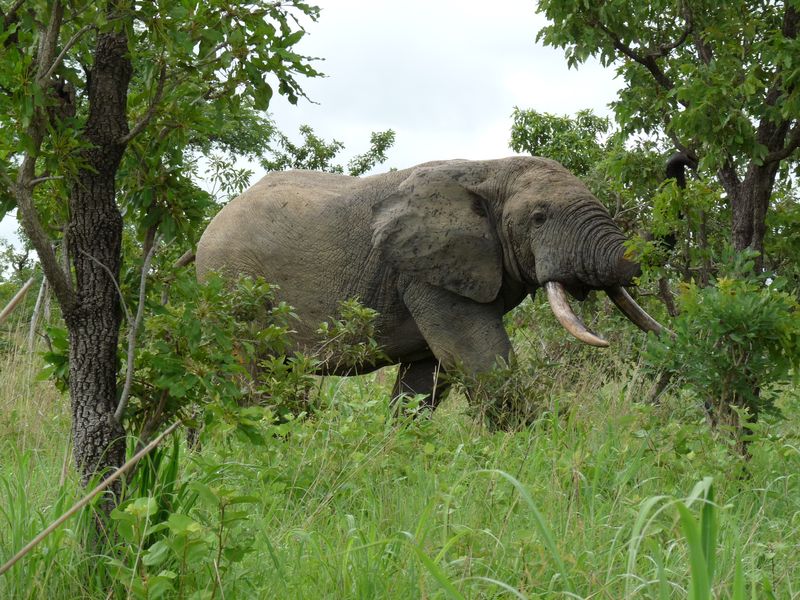
The elephants came back first. In a region of southern Burkina Faso where poaching had nearly erased large wildlife from the landscape, herds of Loxodonta africana began reappearing in numbers that surprised even the biologists tracking them. Nazinga Game Ranch, a 94,000-hectare experiment launched by two Canadian brothers in 1979, was doing something that conservation orthodoxy said was impossible: proving that letting local communities hunt wildlife sustainably could save both the animals and the people who lived alongside them. For a decade, it worked brilliantly. Then it was taken away.
Brothers in the Savanna
Clark and Robert Lungren grew up in what was then Upper Volta, watching cyclical drought devastate domesticated livestock while wild animals adapted and survived. Clark, who would spend most of his life in West Africa as a field biologist and bird specialist, became convinced that the answer to both famine and extinction lay in resource development rather than resource restriction. After years of research and fundraising, the brothers focused on a relatively unsettled stretch of southern savanna. Nazinga offered topographic variety -- open grasslands, gallery forests, seasonal wetlands -- but endemic poaching was rapidly emptying it of wildlife. The Lungrens arrived with their families, a radical idea, and very little else.
Poachers into Gamekeepers
The project's genius was its refusal to treat local people as the enemy. Using local labor, the Lungrens constructed dams, built over 600 kilometers of roads, and established an administrative base. They negotiated with subsistence farmers to relocate fields outside the ranch boundaries and banned all domestic livestock from the land. Most audaciously, they hired the region's poachers as gamekeepers, giving them a direct financial stake in protecting the animals they had previously hunted. Biologists from multiple countries were invited to conduct wildlife and ecological studies, and native species that had been eradicated from the region were reintroduced. The approach ran against prevailing conservation doctrine, which favored strict exclusion of local communities. International development experts dismissed it outright.
The Numbers That Defied Expectation
The results silenced the skeptics. Studies showed that wild animals tolerated drought far better than cattle, thrived on grasses and leaves that livestock derived little nutrition from, and did not cause erosion through overgrazing. They also produced more meat per kilogram of body weight than domestic animals. A carefully managed culling program -- conducted at night, processed under controlled conditions -- employed growing numbers of local people and transformed the region's protein intake from the lowest in the country to the highest. The meat, marketed legally in supermarkets in Ouagadougou, undercut the poaching economy entirely. Poachers could no longer compete on quantity or quality. Nazinga became a significant source of tax revenue for the national government.
Success as Downfall
The ranch's very success attracted the forces that would undo it. International development funders wanted in. The healthy cash flow proved irresistible to officials in the capital. In 1989, a year before the project was scheduled to transition to national management on the Lungrens' own terms, corrupt officials forcibly relocated the brothers to Ouagadougou. Clark and Robert spent the next few years completing project studies, hoping the ranch might survive without them. It did not. Under national management, Nazinga reverted to a conventional wildlife park oriented toward foreign tourists. Poaching resumed. Management deteriorated. Clark Lungren, who continued working on community conservation across West and Central Africa until his death in September 2025 at age 74, never saw his model fully replicated -- though the science behind it has never been refuted.
From the Air
Located at 11.19N, 1.48W in southern Burkina Faso, roughly 200 km south of Ouagadougou. The ranch covers 94,000 hectares of savanna grassland with scattered gallery forest -- visible as a notably greener patch compared to surrounding agricultural land. Look for the constructed dams and road network as identifying features. Nearest significant airport is Ouagadougou (ICAO: DFFD), approximately 200 km north. Po Airstrip (ICAO: DFCP) is closer at roughly 60 km. Flat terrain, good visibility except during harmattan dust season (December-February).