Neath Abbey
Tudor historian John Leland called it "the fairest abbey of all Wales." By the time the 20th century arrived, the fairest abbey lay buried under heaps of industrial waste, its medieval walls swallowed by the very forces that had transformed South Wales from pastoral countryside into an engine of the Industrial Revolution. The story of Neath Abbey is a story of repeated transformation: from monastery to mansion, from mansion to ironworks, and finally, improbably, from slag heap back to heritage site.
Knights and Monks from Normandy
In 1129, Richard de Grenville, one of the Twelve Knights of Glamorgan who divided the region's spoils after the Norman conquest, donated 8,000 acres of his estate to Savigniac monks from western Normandy. The first monks arrived in 1130, and when the Savigniac order merged with the Cistercians in 1147, Neath joined them. The abbey grew to become the largest in Wales, but its prominence also made it a target. Welsh uprisings ravaged it during the 13th century. When Henry VIII's dissolution reached Wales, Neath's last abbot, Lleision ap Thomas, fought a shrewd rearguard action -- paying a large fine in 1536 to buy time and serving as a spokesman for the Welsh abbeys in letters to the Cistercian General Chapter. It delayed the inevitable by only three years; the abbey was dissolved in 1539.
From Cloister to Country House
After the dissolution, the abbey was converted into a grand estate. Richard Williams received the initial grant, but by 1600 Sir John Herbert had built a substantial Tudor mansion occupying part of the cloisters. For perhaps a century, the house functioned as a gentleman's residence, its rooms carved out of spaces that had once echoed with plainchant. But the mansion's life proved brief. As industry spread through the Neath valley, the site became less a home and more a casualty -- abandoned, its walls gradually engulfed by the detritus of copper smelting and ironworking. The ruined abbey and the ruined mansion disappeared together beneath slag and ash.
Digging Out the Fairest Abbey
The rescue of Neath Abbey began quietly in the 1920s when a local group of amateur archaeologists, encouraged by Walter FitzUryan Rice, 7th Baron Dynevor, started clearing away industrial waste to reveal the medieval walls beneath. In 1944, ownership passed to the Ministry of Works, which stabilized what the volunteers had uncovered. Cadw, the Welsh Government's historic environment service, took over care of the site and in 2014 launched a substantial project to further protect and stabilize the ruins. The gatehouse, originally built around 1130 and now marked by two pointed windows dating from the 13th or 14th century, stands on a road alongside the playground of a primary school -- medieval architecture woven into the fabric of daily life.
Filming Among the Ruins
Neath Abbey's second life has included an unexpected career in television. The ruins have served as filming locations for the BBC's Doctor Who, with Matt Smith's Time Lord and Karen Gillan's Amy Pond adventuring among walls that were digitally restored to their former grandeur. The BBC series Merlin also used the site, transforming it into the castle of the ancient kings where Arthur rediscovered the Round Table. Even a motorcycle speedway track ran adjacent to the abbey in 1962, its banking so close to the west wall that the ruins appeared to be part of the circuit. It is a place that has been repurposed so many times -- monastery, mansion, industrial site, speedway, television set -- that reinvention has become its defining characteristic.
From the Air
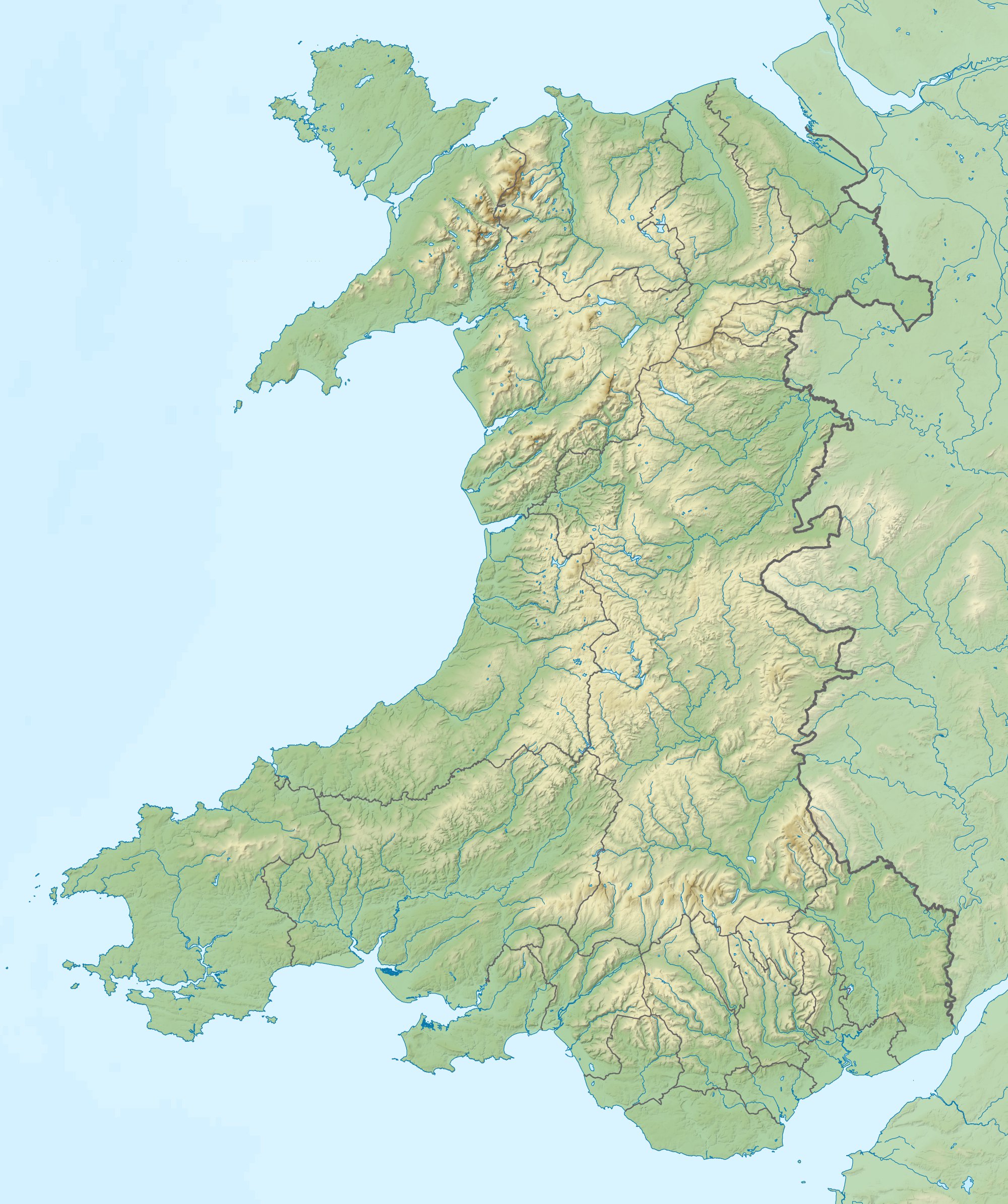
Located at 51.66N, 3.83W near the town of Neath in South Wales. The abbey ruins are visible in the Neath valley, surrounded by the town's industrial and residential areas. Best viewed at 2,000-3,000 ft. Nearest airport: Swansea (EGFH), approximately 8 nm southwest. The Neath River and M4 motorway corridor provide visual reference points.