Nebel
The windmill in Suddorf stands on top of a grave mound. The mound is Bronze Age, four thousand years old; the windmill was built in 1775 on the neighbouring island of Sylt, then taken apart in the nineteenth century, ferried across the Kniepsand, and reassembled on the older dead. People live in it now. The current owner sleeps inside a working mill perched on top of a barrow. That is the kind of place Nebel is - a small German municipality where the layers do not bother to disguise themselves.
Three Villages in One
Nebel is technically three settlements stitched together. The village proper is centred on the church of St. Clement, which was built in 1236 - a generation before Amrum's first written mention in Valdemar's Danish census. To the south lies Suddorf, first recorded in 1446 and possibly the oldest hamlet on the island. To the east, on the Wadden Sea shore, sits Steenodde, the smallest settlement of all, where Amrum's oldest house - the former inn Zum lustigen Seehund, the Merry Seal - has stood since 1720. Until 2006 Nebel was the administrative seat of the Amt Amrum, the island's local government. The name itself probably comes from old Danish nei boli, new settlement. New, in this case, meaning early sixteenth century.
The Talking Stones
The St. Clement churchyard contains 152 sandstone gravestones carved between 1678 and 1858, and most of them talk. The inscriptions, sometimes carried onto the back of the stone for room, give the deceased's life story in concise detail: birth date, marriages, number of children, occupation, voyages survived, ships lost. The largest stones run to two metres and weigh eight hundred kilograms. They were carved not by professional stonemasons but by local craftsmen and ships' carpenters - men like Tai Hirichs from Nordstrandischmoor and Jan Peters from Amrum itself. Peters alone cut thirty-six of the surviving markers. The most famous is Hark Olufs's, the Frisian sailor who was kidnapped by Barbary corsairs at sixteen and returned eleven years later as a commander in the Bey of Constantine's cavalry. He is buried less than a kilometre from where he was born.
What the Church Holds
Inside St. Clement, the baptismal font is Roman - or at least, that is what local tradition holds, and the stone is old enough to make the claim plausible. A Gothic wooden ensemble called the Divine Sacrament shows a group of apostles that the village will tell you washed ashore during a storm surge and was kept. The nave is narrow, with a low gallery along one side, and the architect built the interior to feel like the hull of an inverted ship - a deliberate touch in a parish whose income, for centuries, came from the sea. The 36-metre copper-tiled tower was added only in 1908. The parish also owns one of just four surviving copies of the Missale Slesvicense, printed by Steffen Arndes in 1486 - the first book ever printed in Schleswig-Holstein and the second ever printed in Denmark. It is kept safely in the archives at Kiel.
The Graveyard of the Unknown
Across from one of the village's two windmills lies a smaller, sadder yard: the Friedhof der Heimatlosen, the Graveyard of the Homeless. The bodies buried here are those of drowned sailors washed up on Amrum's beaches who could not be identified. Each grave is marked only by a wooden cross with the date the body came ashore. Most are early twentieth century; the youngest dates to 1969. After that, forensic techniques had improved enough that no anonymous body has been buried here since. Walking from the talking gravestones to this small plot of nameless dead is a short trip, and it does the same thing in reverse: this churchyard insists on naming everyone it can, and refuses to forget the ones it cannot.
Tourism and Thatched Roofs
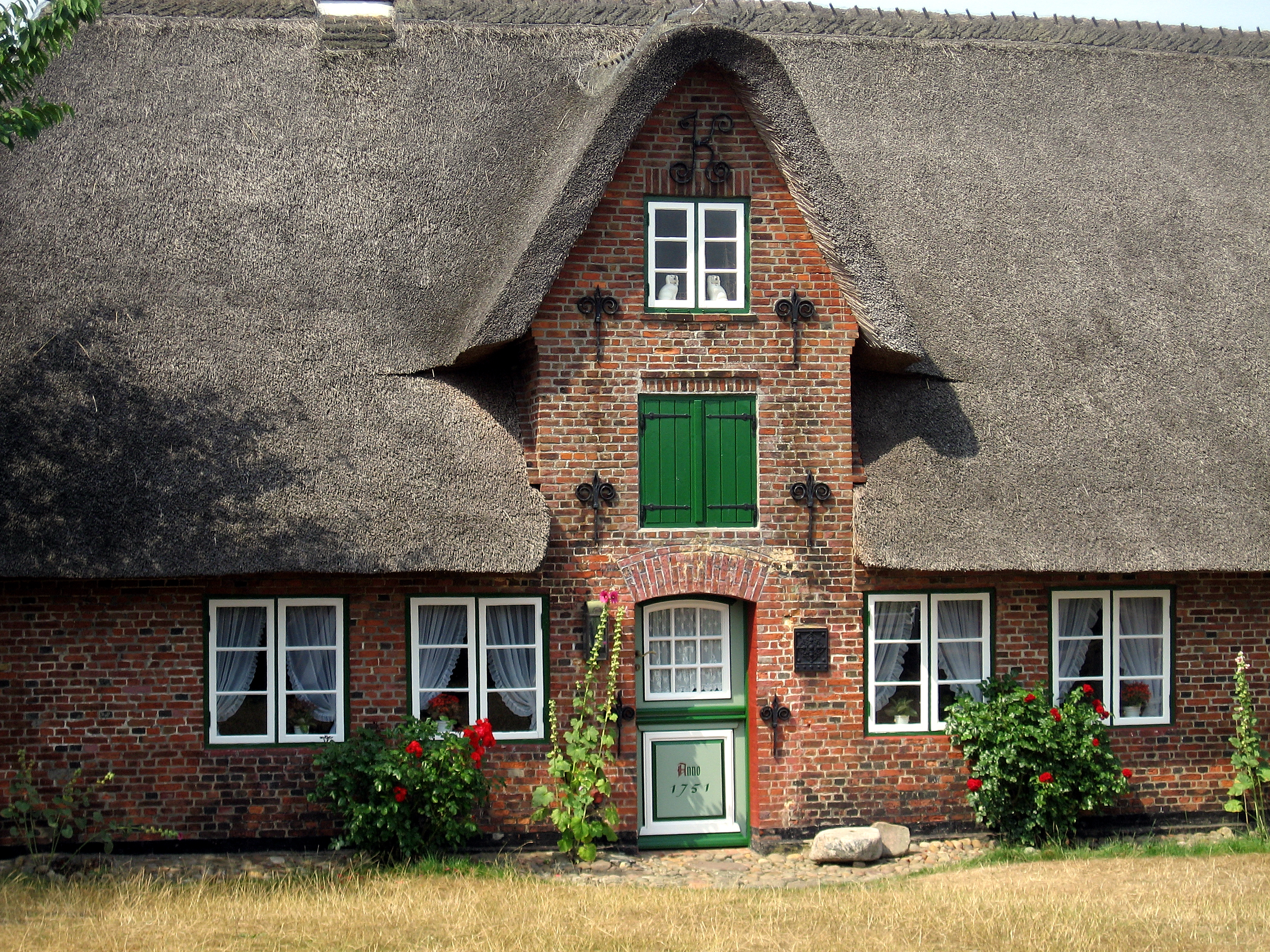
Modern Nebel earns its living the way most of Amrum does: from visitors. The municipality counted 35,470 guests and 341,371 overnight stays in 2005, not counting patients of the Satteldune sanatorium just south of Suddorf, which treats children with respiratory conditions in the clean Frisian air. The Oeoemrang Hus, an original Frisian house dating to around 1751, is open to the public as a museum and small wedding venue. Eighteenth- and nineteenth-century thatched homes line the central streets. Nebel has the highest proportion of second residences of any municipality in Schleswig-Holstein. People who do not live here own the houses; people who do live here mostly rent rooms to people who do not. It is the deal Amrum has made with the rest of the world.
From the Air
Nebel sits at roughly 54.653 N, 8.355 E, in the middle of Amrum's east coast. The Amrum Lighthouse is 4 km southwest; Suddorf and St. Clement's Church lie at the southern edge of the municipality. Nearest airport is Sylt (EDXW), 25 km north. From cruise altitude, Nebel is the cluster of thatched roofs roughly halfway down the island, distinguishable by the green copper spire of St. Clement and the dark windmill on the rising ground to its south.