Nechung
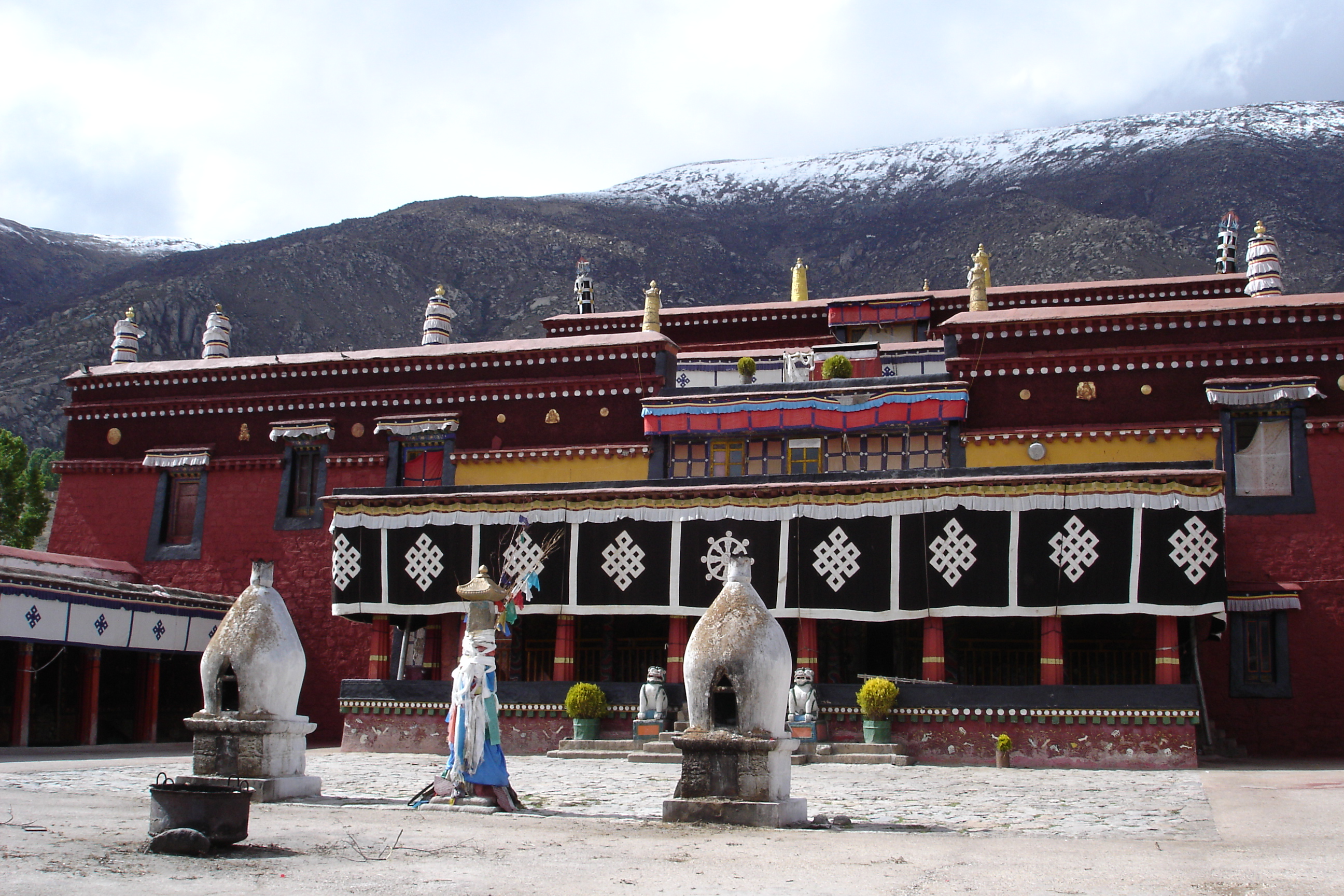
Somewhere below Drepung Monastery, tucked into the hillside about ten minutes' walk downhill, stands a medium-sized temple with an outsized reputation. Nechung Monastery - the "small dwelling" - is also known as Sungi Gyelpoi Tsenkar, the "Demon Fortress of the Oracle King." Both names are accurate. The building is modest. What happens inside it is not. For centuries, this was the place where the Tibetan government came to consult the future, where a monk would enter a trance so violent that he could twist swords with his bare hands, and where the words he mumbled - recorded and interpreted by attending monks - shaped the decisions of the Dalai Lamas on matters ranging from diplomacy to war.
The God Who Was Captured
The story of Nechung begins not with Buddhism but with conquest. Pehar Gyalpo, the three-headed, six-armed deity who resides at Nechung, was originally a god of the Horpa people who lived east of Lake Kokonor. According to one tradition, Padmasambhava - the 8th-century master who brought Buddhism to Tibet - captured Pehar and bound him to protect the dharma. An alternative account holds that a Bon general named Tara Lugong brought the deity back from a Uighur meditation school near Kanchow around the end of the 8th century CE. Either way, Pehar first served as guardian of the treasures at Samye Monastery, Tibet's oldest. During the reign of the Fifth Dalai Lama, Lobsang Gyatso (1642-1682), the deity was relocated - first to Tse Gugtang, then to Nechung's present site. The Fifth Dalai Lama was the first to formally institutionalize the State Oracle of Nechung, weaving a pre-Buddhist shamanic tradition into the fabric of Gelug governance.
Possession as Statecraft
The State Oracle is a Nyingma monk, adopted by the Gelugpas and chosen specifically for his receptivity to possession by Pehar during trance. He is considered the medium of Dorje Drakden, one of Pehar's aspects. When possessed, the oracle becomes violently agitated - tongue lolling, eyes bloodshot, displaying what witnesses describe as superhuman strength. He lifts heavy objects, bends metal, and mumbles words that are carefully recorded and later interpreted. He blesses grain, which is thrown to the assembled crowd. This practice differs from Central Asian shamanism, in which practitioners are believed to leave their bodies and travel to the spirit realm. Tibetan oracles work the other way around: the spirit comes to them, speaks through them, often without the oracle's knowledge of what is being said. The Dalai Lamas traditionally consulted the Nechung Oracle before making any important decision. It was not superstition operating at the margins of power. It was protocol operating at its center.
Destruction and the Throne That Waits
In 1959, when the Dalai Lama fled to India, the State Oracle went with him. They settled in Dharamsala, in the foothills of the Indian Himalayas, where a new Nechung Monastery has since been built. The original in Tibet was nearly obliterated during the Cultural Revolution, part of a broader campaign that destroyed thousands of monasteries across the plateau. But Nechung has been largely restored. A massive new statue of Guru Rinpoche - Padmasambhava, the same figure who tradition says first bound Pehar to the dharma - now occupies the second floor. A college of debate has reopened to the east, attended by young students once again. In the monastery's inner rooms, a throne sits empty, awaiting the Dalai Lama's return. Photographs from 1993 show it dressed and ready, as if he might walk in at any moment. The oracle continues his work in exile. The throne continues its vigil in Lhasa.
Between Two Worlds
Nechung occupies a unique position in Tibetan religion. It is a Gelug institution that houses a Nyingma practitioner channeling a pre-Buddhist deity through methods inherited from the Bon tradition. It bridges the scholastic Buddhism of the great monasteries and the older, wilder spiritual practices of the Tibetan plateau. The tradition of oracles predates Buddhism in Tibet entirely, rooted in the Bon religion that preceded it. That the most rationalist of Tibetan Buddhist sects - the Gelugpas, the "Yellow Hats" - should place such authority in a practice of spirit possession speaks to the pragmatism that has always characterized Tibetan governance. Power needs information, and the Nechung Oracle was, for centuries, the most trusted source. Today the monastery draws pilgrims who spin prayer wheels along its outer walls and tourists who come to see where the future was once divined. The "small dwelling" remains, as it always was, a place where the boundary between this world and another grows thin.
From the Air
Nechung Monastery is located at 29.671N, 91.055E, about 10 minutes' walk downhill from Drepung Monastery on the western outskirts of Lhasa at approximately 3,650m elevation. From the air, look for the Drepung complex sprawling across the hillside - Nechung sits below it to the south. Lhasa Gonggar Airport (ZULS) is approximately 60km to the southwest. Expect high-altitude conditions and variable mountain weather.