Negishi Racecourse: Where East Met West at the Starting Gate
Emperor Meiji came back fourteen times. That is perhaps the most telling detail about the Negishi Racecourse -- that Japan's modernizing emperor, the man dismantling two centuries of isolation, found something irresistible about watching horses run in circles on the outskirts of Yokohama. What began in 1866 as a diversion for restless foreign merchants in a treaty port became, within a generation, a gathering place where Japanese nobility and Western diplomats rubbed shoulders in the grandstand, placing bets in two languages. The tradition of awarding the Emperor's Cup to the winner of the most prestigious race started here, a custom that endures in Japanese horse racing to this day. Every major racecourse built afterward in Japan -- the clockwise circuit, the grandstand design, the social rituals -- traces its lineage to this single oval track carved from the wetlands behind Kannai.
From Swamp Ground to Starting Gate
The first horse races in Yokohama were run in 1862 on a makeshift track called the Swamp Ground, a boggy patch behind the Kannai foreign settlement. Foreigners stationed in the newly opened treaty port craved the familiar entertainments of home, and horse racing fit the bill. Four years later, in 1866, the Negishi Racecourse opened as the first purpose-built European-style racecourse in Japan, giving the port's international community a proper venue. The course sat on the outskirts of Yamate, the bluff neighborhood where Western merchants and diplomats built their residences overlooking Yokohama Bay. What started as an expatriate pastime quickly drew Japanese spectators. Within a decade, the racecourse had become one of the few places in Meiji-era Japan where the country's rigid social boundaries dissolved in the shared thrill of a close finish.
The Emperor's Grandstand
Emperor Meiji's fourteen visits to Negishi were not casual outings. Each imperial appearance elevated horse racing from foreign novelty to a pursuit worthy of national attention. The emperor's presence legitimized the sport and drew Japan's elite to the railings. The tradition of the Emperor's Cup, awarded to the winner of the top race, began at Negishi and became a cornerstone of Japanese racing culture. The racecourse's clockwise circuit -- opposite to the counterclockwise standard in Britain -- became the template for every subsequent Japanese racecourse. Negishi did not merely host races; it defined how Japan would race horses for the next century and a half. The stands filled with silk merchants, naval officers, diplomats, and local dignitaries, all watching thoroughbreds thunder around a track that symbolized Japan's headlong engagement with the wider world.
Earthquake, Resurrection, and a New Grandstand
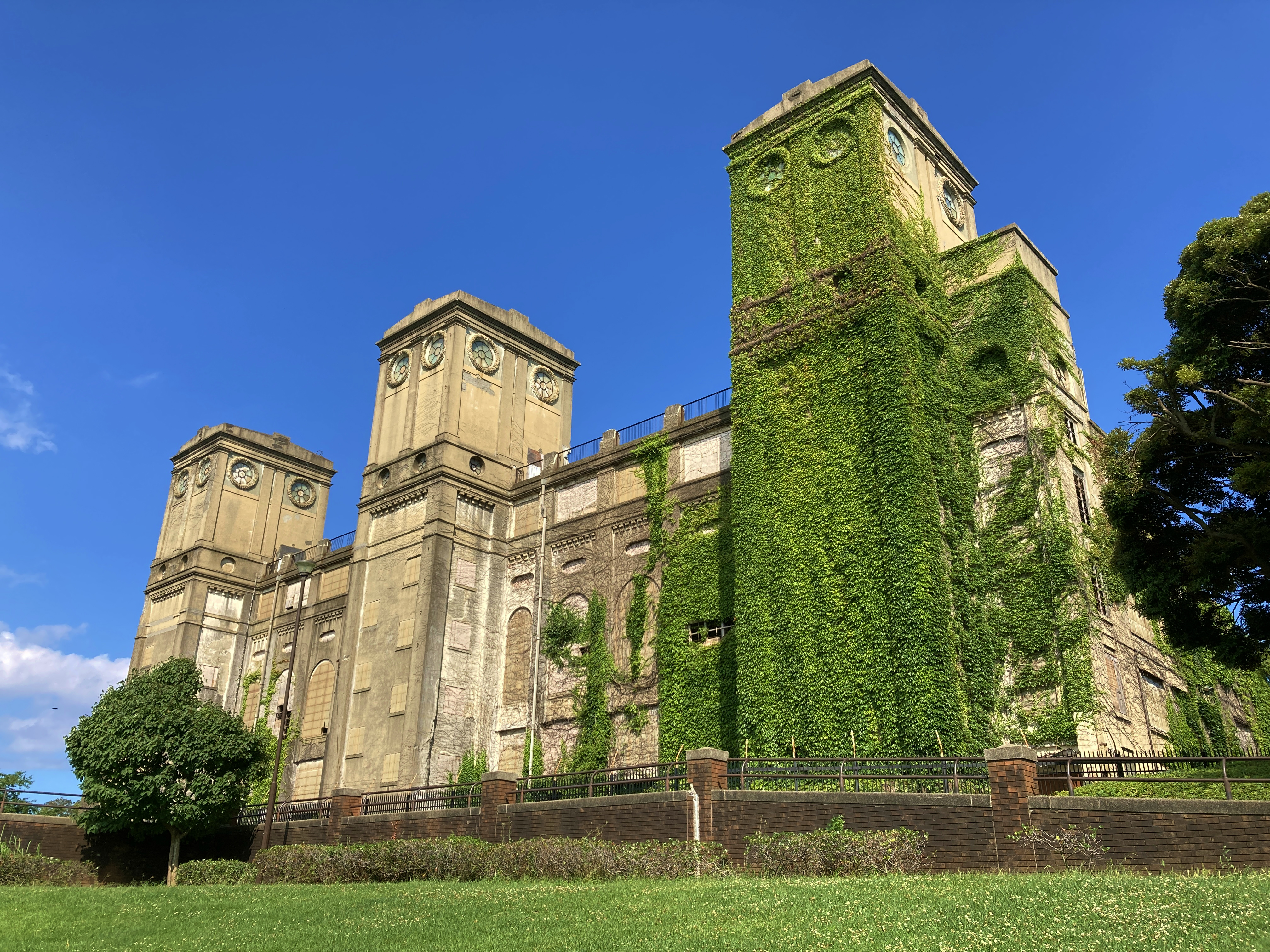
The Great Kanto Earthquake of 1923 leveled much of Yokohama and destroyed the original Negishi grandstand. The racing community rebuilt. In 1929, American architect Jay Herbert Morgan designed a replacement grandstand in a sweeping Art Deco style -- a concrete and steel structure with soaring observation towers, elegant staircases, and tiered viewing galleries. Morgan, who had designed several prominent buildings in Yokohama, gave Negishi a grandstand that rivaled any in Asia. The new structure anchored the racecourse's golden years through the 1930s, as horse racing in Japan grew from an elite hobby into a national passion. But the golden years were numbered. War was coming, and with it, the end of racing at Negishi.
War, Occupation, and Silence
Horse racing at Negishi ended in 1942 as the military requisitioned the site. The grandstand that had hosted emperors and diplomats fell into wartime service. After Japan's surrender, the U.S. Navy took over a large portion of the grounds for the Negishi Heights military housing facility, which remained in American hands for decades. The rest of the land became Negishi Forest Park, a popular public green space where families now picnic and children play on the hillside that once thundered with hooves. The Equine Museum of Japan was built nearby, preserving the site's connection to its racing heritage. But the most striking remnant is Morgan's 1929 grandstand itself -- still standing, fenced off and deteriorating, its Art Deco towers rising above the tree line like the bones of a forgotten era.
The Ruins That Remember
Today, Morgan's grandstand is one of Yokohama's most evocative ruins. Barbed wire and fencing keep visitors at a distance, but the structure's soaring towers and crumbling staircases are clearly visible from the park. Vegetation creeps through the concrete. The viewing galleries where the Emperor once sat are open to the sky. The grandstand has become a pilgrimage site for urban explorers and history enthusiasts, a place where the ambitions of Meiji-era Japan and the aesthetics of American Art Deco intersect in slow decay. General MacArthur reportedly used printing equipment within the building to produce 140,000 copies of Japan's instrument of surrender. The racecourse that introduced Japan to Western horse racing now serves as a quiet memorial to the forces that shaped modern Yokohama -- trade, diplomacy, ambition, war, and the passage of time written in crumbling concrete.
From the Air
Located at 35.42N, 139.64E on the Yamate bluffs above Yokohama's port district. From altitude, Negishi Forest Park is a large green expanse on the hillside south of central Yokohama, with the distinctive Art Deco grandstand towers visible at the park's eastern edge. Best viewed at 2,000-3,000 feet AGL approaching from the north over Yokohama Bay. Tokyo Haneda International Airport (RJTT) lies approximately 15 nautical miles north-northeast. The U.S. Navy Negishi Heights housing area is adjacent to the park grounds. Yokohama's Minato Mirai waterfront district is visible to the northwest.