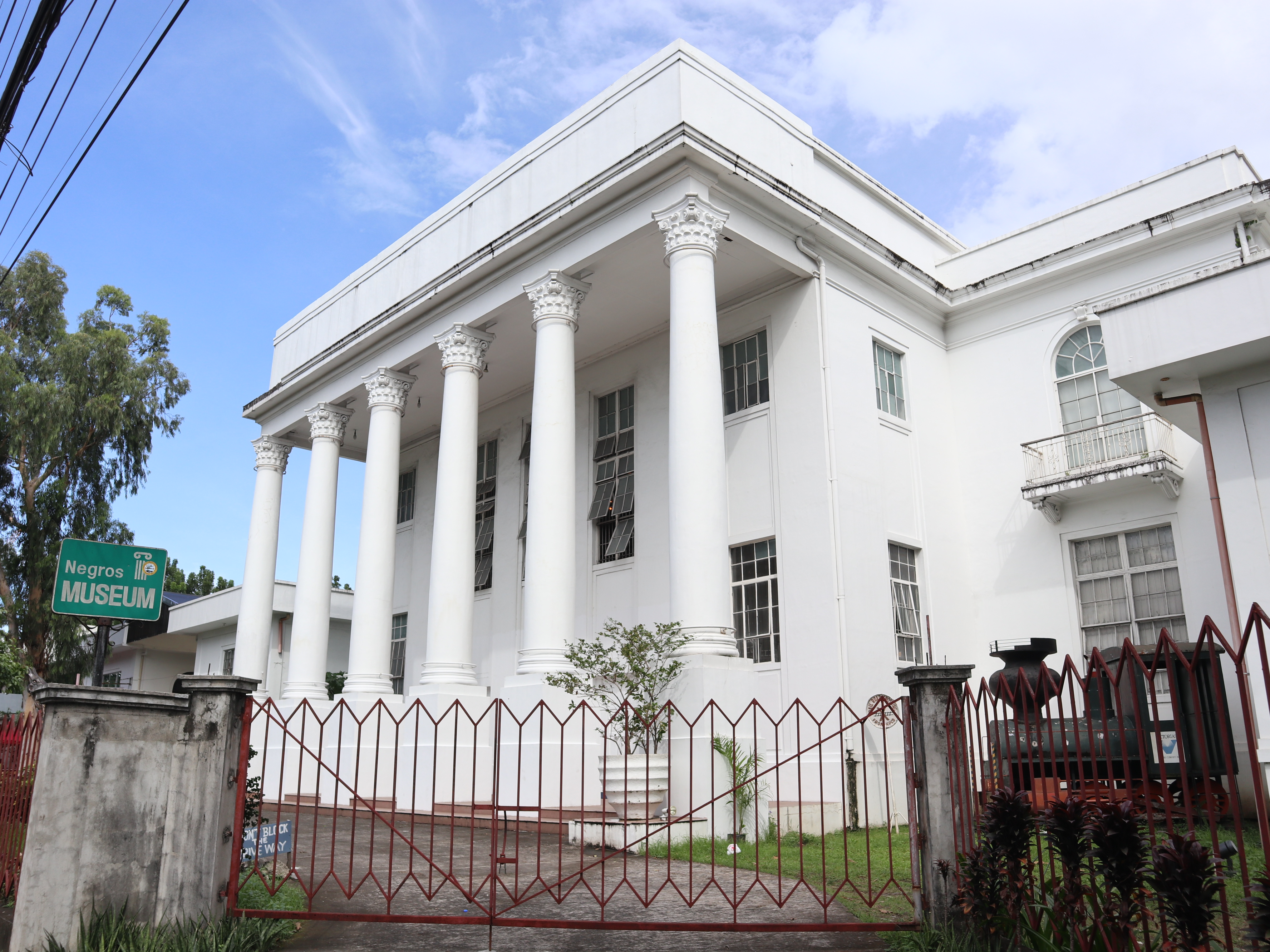
Negros Museum
Most museums begin with ancient artifacts behind glass. The Negros Museum begins with a question: what does it mean to be Negrense? Opened on March 17, 1996, in Bacolod's Provincial Capitol complex, this privately owned museum made a deliberate choice to skip the archaeological digs and pottery shards and focus instead on lifestyle and society -- old furnishings loaned from ancestral houses, art from local and foreign artists living on Negros Island, and exhibitions that capture the texture of daily life in a province shaped by sugar, faith, and resilience.
From Agriculture to Art
The building itself tells a story of transformation. Constructed in 1925 as the Provincial Agriculture Building, it originally served the administrative needs of Negros Occidental's dominant industry: sugar. The structure sits within the Negros Occidental Provincial Capitol Complex, a Beaux-Arts compound designed by Juan Arellano that anchors the civic heart of Bacolod. When the museum first opened in 1996, it was housed inside the Provincial Capitol itself. But in 2003, the Capitol was reclaimed for government use, and the exhibits were transferred to the former agriculture building. The move was fitting: a building that once managed the province's cash crop now preserves its cultural harvest. The Negros Cultural Foundation, which manages the museum, pays the Provincial Government a nominal rent, a courtesy arrangement that keeps the institution financially lean and operationally independent.
No Artifacts, Just Life
The museum's founding philosophy was radical for the Philippines. Rather than competing with institutions that house pre-colonial gold or Spanish-era religious art, the Negros Museum positioned itself as a mirror of the living culture of Negros Island. Its collections include furniture and household items loaned from the ancestral houses that dot the province, the grand homes of the sugar families whose wealth defined the island's identity for over a century. Art exhibitions rotate through the space, featuring work by both Negrense artists and foreign artists who have made the island their home. The museum also functions as an educational space, hosting art training sessions and seminars that aim to cultivate the next generation of Negrense creative talent. It is less a repository than a workshop, a place where the past is not preserved under glass but handled, discussed, and reinterpreted.
The Cafe and the Stage
At the museum's West Annex, the Negros Museum Cafe blurs the line between cultural institution and neighborhood gathering place. It has its own separate entrance, welcoming walk-in guests who may never set foot in the galleries. The cafe includes both an open-air seating area and an enclosed station that doubles as a venue for small theater productions and art exhibitions. This combination of food and performance is characteristically Bacolod -- a city famous for its culinary traditions and its festival culture. The cafe also serves as the official caterer for the Office of the Governor and the Provincial Government of Negros Occidental during dignitary functions, giving the museum a practical civic role that extends well beyond its exhibition walls.
Sugar Island's Mirror
Negros Island's identity has been inseparable from sugar since the nineteenth century. The great houses, the provincial wealth, the social hierarchies, the festivals, and the economic crises that have shaped the island all trace back to sugarcane. The Negros Museum does not shy away from this legacy. By displaying the furnishings and decorative arts of the sugar families alongside contemporary work by artists who grapple with the island's present, the museum creates a conversation between eras. It sits in a compound that includes the Capitol Park and Lagoon, where carabao sculptures bookend a public green space, and the Provincial Capitol itself, a neoclassical building that once represented the wealthiest province in the Philippines. In this setting, the museum serves as a reminder that wealth produces culture, culture outlasts wealth, and the story of a place is best told not through its treasures but through the way its people lived.
From the Air
Located at 10.677°N, 122.951°E within the Negros Occidental Provincial Capitol Complex in central Bacolod, Negros Island. The museum building is part of a larger civic complex that includes the Capitol building, Capitol Park and Lagoon, and other government structures, all visible as a green civic campus in the urban core. Nearest airport is Bacolod-Silay International Airport (RPVB), approximately 15 km northeast. Best viewed at 2,000-3,000 ft AGL.