Nenets Nature Reserve
In 2015, scientists on Matveyev Island counted over six hundred walruses hauled out on the breeding grounds -- massive creatures piled together on a rocky Arctic shore, their tusks gleaming in the low polar light. The island lies within the Nenets Nature Reserve, a zapovednik covering 313,400 hectares of tundra, wetlands, river delta, and sea along the Barents Sea coast. Established in 1997, this strictly protected reserve guards one of the most biologically productive stretches of the Russian Arctic, a place where the Atlantic migratory flyway funnels millions of birds between their Western European wintering grounds and the nesting tundra of Eastern Europe and Western Siberia.
The Delta's Mosaic
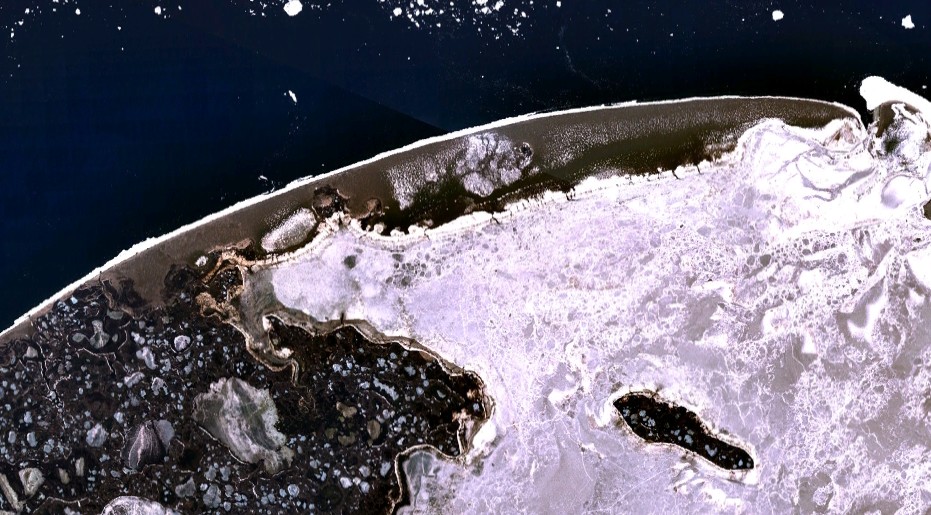
The reserve sprawls across the delta of the Pechora River and the adjacent Barents Sea coast in four distinct sectors. The largest stretches along the west side of the Pechora Delta, reaching out along the Zavorot Peninsula into the sea. Smaller sectors cover the east side of the delta along the Neruta River and the offshore Bolvansky Island. The landscape is overwhelmingly flat -- seventy-five percent lowland tundra -- blanketed in multicolored mosses and lichens that give the ground a living, shifting texture when seen from above. Coastal meadows and marshes extend far inland, an unusual feature that creates vast breeding habitat for waterfowl and shorebirds. Scientists have recorded 339 species of vascular plants, 474 species of algae, and 176 species of lichen across this seemingly barren terrain.
Flyway Crossroads
The reserve sits at a critical junction on the East Atlantic flyway, and its importance to migratory birds is difficult to overstate. Species that winter along the coasts of Western Europe -- from the shores of Britain to the wetlands of the Netherlands -- pass through here on their way to nesting grounds across the Siberian tundra. The Nenets Reserve is designated an Important Bird and Biodiversity Area, home to vulnerable species like the long-tailed duck. Bewick's swans use the reserve as a staging ground, and the reserve's scientists offer a dedicated excursion called the "Arctic House of Bewick's Swan" for permitted visitors. The interplay of freshwater, saltwater, and tundra habitats packed into a relatively compact area makes the reserve a bottleneck of life in an otherwise sparsely populated landscape.
Walruses and the Warming Sea
The Atlantic walrus breeds on the reserve's islands, and the 2015 count on Matveyev Island confirmed that these grounds remain significant for the species. Twenty-six mammal species have been recorded within the reserve, including Arctic fox and hare, though the walrus is the star attraction. The reserve's coastal position on the Barents Sea places it at the front lines of Arctic climate change, where warming temperatures and retreating sea ice threaten the very species the zapovednik was created to protect. The fragile connection between ice, sea, and shoreline that walruses depend on grows more tenuous with each passing decade.
Scars Beneath the Tundra
The reserve exists partly because of what happened before it was established. The surrounding region contains widespread deposits of oil and gas, and the ecological consequences of extraction have been severe. In 1980, a catastrophic accident at the Kumzhinskoye gas field in the Pechora River delta caused uncontrolled venting of gas that lasted seven years. The disaster underscored the need for formal protection of the remaining wetlands and helped build the case for the reserve's establishment in 1997. The tension between resource extraction and conservation remains the defining dynamic of the Nenets Autonomous Okrug, and the zapovednik represents one of the few places where conservation has won outright.
A Closed Frontier
As a zapovednik -- Russia's strictest category of nature reserve -- the Nenets Reserve is largely closed to the general public. Access requires permits obtained in advance through the reserve's main office in Naryan-Mar. Scientists and those pursuing environmental education can arrange visits, and the reserve offers guided birdwatching tours lasting up to three days. For everyone else, the reserve exists as an idea more than a destination: a vast stretch of Arctic coast where human interference is deliberately minimized, where the tundra and the sea conduct their ancient exchange of nutrients and life largely without witness.
From the Air
Located at approximately 68.60°N, 53.66°E on the Barents Sea coast, centered on the Pechora River delta. The reserve is about 800 km northeast of Arkhangelsk. Nearest airport is Naryan-Mar (ULAM). From the air, the reserve appears as a vast expanse of flat, waterlogged tundra with countless braided river channels, coastal marshes, and offshore islands. The Zavorot Peninsula extending into the Barents Sea is a prominent landmark. Best viewed at medium altitude to appreciate the mosaic of wetlands and coastline.