Nerbudda Incident
Of the 274 people aboard the British merchant ship Nerbudda when it struck a reef off northern Taiwan in September 1841, the 29 Europeans took the only rowing boat and left. Behind them, 240 Indian camp followers and lascars clung to the wreck in Keelung Bay, waiting five days before attempting to reach shore on makeshift rafts. Some drowned in the surf. Others were killed on the beach. The rest were captured, marched south, imprisoned, and eventually beheaded by Qing authorities. The Nerbudda incident is one of the Opium War's least remembered atrocities, and one of its most revealing.
Two Ships, One Fate
The Nerbudda sailed from Hong Kong Island bound for Chusan in early September 1841, carrying 243 Indians, 29 Europeans, and two Filipinos from Manila. A severe gale dismasted the ship, and it drifted helplessly toward the northern coast of Taiwan. When it struck a reef, the Europeans commandeered the only rowing boat, taking three Indians and the two Filipinos with them. They were eventually rescued by the British schooner Black Swan and returned to Hong Kong. The 240 Indians left behind had no such luck. Six months later, in March 1842, the merchant brig Ann wrecked at Da'an harbor farther south along the Taiwan coast. Its survivors suffered the same fate. The two groups of castaways, separated by months and hundreds of kilometers, were funneled into the same system of Qing military justice.
Captives Marched South
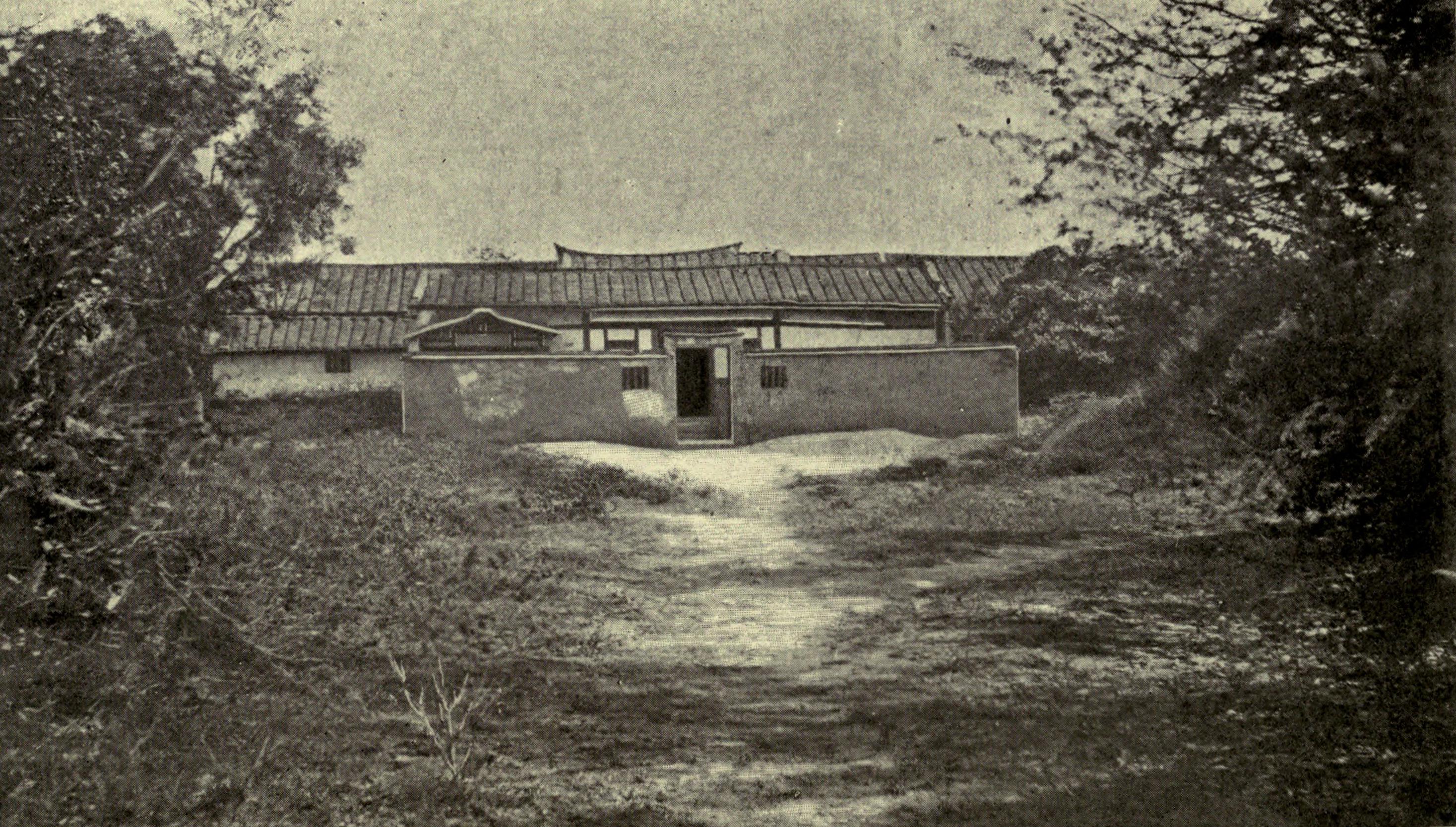
Chinese forces captured the survivors from both wrecks and separated them into small parties for the long march south to the prefectural capital of Taiwan, modern-day Tainan. The prisoners were primarily Indian lascars, sailors who served on British merchant vessels, and camp followers who supported military operations. These were not soldiers. They were workers caught in a war between empires that regarded them as expendable. Upon reaching Tainan, they were imprisoned in a granary, a storage building never designed to hold hundreds of human beings. Conditions were brutal. Of the nearly 300 survivors from both ships who made it to shore, 87 died from mistreatment in captivity before the executions even began.
The Emperor's Order
Meanwhile, two senior Chinese officials, brigade general Dahonga and intendant Yao Ying, filed a wildly inaccurate report to the Daoguang Emperor. They claimed to have sunk the Nerbudda from the Keelung fort while defending against a naval attack, reporting 32 enemies killed and 133 captured in battle. The reality, of course, was a shipwreck and the capture of unarmed survivors. The fabricated victory report served its purpose. After the British won the Battle of Ningpo, the humiliated Daoguang Emperor ordered on May 14, 1842 that all captured prisoners be executed. On August 10, 1842, 197 prisoners were beheaded. Of the nearly 300 people from both ships who reached Taiwan alive, only 11 survived the war.
The People Left Behind by History
The Nerbudda incident reveals the layered cruelties of the Opium War era. The Europeans who abandoned the Indian crew to save themselves. The Qing officials who fabricated military victories from the suffering of shipwreck survivors. The emperor who ordered mass execution as political revenge. And at the center of it all, the Indian lascars and camp followers, people with names and families and lives, reduced to numbers in dispatches sent between men who never saw their faces. The British East India Company had long viewed Taiwan as a potential trading post, and men like William Huttmann had written to Foreign Secretary Lord Palmerston about the ease of occupying the island. But it was not soldiers who tested that theory. It was sailors and workers who never chose to be there, wrecked by a storm on a coast where no one was coming to help them.
From the Air
The Nerbudda struck a reef off northern Taiwan near Keelung, at approximately 25.1511N, 121.7561E. The Keelung Harbor area is the primary geographic reference point. From the air, the harbor basin and surrounding hillside forts (including Ershawan Battery, where officials falsely claimed to have engaged the ship) are visible landmarks. Best viewed at 2,000-4,000 feet. Nearest airport is Taipei Songshan (RCSS), approximately 19 nm southwest. The Ann wrecked at Da'an harbor, much farther south along the western coast.