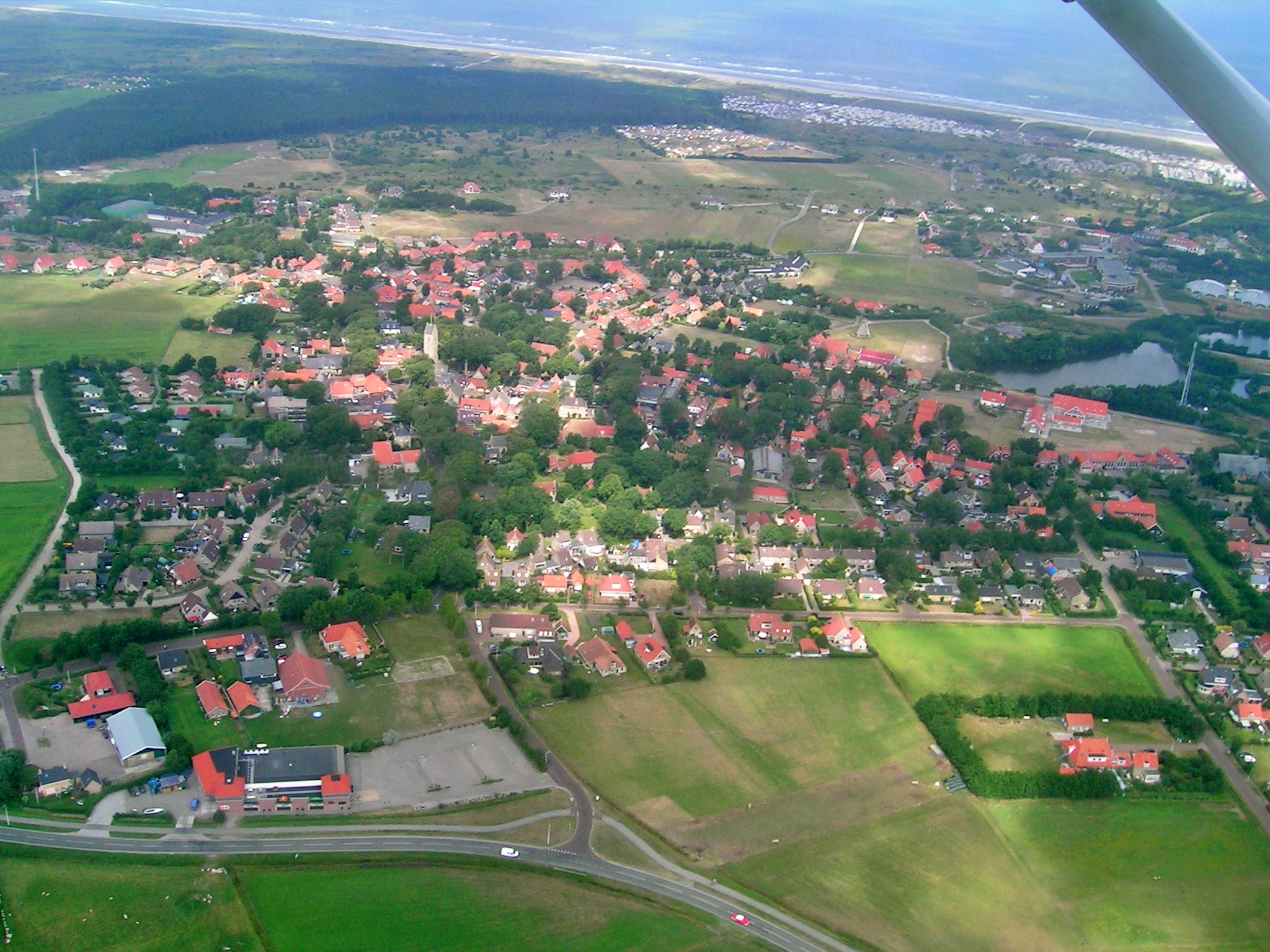
Nes, Ameland
On an island only 25 kilometers long, the religious geography ran east-west for centuries. The Catholic Amelanders lived in Nes and Buren on the eastern half. The Protestants lived in Hollum and Ballum on the western half. The two communities fished the same waters and walked the same beaches, but they did not always get along - there are stories of brawls, boycotts, and decades of quiet feuding that ran on a logic everyone living on the island understood. Nes was the Catholic capital. Today it is also the busy capital, the place where the ferry from Holwerd arrives several times a day, where the hotels cluster, where the gin distillery operates, and where the windmill called De Phenix - The Phoenix - still turns above the village rooftops.
The Catholic Half
When the Reformation reached the Frisian islands in the late 16th century, it did not finish the job. Ameland split religiously and geographically: the villages at the western end of the island - Hollum and Ballum - went Protestant, while the eastern villages of Nes and Buren stayed Catholic. The line was real enough that it shaped marriages, schools, even which side of the island a person was buried on. Nes was the largest of the Catholic settlements and over the centuries became their main town - a place of brick farmhouses, Catholic schools, and a community that knew exactly which families had been on which side for how long. The 19th and 20th centuries softened the rivalry. Today it survives mostly as a piece of local history that the older residents can still describe in detail.
The Ferry Lands
Several times a day from the mainland port of Holwerd, the MS Oerd or the MS Sier nudges into the Reegeul - the dredged channel that lets a ship reach Nes through the otherwise shallow southern coast of Ameland. The vessels are named for two villages that the sea took centuries ago: Oerd and Sier, both flooded and gone, their names preserved on the prows of the ferries that now carry tourists where the villagers used to live. Bicycles, cars, and walkers pour off the ramp into the harbor at Nes. Buses leave from the terminal: route 130 to Hollum and Ballum, route 132 to Buren. Most visitors never bother with a car - the island is small enough to bike across in an afternoon.
A Working Harbor
Nes is one of seventeen Wadden Sea ports and the only marina on Ameland. The Foundation Marina Leyegat manages the docks from April through October, with floating berths, a port office that tracks tides and weather, and a fueling point. The water is shallow - 60 to 80 centimeters at the harbor entrance during low tide - so larger boats time their arrivals to the rhythm of the moon. The Reegeul, the marked channel through the mudflats, is straight and clear and well-buoyed, but anyone trying to come in at the wrong hour can find themselves drying out on a sandbank with the ferries passing overhead. The KNRM, the Dutch lifeboat service, keeps its station at the Ballumerbocht about 4 kilometers to the west, where they can launch in either direction.
Phoenix and Distillery
Above the village, the windmill De Phenix - The Phoenix - rises against the sky. It is a working stellingmolen of the same Dutch type as De Verwachting in Hollum, but Nes's mill has a different history and a different sail color. Down in the village streets, Destilleerderij Nes turns out small batches of gin, jenever, and liqueurs using island botanicals: sea buckthorn from the dunes, juniper, herbs that grow nowhere else quite the same way. The village pump still stands in the square. Restaurants line the main streets. The Burgemeester Waldaschool - the island's only secondary school - sits among the houses, drawing teenagers from all four villages.
Where the Famous Came From
For a place of fewer than two thousand people, Nes has sent some quietly remarkable figures into the world. Johannes de Jong was born here in 1885 and became Archbishop of Utrecht from 1936 to 1955, the spiritual head of Dutch Catholicism through the war years and beyond - his refusal to cooperate with the Nazi occupation cost the church real risks but earned him later honor. The postmodern architect Sjoerd Soeters, born in Nes in 1947, has shaped neighborhoods and buildings across the Netherlands. The research scientist Pieter Mosterman, born in Nes in 1967, works in the United States. The island is small. The reach is long.
From the Air
Coordinates 53.4442N, 5.7728E. Nes sits on the south-central coast of Ameland, immediately above the ferry harbor that connects to the mainland village of Holwerd. From 1,500-3,000 ft AGL the village reads as a denser grid than the other Ameland settlements, with the windmill De Phenix and the ferry pier as the clearest landmarks. The Reegeul channel runs south from the harbor through the Wadden Sea mudflats. Ameland Airport (EHAL) lies about 4 nm west near Ballum. Larger nearby fields include Leeuwarden Air Base (EHLW) about 25 nm south and Groningen Airport Eelde (EHGG) about 50 nm southeast. The ferries themselves are good visual reference points - twice-daily traffic between Nes and Holwerd.