Netherlands Film Festival
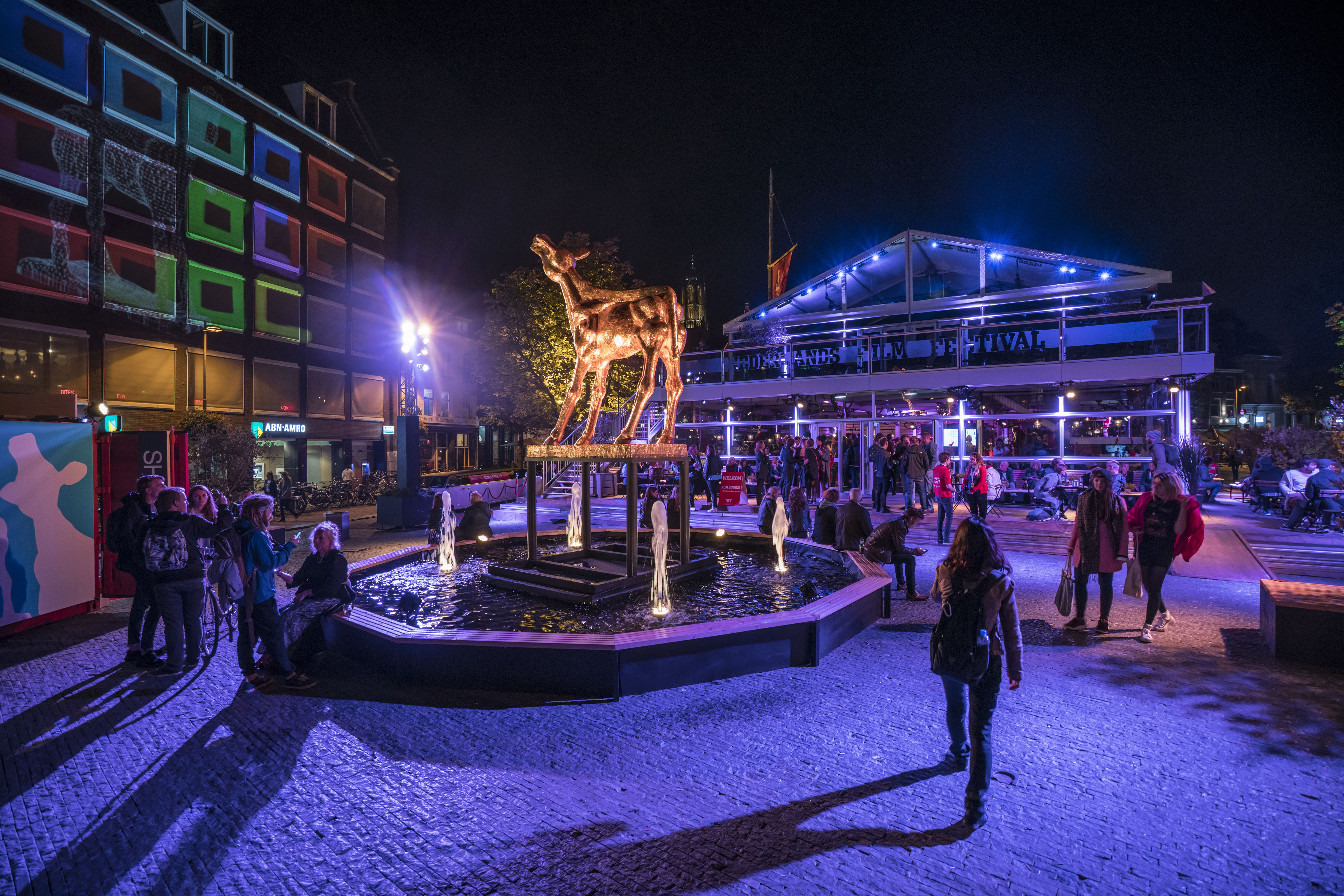
The trophy is a calf. Not a statuette of an actor in dramatic pose, not a winged figure or an abstract slab, but a small bronze calf with the slightly bewildered look of something fresh on its legs. Every September, when Utrecht thickens with film posters and queues outside the Tuschinski-style picture houses, the Gouden Kalf — the Golden Calf — waits in its velvet case for the closing night. It is the Dutch Oscar, and like the country that made it, it refuses to take itself too seriously.
A Festival the Filmmakers Built
The Netherlands Film Festival was the idea of one man, the filmmaker Jos Stelling, who in 1981 looked at the Dutch cinema landscape and decided it needed somewhere to gather. He called the first edition the *Nederlandse Filmdagen* — Netherlands Film Days — and aimed it squarely at the people in the industry. There was no red carpet to speak of. There were directors arguing about lenses and producers shopping for distribution, and the whole thing felt less like a festival than a long working weekend. The audience came later, drawn by the films and by the discovery that Dutch cinema, watched in concentration over ten days, has a flavor distinct from anyone else's. By 2016, the 36th edition pulled in more than 150,000 visitors — still industry-rooted, now genuinely public.
Calves, Crystal, Diamonds
The Golden Calves are awarded on closing night to the best films, directors, and actors — a working filmmaker's prize given by a jury that has actually watched everything. Around them orbit a constellation of more practical trophies. The Crystal Film honours any Dutch documentary that crosses 10,000 tickets; the Golden Film, 100,000; the Platinum, 400,000; the Diamond, a full million. It is one of the most clear-eyed reward systems in world cinema — a public ledger of which Dutch films the Dutch actually went to see. Alongside the Calves sit specialty awards: the Dutch Film Critics prize, the Tuschinski Award, the NPS Award for best short, a Teen Award voted by the audience that will inherit Dutch cinema, and a poster prize that treats the marketing art as art.
The Canon
In 2007 the festival did something only the Dutch would do: it published a Canon of Dutch Cinema. Sixteen films, ranging from a 1905 Willy Mullens short with the magnificent title *The Misadventure of a French Gentleman Without Pants at the Zandvoort Beach* to Michaël Dudok de Wit's quietly devastating 2000 animation *Father and Daughter*. Between them: Joris Ivens's *Rain* (1929), still studied in film schools for what it does with weather; Bert Haanstra's *Fanfare* (1958); Paul Verhoeven's *Turkish Delight* (1973), a film that announced a director and ruffled a country; *Antonia's Line* (1995); Dick Maas's *Flodder* (1986), proof that the Dutch can do comic vulgarity with style. The Canon is a love letter and an argument — a claim that small countries can have great cinemas if they treat their own past with seriousness.
Utrecht in September
Why Utrecht and not Amsterdam? Partly because Stelling lived there. Partly because Utrecht has the right scale — a medieval inner city compact enough that you can walk from a 9 a.m. shorts program at one cinema to a midnight documentary at another, stopping for *bitterballen* on a canal bench in between. The festival sprawls through the city's historic centres, with screenings in the Neude and along the Oudegracht, the canal whose water-level wharves give Utrecht its distinctive double-deck streets. Each year since 1992 a special guest is invited — Paul Schrader in '92, Rutger Hauer in '94, Krzysztof Zanussi a year before that — and they come less for the prize money than for the conversations. The Netherlands Film Festival has always understood that the best part of a film festival is the talking afterwards, on the way to the next screening, in the slanting amber light of a Utrecht autumn.
From the Air
The festival is centred on Utrecht's medieval inner city, around 52.08°N, 5.12°E. From altitude, Utrecht reads as a tight cluster of red roofs and narrow canals organized around the Dom Tower (112 meters tall, the highest church spire in the Netherlands), with the broader green ring of the historic *singel* canals tracing the old city walls. Best viewed at 3,000–5,000 ft to pick out the cinema district near the Neude. Nearest airfield is Hilversum (EHHV); Schiphol (EHAM) is roughly 35 km northwest.