Neville Ranch Raid
Glenn Neville peered out the window into the dim twilight of March 25, 1918, and saw fifty horsemen approaching. He had ridden eight hours straight from Van Horn to reach this isolated ranch on the Rio Grande, racing against whispered warnings of an imminent attack. Now the warnings had become riders with rifles. What Glenn could not know, as the first shots shattered the evening silence, was that this raid would be the last major Mexican incursion into Texas during the Bandit War, a final violent echo of the bloodshed that had convulsed the Big Bend borderlands since the Mexican Revolution began eight years earlier.
A Ranch on the Edge of Two Worlds
The Neville Ranch stretched for eighteen miles along the Rio Grande, beginning just six miles northwest of the village of Porvenir. In this remote corner of Presidio County, the border was more concept than barrier. Edwin W. Neville had carved out a life here with his wife Anna and their five children, but the chaos of the Mexican Revolution had reached even this distant place. After Christmas Day 1917, when raiders killed three people at nearby Brite Ranch, Edwin sent Anna and four of their children to the safety of Van Horn. Only his eldest son Glenn remained, along with Rosa Castillo, a Mexican servant, her husband, and their three children. The lower ranch complex, where they lived, had no telephone connection to the outside world. If trouble came, there would be no way to call for help.
The Warning That Came Too Late
On the morning of March 25, Captain Leonard Matlock of the 8th Cavalry received intelligence at his garrison in Candelaria: an attack on Neville Ranch was imminent. He dispatched Lieutenant Gaines with a patrol to warn Edwin Neville, but the rancher was already in Van Horn buying supplies. When Edwin heard the same rumors in town, he and Glenn immediately mounted up for the grueling eight-hour ride home. They arrived to find the ranch undisturbed and gathered everyone in the family house to discuss what to do next. It was during this conversation that Glenn heard sounds outside and went to investigate. The approaching horsemen opened fire the moment they saw movement at the window.
A Night of Terror
The house offered little protection against fifty armed riders. The Nevilles and Castillos fled to a ditch three hundred yards away, but Glenn was shot in the head during the escape. As he lay wounded, the raiders approached and beat him to death with their rifle butts. Rosa Castillo was shot and sexually assaulted in front of her children before being killed and mutilated. Her husband managed to escape on a pony. Edwin fled on foot into the desert night, where he was later found wandering in shock. The raiders spent hours pillaging the ranch of horses, food, clothing, and supplies before riding south toward Mexico. Many of them were believed to have relatives who had lived in Porvenir, the village where Texas Rangers had executed fifteen Mexican men two months earlier.
The Pursuit into Mexico
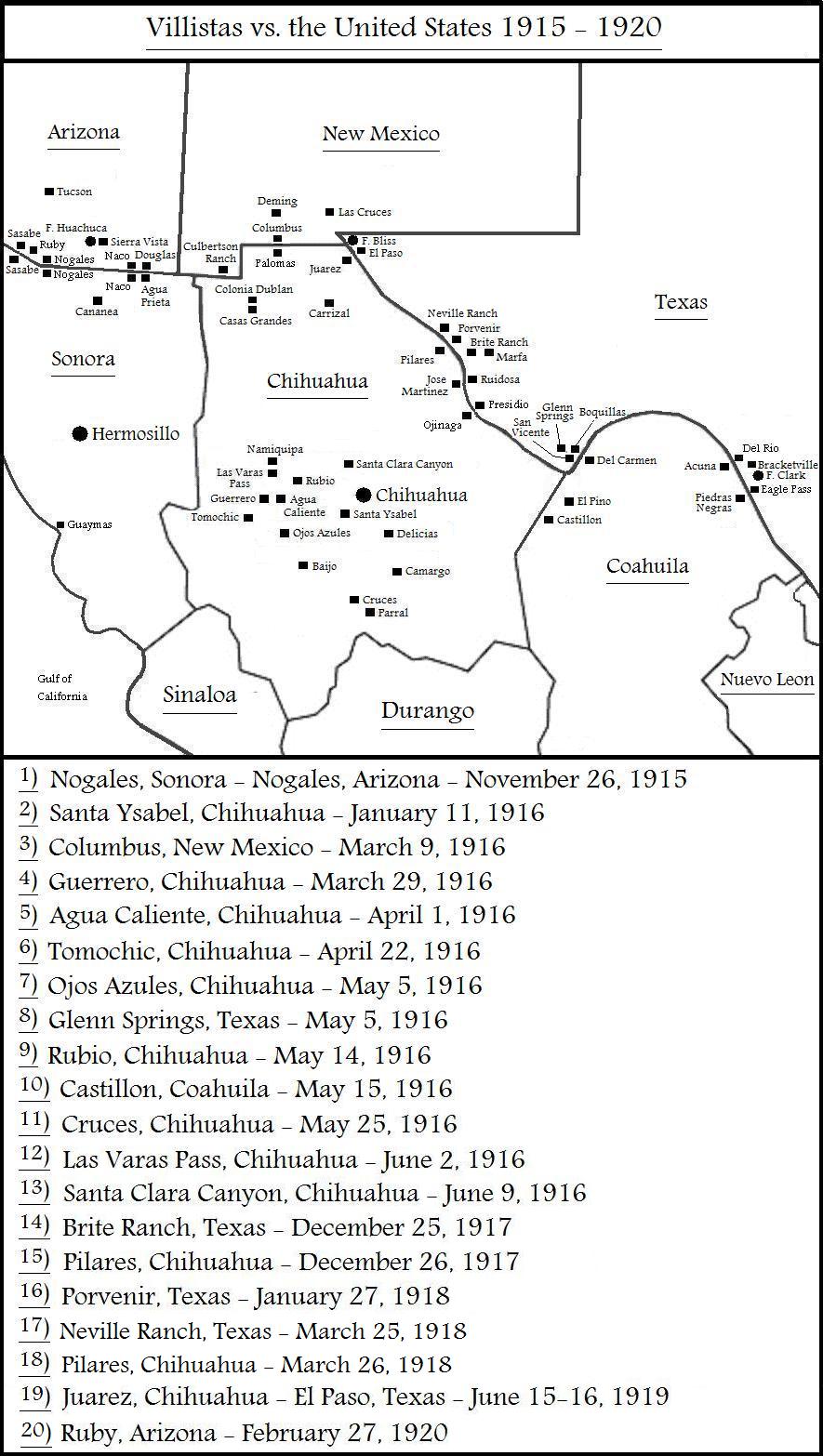
Mr. Castillo found Lieutenant Gaines and his patrol six miles from the ranch and reported what had happened. Within hours, Colonel George Langhorne had mobilized Troop G of the 8th Cavalry from Everett Ranch and Troop A from Marfa. By four in the afternoon on March 26, Captain Henry H. Anderson had assembled both troops with a mule train of supplies and crossed the Rio Grande into Chihuahua. The pursuit covered seventy miles over rough mountain terrain before the raiders doubled back toward the village of Pilares. Unable to escape, they laid an ambush that turned into a running eleven-mile battle. Residents of Pilares and possibly some Carrancista soldiers joined the fight.
The Village That Burned
When the battle ended, Captain Anderson ordered his men to burn every building in Pilares except one house. Among the weapons recovered were German-made Mauser rifles, hinting at possible foreign involvement, along with evidence linking the village to both the Brite and Neville raids. The cavalry found horses belonging to the Neville ranch and recovered Glenn's body. Private Carl Alberts was the only American killed. Mexican casualties ranged from ten to thirty-three dead, with another eight wounded. Colonel Langhorne later reported that a Carrancista officer named Enrique Montova had boasted about fighting the Americans while pretending to assist them. The troops returned to Texas just ahead of a larger Carrancista force. The Neville Ranch raid was the last serious Mexican attack on Texas soil during the Bandit War, closing a cycle of violence that had begun with the chaos of revolution and deepened through massacre and revenge.
From the Air
The site of Neville Ranch lies at 30.50N, 104.87W in the remote Big Bend region of Presidio County, Texas. From the air, the Rio Grande traces the international border just to the south, with the rugged Candelaria Rim visible to the southwest. The nearest airfield is Marfa Municipal Airport (KMRF), approximately 40 miles to the north. The terrain is harsh desert scrubland with scattered mesas. Best viewed at 3,000-5,000 feet AGL during morning or late afternoon when shadows accentuate the landscape. The site of Pilares, across the Rio Grande in Chihuahua, is visible to the south.