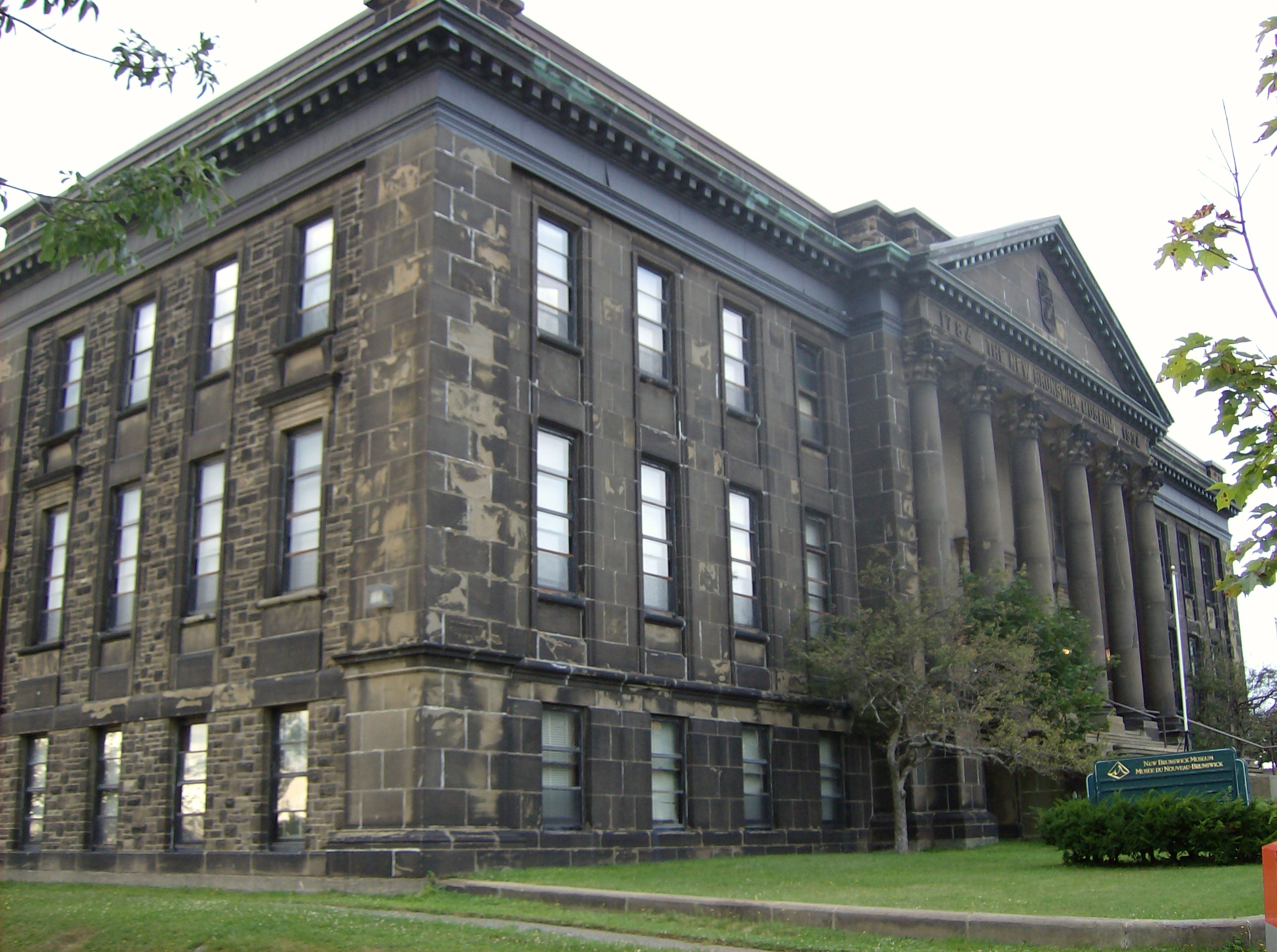
New Brunswick Museum
Abraham Gesner had a problem. The geologist and inventor -- who would later develop kerosene and help launch the petroleum age -- had assembled a fine collection of natural history specimens, but by 1843 he was broke. His creditors seized the collection, and here the story takes an unexpected turn: rather than auction off the minerals and zoological specimens, they donated everything to the Saint John Mechanics' Institute. It was an act of civic generosity that planted the seed for what would become Canada's oldest continuing museum. The New Brunswick Museum traces its lineage to that single room in the Mechanics' Institute where Gesner first displayed his treasures on April 5, 1842.
From One Room to a Province's Memory
The museum's early decades were a story of accumulation driven by geography. Saint John was a major port, and an 1863 annual report described the growing collection as containing "a large and valuable collection of minerals, a great variety of zoological specimens, and many Chinese, Indian and other curiosities" that "frequently receives additions from foreign sea captains and others who get into their possession foreign articles of an attractive description." Sailors, in other words, kept bringing things back. When the Mechanics' Institute closed in 1890, the Natural History Society of New Brunswick took custody of the collection, moving it first to the Market Building and then, in 1906, to 72 Union Street. Under the entomologist Dr. William McIntosh, who served as curator and later director, the collection expanded until the cramped quarters on Union Street could no longer contain it.
Douglas Avenue and a Prime Minister's Blessing
In 1934, a new provincial museum facility opened on Douglas Avenue in Saint John, officially inaugurated by Prime Minister R.B. Bennett. The timing was significant: 1934 marked the 150th anniversary of New Brunswick's founding, and the new building was intended as a statement of provincial identity during the depths of the Great Depression. By 1942, the museum's collections, building, and properties were formally transferred to become the property of the people of New Brunswick. What had begun as one man's bankruptcy had become public patrimony. Over the following decades, the museum expanded beyond natural sciences to build one of the largest collections of 19th-century decorative arts and Canadiana in Atlantic Canada, reflecting the province's long history as a center of shipbuilding, lumber, and transatlantic trade.
A Museum in Search of a Home
By the 1990s, the museum had outgrown Douglas Avenue. In April 1996, exhibition galleries moved to Market Square in leased space in uptown Saint John, offering three floors and 60,000 square feet of exhibition space. The Collections Centre, archives, and research library stayed behind on Douglas Avenue -- a split identity that would define the museum for the next quarter century. In 2017, the New Brunswick government announced plans for a new centralized facility in uptown Saint John, but a change in government in 2018 killed the project as a cost-cutting measure. The museum's fortunes shifted again in July 2023, when officials announced that the institution would return to its 1934 home on Douglas Avenue. Diamond Schmitt Architects won the contract to design the refurbishment and major addition to the nearly century-old facility, with approximately $108 million in government funding secured and total project costs estimated at around $141 million. Construction began in late 2024.
What Gesner Started
The New Brunswick Museum today holds collections that span natural sciences, fine and decorative arts, and provincial history. It is affiliated with the Canadian Museums Association, the Canadian Heritage Information Network, and the Virtual Museum of Canada. But its most compelling exhibit might be its own history -- the improbable journey from a bankrupt geologist's one-room display to a provincial institution preparing for a multi-million-dollar reinvention. Gesner, who went on to refine kerosene from coal and petroleum, could not have imagined that his failed museum venture would outlast his more celebrated achievements. The collection that his creditors gave away in 1843 has been growing ever since, carried forward by sea captains, entomologists, and the stubbornly civic-minded citizens of a port city that has always understood the value of what washes ashore.
From the Air
Located at 45.27°N, 66.07°W in Saint John, New Brunswick. The Douglas Avenue facility is on the city's north side, near the Reversing Falls. Nearest airport is Saint John Airport (CYSJ), approximately 15 km east. The Saint John River, harbour, and urban core are prominent visual landmarks. Best viewed at 2,000-3,000 feet AGL for urban context.