New Cathedral of Salamanca
On the north facade of Salamanca's New Cathedral, among the saints and demons and tangled vines carved into the Puerta de Ramos, there is an astronaut. He floats in full spacesuit, complete with boots and helmet, an anachronism so brazen that first-time visitors assume it must be a hoax. It is not. During a 1992 restoration, stonemason Miguel Romero carved the figure into the portal, following a centuries-old tradition of adding a contemporary element with each repair. The astronaut is a fitting symbol for a cathedral that has always been about ambition stretched across time. Construction began in 1513 and was not completed until 1733, a span of 220 years during which Gothic gave way to Renaissance, and Renaissance gave way to Baroque.
Why Build a Second Cathedral?
By the early 16th century, Salamanca's Old Cathedral, a Romanesque-Gothic gem completed in the 14th century, was considered too small for a city that had become one of Europe's great intellectual centers. Ferdinand V of Castile commissioned a new cathedral, and the result would be one of the largest in Spain, with a bell tower reaching 92 meters. Rather than demolish the old building, the planners chose to build alongside it, keeping the Old Cathedral open for worship during the two centuries of construction. When the work was finally finished in the 18th century, there was talk of tearing the old one down, but the idea was abandoned. The south wall of the New Cathedral rests directly on the reinforced north wall of the Old, binding the two buildings together physically and permanently.
Three Styles Under One Roof
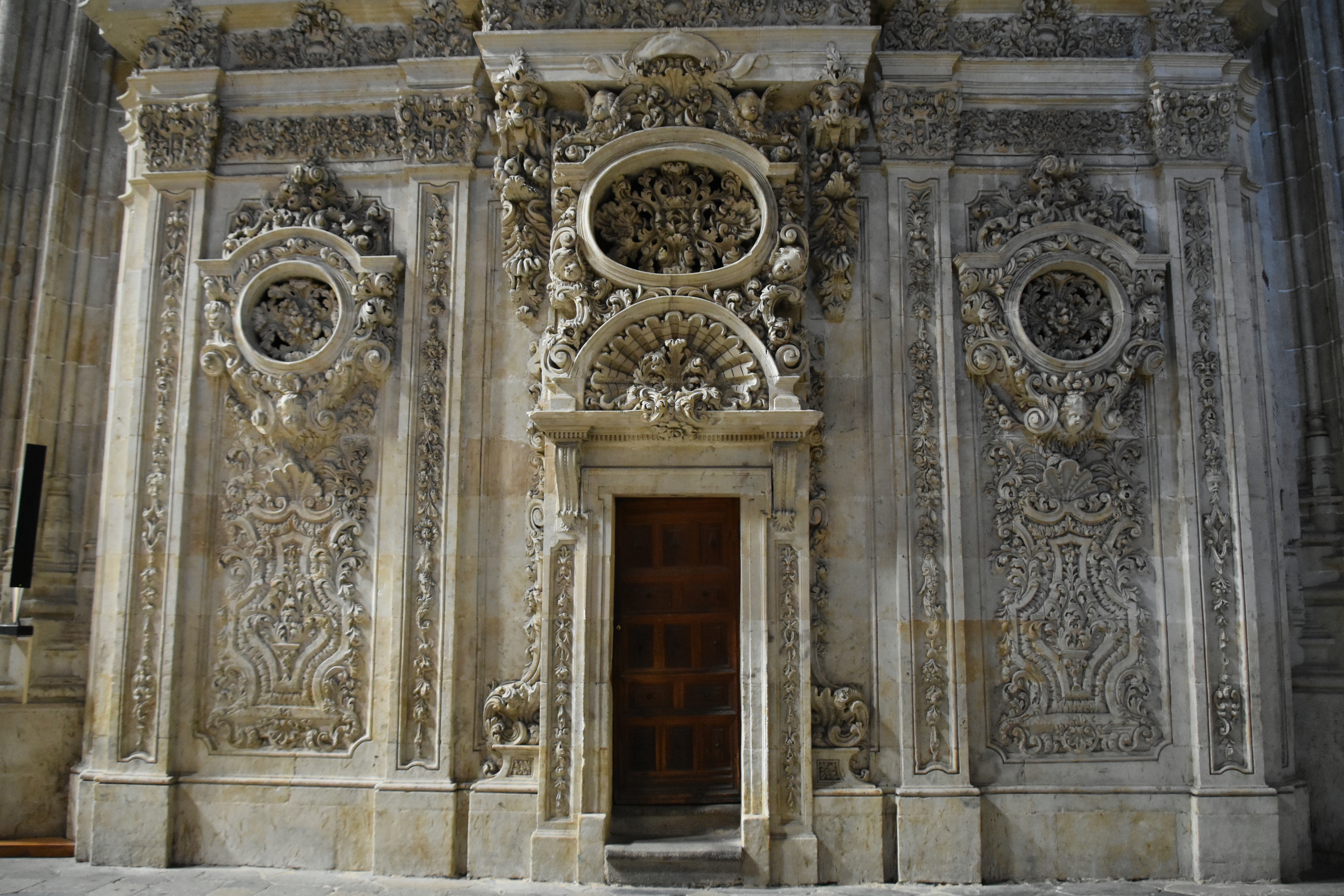
The cathedral's extraordinary construction timeline meant that architectural fashion shifted beneath the builders' feet. The earliest work is late Gothic, with soaring ribbed vaults and pointed arches. The Plateresque style, that distinctly Spanish fusion of Gothic structure and Renaissance ornament, dominates the facades, their surfaces covered with intricate sculptural programs that seem to vibrate with detail. By the time the dome and later additions were completed, full Baroque had arrived, bringing curves, drama, and an emphasis on light. The main chapel, covered by a starred vault that matches the central nave's design but adds color, once held an altarpiece by Alberto de Churriguera. It survived only eleven years before being dismantled in 1743, a reminder that even within this building, tastes kept shifting.
Sound and Stone
Two organs face each other across the nave. The older one, on the Epistle side, dates to the 16th century and speaks in Renaissance tones. The Gospel Organ, built in 1744 by master Pedro Echevarria, is a Baroque instrument that was modified in the 19th century but retained its essential character. Around 1950, a Belgian specialist called to tune it was astonished to learn the organ had gone nearly a century without tuning, yet remained in excellent condition, a testament to Salamanca's dry climate. In 1992, the same year the astronaut was carved, the Gospel Organ was restored with support from the Japanese monarchy, at the recommendation of Japanese organ master Tsuji. The lateral chapels, designed to a single model with star-shaped vaults and arcosolios intended for burials, create a rhythm of intimate spaces along the nave's length.
The Astronaut and the Tradition of the Living Stone
The astronaut carved by Miguel Romero during the 1992 restoration of the Puerta de Ramos has become the cathedral's most photographed detail, but it represents something deeper than a sculptor's whimsy. Spanish cathedral restoration has long included the practice of adding a contemporary motif to mark the era of repair, a way of keeping the building alive across centuries. The astronaut joins an ice-cream-eating figure and other modern touches that reward the careful observer. On September 20, 2010, vandals broke the astronaut's right arm, but the damage was repaired. The cathedral remains the seat of the Diocese of Salamanca, hosting the exhibition Las Edades del Hombre in 1993, the same event that prompted the restoration in which the astronaut first appeared.
From the Air
Located at 40.96N, 5.67W in Salamanca, Castile and Leon, Spain. The cathedral complex is prominent in the old city skyline, with the New Cathedral's 92-meter bell tower serving as the tallest structure. The Old and New Cathedrals sit side by side on the southern edge of the old town, overlooking the Tormes River. Nearest airport is LESA (Salamanca) approximately 15 km east. Best viewed from 2,000-3,000 ft AGL. The distinctive golden sandstone of Salamanca's buildings makes the city center easy to identify from the air.