New Jersey Audubon Society
Every May, teams of birders fan out across New Jersey in a 24-hour sprint to identify as many species as possible. They scan mudflats on Delaware Bay, listen for warblers in the Pine Barrens, and glass the skies above Cape May -- all for the World Series of Birding, organized by an organization that has been watching over New Jersey's wildlife since 1897. New Jersey Audubon is one of the state's oldest and largest environmental groups, with staffed nature centers scattered from Bergen County to Cape May. Despite the name, it has no affiliation with the National Audubon Society. It is its own creature entirely.
Hawks, Horseshoe Crabs, and the Flyway
New Jersey sits under one of North America's great migratory corridors, and New Jersey Audubon has built much of its research program around tracking what flies overhead. Hawk watches at Montclair, Sandy Hook, and Cape May monitor long-term trends in raptor populations -- data sets that now span decades and offer some of the most detailed pictures of how birds of prey are faring along the Atlantic seaboard. The organization's "Oases Along the Flyway" program uses radar and field observation to identify the stopover habitats that migrating songbirds depend on, patches of forest and wetland where exhausted travelers rest and refuel. On Delaware Bay, New Jersey Audubon has fought for a moratorium on horseshoe crab harvesting to protect the red knot, a shorebird whose survival depends on gorging on crab eggs during its spring migration north.
The Nature Center Network
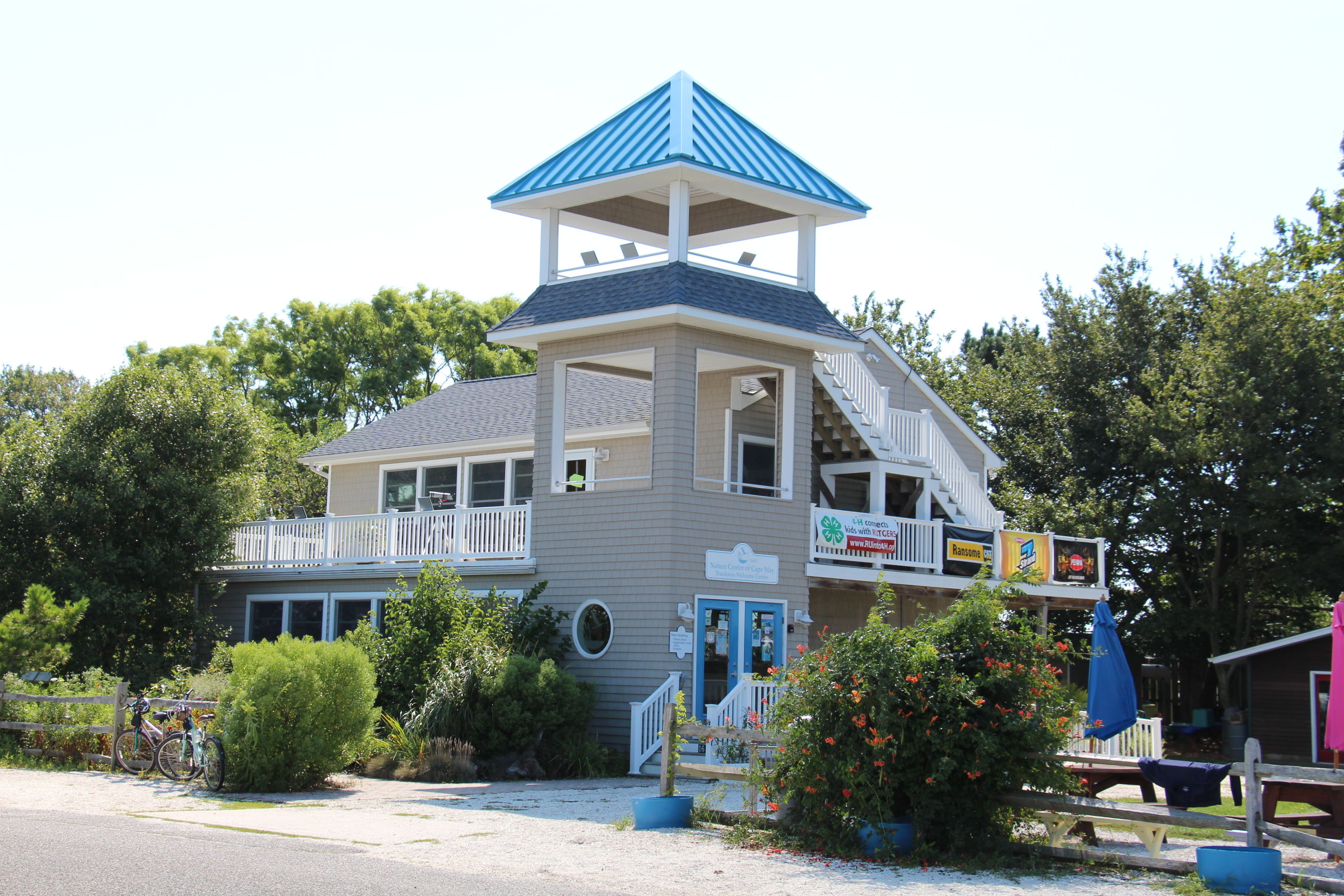
Headquarters sits at the Scherman-Hoffman Wildlife Sanctuary in Bernardsville, Somerset County, where woodland trails follow the ridgeline above the Passaic River headwaters. From there, the organization operates nature centers across the state: two Cape May Bird Observatory locations -- one in Cape May Court House, the other at Cape May Point -- the Hawk Rise Sanctuary in Linden, the Lorrimer Sanctuary in Franklin Lakes, and the Nature Center of Cape May. Each center runs field trips, lectures, and exhibits, and most adjoin wildlife sanctuaries that serve as outdoor classrooms. Beyond the staffed centers, dozens of unstaffed sanctuaries dot the New Jersey landscape, small pockets of protected habitat that collectively form a statewide network of refugia.
Twenty-Four Hours, One State, Every Bird
The World Series of Birding may be New Jersey Audubon's most visible creation. Held annually on a Saturday in mid-May -- timed to the peak of spring migration -- the competition challenges teams to identify as many bird species as possible within New Jersey's borders in a single day. Some teams cover the entire state; others focus on specific regions or compete on foot or by bicycle. The event functions as both a serious birding competition and a major fundraiser, with teams collecting pledges for each species tallied. New Jersey's compact geography and extraordinary habitat diversity make it uniquely suited to such a contest: salt marsh, barrier beach, deciduous forest, coastal plain, and mountain ridge all fit within a state smaller than many western counties.
Conservation Without a National Office
New Jersey Audubon's independence from the National Audubon Society is more than an organizational footnote -- it shapes how the group operates. Without a national parent, the organization focuses entirely on New Jersey's specific conservation challenges: grassland habitat loss, shorebird decline, raptor population monitoring, and the preservation of migration corridors through one of the most densely populated states in the country. The organization works with legislators on wildlife funding, partners with landowners to protect grassland habitats, and trains teachers through professional development programs and publications like "Bridges to the Natural World." Charity Navigator has given New Jersey Audubon its highest four-star rating, a reflection of both its conservation impact and its efficient management. For an organization approaching its 130th year, the mission remains deceptively simple: watch the birds, protect what they need, and teach people to care.
From the Air
Located at 40.744N, 74.552W. Headquarters at the Scherman-Hoffman Wildlife Sanctuary in Bernardsville, Somerset County, New Jersey, sits along a wooded ridge visible as a dark green patch amid suburban development. The sanctuary is best spotted by following the Passaic River headwaters corridor. Nearby airports include Morristown Municipal Airport (KMMU, 8 nm NE) and Somerset Airport (KSMQ, 10 nm SW). At 2,500-3,500 ft AGL, look for the forested ridge running north-south through Bernardsville.