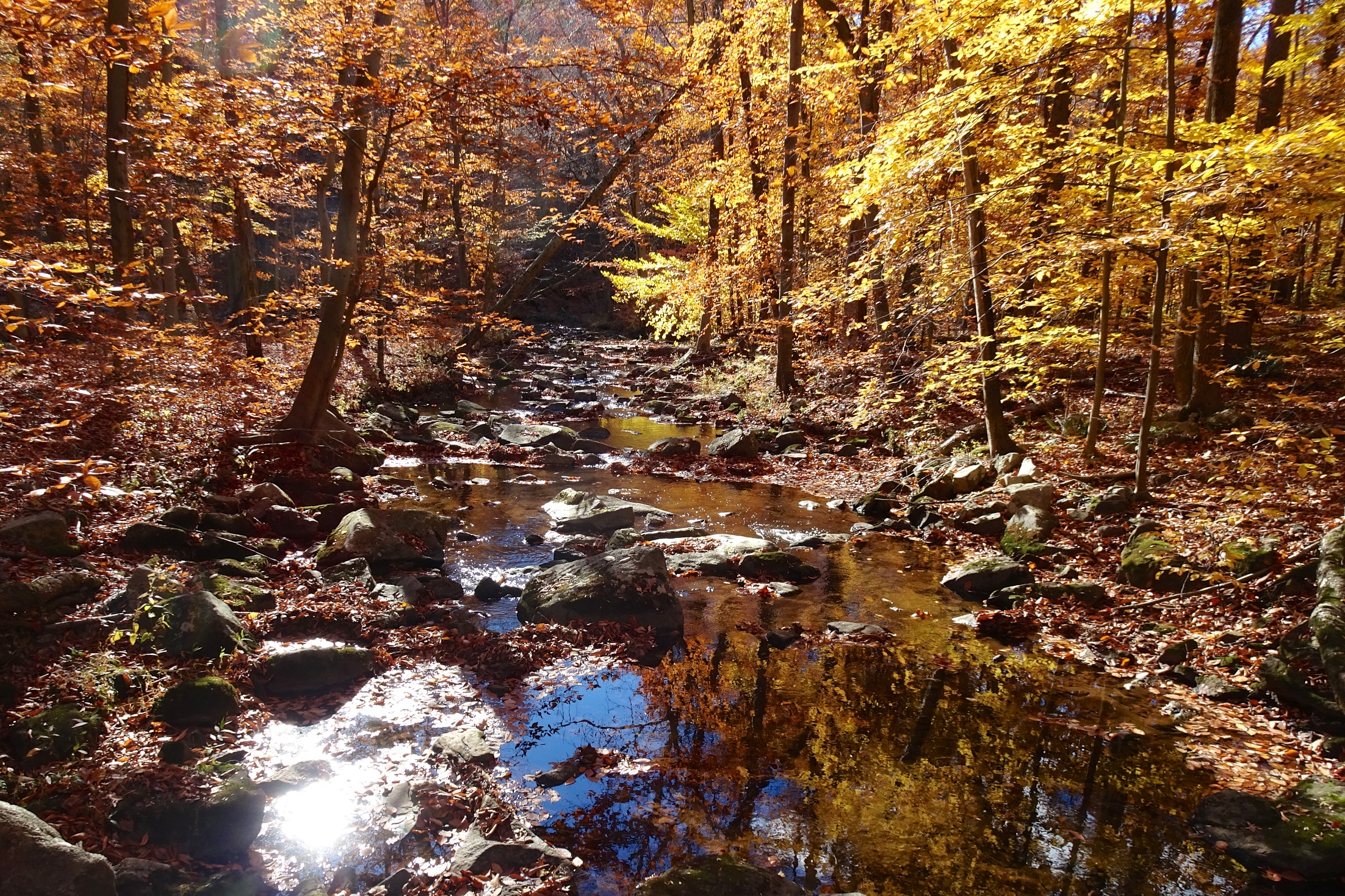
New Jersey Brigade Encampment Site
The fireplace stones are still there, half-buried in the forest floor. Walk the Patriots' Path through the woods of Bernardsville and you will find them -- hearth remnants from the winter of 1779-80, when roughly 1,300 men of the New Jersey Brigade made camp in these hills while the rest of the Continental Army shivered at nearby Jockey Hollow. It was the "Hard Winter," remembered as one of the most punishing seasons of the entire Revolutionary War, and the New Jersey troops endured it here, on a wooded slope between the Passaic River and Hardscrabble Road, in what is now one of four contributing sites to Morristown National Historical Park.
The Hard Winter's Separate Camp
General Washington chose the Morristown area for its defensive terrain -- hills, dense forest, and enough distance from British-held New York to discourage a winter assault. The main encampment at Jockey Hollow housed thousands of Continental soldiers in log huts, but the New Jersey Brigade drew a separate assignment. The 1st, 2nd, and 3rd New Jersey Regiments, along with Spencer's Additional Continental Regiment, established their own camp on this hillside in Bernardsville, straddling the border with Harding Township in Morris County. Why the separation? The New Jersey men knew this ground. They were defending their home state, and their encampment sat along routes they could patrol against British raiding parties probing westward from the coast.
What Hardscrabble Means
The road that borders the encampment site carries the name Hardscrabble, and the word applied to the winter itself. The season of 1779-80 brought some of the coldest temperatures recorded in eighteenth-century North America. Snow piled deep enough to halt supply wagons. Rations ran short. The Continental Army, chronically underfunded by a Congress that could barely govern, relied on foraging and the grudging cooperation of local farmers to feed its men. In the New Jersey Brigade's camp, soldiers built log huts and constructed fireplaces from the local stone -- the same hearths whose remnants mark the site today. They burned enormous quantities of wood, felling trees in widening circles around the camp until the hillside was stripped bare. The landscape has since regrown into mature hardwood forest, but the pattern of deforestation and regrowth is written in the age of the oldest surviving trees.
Stones in the Forest
Today the encampment site is accessible via the Patriots' Path, a regional trail network also known locally as the New Jersey Brigade Trail. One trailhead sits on Hardscrabble Road, another on Jockey Hollow Road. The path crosses a footbridge over the Passaic River -- here just a modest stream near its headwaters, nothing like the industrial waterway it becomes downstream -- and climbs into the woods where the brigade camped. Interpretive signs mark the locations of hut sites and fireplaces. The Cross Estate Gardens, a cultivated property added to the national park in 1975, adjoins the encampment area and offers a contrasting landscape: formal gardens and stone walls in place of forest floor and hearth rubble.
Jersey Men Holding Jersey Ground
The New Jersey Brigade's separate encampment carried a particular weight. These were not Massachusetts men or Virginians sent to a distant theater. They were New Jerseyans camped in New Jersey, enduring the worst winter of the war on soil they knew personally. The state had been a battleground since 1776, crossed and recrossed by both armies, its farms stripped by requisitions and raids. For the 1,300 soldiers on this hillside, the war was not an abstraction -- it was happening to their neighbors, their families, their own fields. That proximity shaped the brigade's identity and its willingness to endure conditions that drove other units to near-mutiny. Walking the trail today, through a forest that has healed over two centuries of regrowth, the fireplace stones are the only tangible proof that men once suffered through a winter here for the sake of a revolution they could see from their front porches.
From the Air
Located at 40.748N, 74.559W in Bernardsville, Somerset County, New Jersey, extending into Harding Township, Morris County. The encampment site lies within the wooded corridor of Morristown National Historical Park, visible as a continuous forest belt south of Jockey Hollow. The Passaic River headwaters thread through the area as a narrow stream. Nearby airports include Morristown Municipal Airport (KMMU, 6 nm NE) and Somerset Airport (KSMQ, 12 nm SW). Best viewed at 2,000-3,000 ft AGL; the Cross Estate Gardens appear as a clearing adjacent to the forested encampment area.