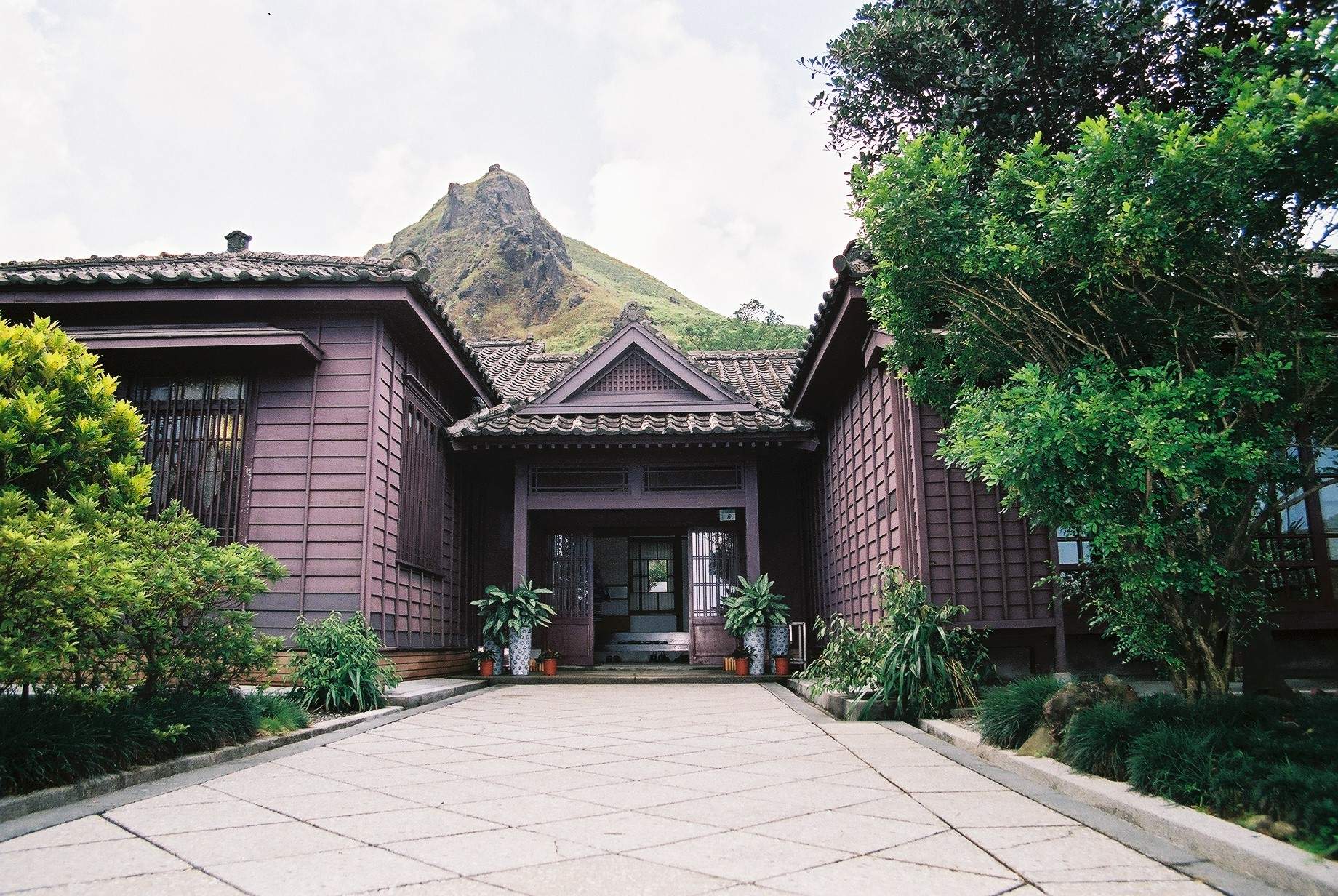
New Taipei City Gold Museum
The gold brick weighs 220.30 kilograms. It is 999.9 parts pure. It sits on the second floor of the Gold Building in Jinguashi, and visitors are invited to touch it - to place their hands on a world-record concentration of refined gold and feel, for a moment, what all the digging was about. The brick is cool and impossibly dense, the weight of a small motorcycle compressed into a shape you could almost carry. Almost.
The New Taipei City Gold Museum occupies the bones of the Taiwan Metal Mining Corporation's former operations in Ruifang District - offices that once processed paperwork for one of East Asia's most productive gold fields, dormitories where miners slept between shifts, and refining buildings where raw ore became something worth killing for. The museum opened on November 4, 2004, initially as the Gold Ecological Park, and was renamed after the formation of New Taipei City. As of recent years, some signage at the front entrance still displayed the old name, a small bureaucratic lag that somehow suits a place devoted to remembering what was.
Offices Turned Inside Out
The museum is not a single building but an open-air campus spread across the mountainside. The Gold Building anchors the complex, its first floor tracing the discovery of gold in the surrounding hills through displays of Benshan Tunnel artifacts, antique mining equipment, and the transport systems - cable cars and rail carts - that hauled ore down to the smelter. But the museum does not shy from the darkest chapter of this landscape. The first floor also documents the Kinkaseki prisoner-of-war camp, where during World War II the Japanese military forced Allied prisoners to labor in the gold mines under brutal conditions. The display is small relative to the suffering it represents, but its presence in the same room as the mining equipment makes a point that larger exhibits might dilute: the gold and the cruelty came from the same tunnels.
Crown Prince and Concrete Memory
Beyond the Gold Building, the museum grounds include the Crown Prince Chalet, a Japanese-era residence built for a visit by the imperial heir; the Jin Shui Special Exhibition Hall; the Gold Refining Building, where the chemical transformation from ore to metal took place; and Four Joined Japanese-Style Residences that preserve domestic architecture from the colonial period. The Benshan Fifth Tunnel offers an experiential component - visitors can walk into the mountain itself, following a path that miners once took into the dark. The tunnel is lit now, safe, narrated. But the walls are the original rock, and the air inside carries the mineral chill of deep earth. Walking through it, the abstraction of 'gold mining' becomes concrete. The mountain is not metaphorically hollowed out. It is literally hollowed out, and you are standing inside the void.
Weight You Can Hold
The 220-kilogram gold brick on the second floor is the museum's most famous single object, and for good reason. Gold's density defies intuition. A brick this size looks like it should weigh perhaps thirty kilograms, maybe forty. Instead it weighs as much as three adult humans. Visitors line up to touch it, some trying to lift a corner, all failing. Around the brick, the second floor displays artworks fashioned from gold - sculptures, ornaments, and decorative pieces that demonstrate the metal's malleability and cultural significance across civilizations. The museum uses these objects to pivot from industrial history to material science: gold does not tarnish, does not rust, conducts electricity with minimal resistance, and can be hammered into sheets thin enough to see through. The brick represents the endpoint of a process that began with picks and dynamite in the tunnels beneath the floor - a distillation of geology, labor, chemistry, and human desire into a single gleaming rectangle.
The Mountain's Longer Memory
Jinguashi's mining district extends well beyond the museum's boundaries. The nearby Ogon Shrine, a ruined Shinto temple built in 1898 by the mine's Japanese operators, clings to the mountainside above. The Remains of the 13 Levels - the massive terraced smelter built in 1933 - looms over the coastal highway below. The Yin-yang Sea, where mineral runoff splits the water into gold and blue, marks the point where the mountain's chemistry meets the Pacific. The museum sits at the center of this landscape like a translator, converting the raw physical evidence of extraction into narrative. It does not romanticize the mining era, nor does it condemn it outright. The POW camp documentation and the gold brick occupy the same building, separated by a single flight of stairs. History, the museum seems to argue, is not a story with heroes and villains but a process with inputs and outputs - ore in, gold out, suffering throughout.
From the Air
Located at 25.11°N, 121.86°E on the mountainside above Taiwan's northeast coast in Ruifang District, New Taipei City. The museum complex is part of the broader Jinguashi mining area, visible from altitude as a cluster of historic buildings on a steep green slope between the coast road and the ridgeline. Look for the nearby Remains of the 13 Levels (stepped concrete smelter ruins) and the distinctive Yin-yang Sea (yellow and blue water) along the shore below. Taiwan Taoyuan International Airport (RCTP/TPE) is approximately 80km southwest. Songshan Airport (RCSS/TSA) is about 40km west. The terrain is steep and mountainous with frequent fog along the northeast coast.