New York City Draft Riots
Eleven Black men and boys were hanged in the streets of Manhattan over five days in July 1863. Among the dead was seven-year-old Joseph Reed, a Bermudian child whose uncle, Robert John Simmons of the 54th Massachusetts Infantry Regiment, was at that very moment fighting in South Carolina and would die of wounds received at the assault on Fort Wagner. The boy's murder was not an isolated act of madness -- it was part of the largest civil insurrection in American history apart from the Civil War itself, a convulsion that historian Samuel Eliot Morison later called "equivalent to a Confederate victory."
A $300 Exemption
The Enrollment Act of March 1863 introduced the first federal military draft in American history, and it came with a provision that enraged working-class New Yorkers: any man could buy his way out for $300, roughly a year's wages for a laborer. The exemption clause laid bare a class divide that the war's rhetoric about union and freedom could not paper over. Irish immigrants, who made up a large share of the city's working poor, saw themselves being conscripted to fight a war whose outcome -- the emancipation of enslaved people -- threatened to flood the labor market with new competition. Meanwhile, wealthy New Yorkers and their sons simply wrote a check. Tammany Hall Democrats, sensing the political danger, helped pay commutation fees for some of the drafted, but the structural injustice was unmistakable. The draft lottery drawings began on Saturday, July 11. By Monday morning, the city was on fire.
Five Days of Violence
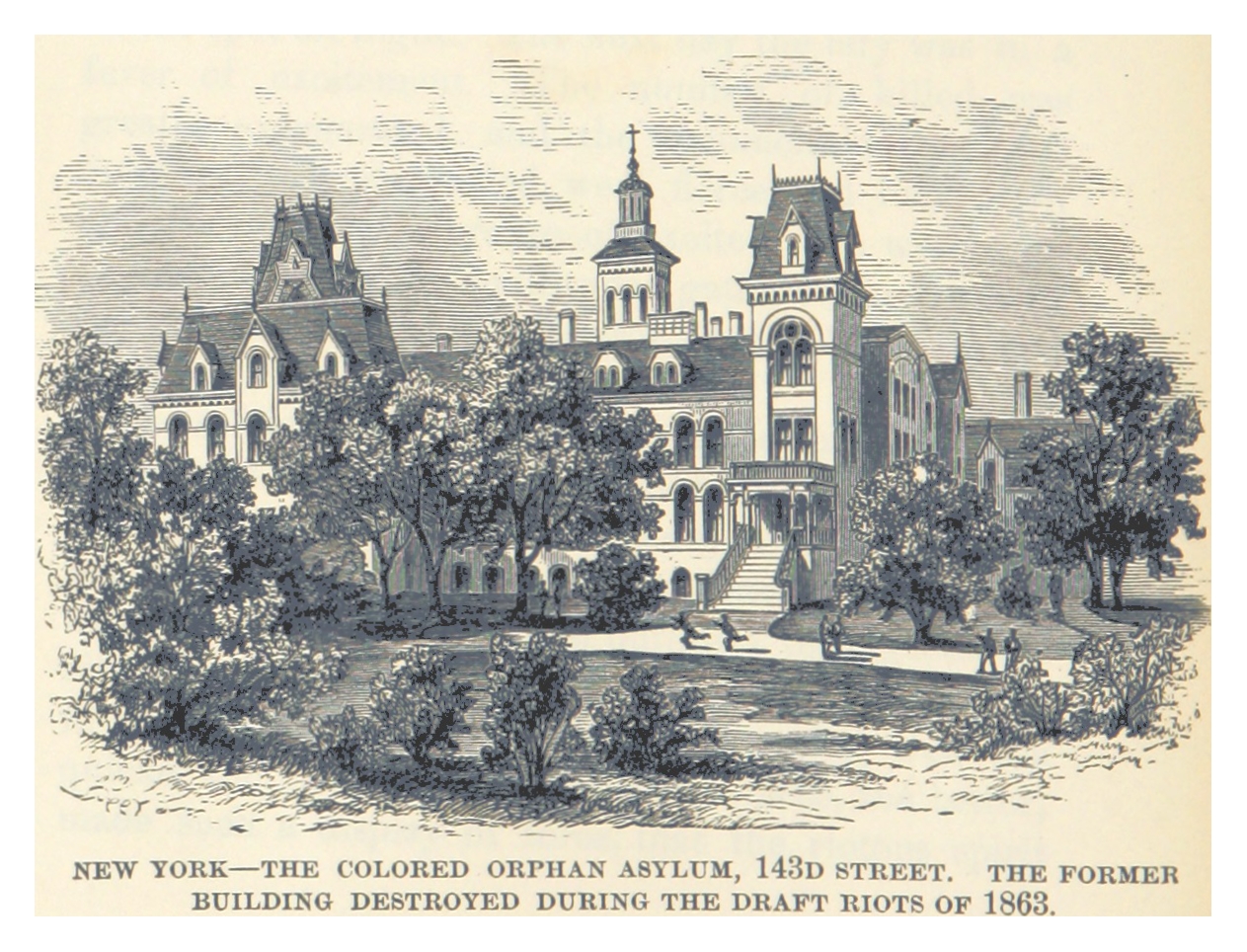
What started as an anti-draft protest on the morning of July 13 became a pogrom by afternoon. Mobs attacked the Colored Orphan Asylum on Fifth Avenue, burning the building to the ground -- though, remarkably, the 233 children inside escaped through a rear exit. Black residents were hunted through the streets, beaten, and lynched from lampposts. Homes were looted and torched. The white working-class rioters turned their fury on anyone associated with the Republican establishment, abolitionists, or the Black community. Police Superintendent John A. Kennedy was beaten so severely by a mob that he could not command his force; commissioners Thomas Coxon Acton and John G. Bergen took over. The reliable estimates put injuries at 2,000 or more, with property damage between $1 million and $5 million -- enormous sums in 1863. Secretary of War Edwin Stanton dispatched five regiments fresh from the Battle of Gettysburg, and by the time more than 4,000 soldiers had garrisoned the city, the violence finally subsided.
The Aftermath No One Expected
The conventional story would end with the troops restoring order. What happened next was more complicated and more remarkable. In December 1863, the Union League Club recruited more than 2,000 Black soldiers, outfitted them, trained them, and in March 1864 honored them with a parade through the same streets where mobs had murdered Black men eight months earlier. A crowd of 100,000 watched the procession, led by police and Union League members, as the regiment marched to the Hudson River docks to ship out. New York's relationship with the war had not been simple -- the city's merchants traded with the South, its Democratic establishment had flirted with secession, and its newspapers had stoked racial resentment -- but by war's end, more than 450,000 soldiers, sailors, and militia had enlisted from New York State, the most of any state in the Union. New York's banks financed the war effort, and its industries outproduced the entire Confederacy.
Echoes on the Streets
The riots exposed tensions between immigrant communities and Black Americans that would recur throughout American urban history -- tensions rooted not in inherent antagonism but in the deliberate structuring of labor markets and political power to pit the vulnerable against one another. The $300 commutation clause was eventually eliminated. The draft continued, and the Union won. But the five days of July 1863 left scars on neighborhoods from the Bowery to Gramercy Park, and the burned shell of the Colored Orphan Asylum became one of the era's most searing images. Martin Scorsese's 2002 film Gangs of New York closes with a fictionalized version of the riots, drawing on Herbert Asbury's 1928 book of the same name. The Broadway musical Paradise Square, which debuted in 2022, dramatizes the events that led to the violence. The draft riots remain a reminder that the Civil War was fought not only on battlefields in Virginia and Pennsylvania, but in the streets of America's largest city.
From the Air
Located at approximately 40.717N, 74.000W in Lower Manhattan. The riots centered on the area between the Bowery and Fifth Avenue, from City Hall north to Gramercy Park. The site of the Colored Orphan Asylum was at Fifth Avenue between 43rd and 44th Streets (now midtown commercial district). Nearby airports: KJFK (JFK International), KLGA (LaGuardia), KEWR (Newark Liberty). Best viewed at 3,000-5,000 ft AGL over Lower Manhattan.