New York Stock Exchange
Twenty-four brokers stood under a buttonwood tree on Wall Street on May 17, 1792, and signed an agreement that would reshape the world economy. The Buttonwood Agreement was barely a paragraph long -- it set a floor commission rate and pledged the signers to trade preferentially with one another. From that informal pact, conducted outdoors because the brokers had no building, grew the New York Stock Exchange: the largest stock exchange on Earth, with a market capitalization exceeding $44 trillion as of January 2026.
Under the Buttonwood Tree
Before the Buttonwood Agreement, securities trading in New York was handled by auctioneers who sold stocks alongside wheat and tobacco. The earliest securities were mostly government bonds -- War Bonds from the Revolutionary War and shares in the Bank of New York, founded by Alexander Hamilton in 1784. The 24 original signers formalized what had been an ad hoc marketplace into something with rules, however rudimentary. By 1817, the brokers had adopted a formal constitution and renamed themselves the New York Stock and Exchange Board. The New-York Gas Light Company, listed in 1824, became the exchange's longest continually listed company -- it survives today as Consolidated Edison, still trading on the same exchange almost exactly two centuries later. The name was shortened to the New York Stock Exchange in 1863, during a Civil War that would test the financial system the exchange had helped build.
The Building on Broad Street
The main NYSE building at 18 Broad Street was completed in 1903, its Beaux Arts facade designed by George B. Post to project the permanence and authority the exchange had earned. Six Corinthian columns frame a pediment filled with marble figures representing commerce and industry. An adjacent building at 11 Wall Street, designed by Trowbridge & Livingston in a similar style, followed in 1922. Both buildings were designated a National Historic Landmark in 1978. Inside, the trading floor became one of the most recognizable rooms in the world -- a cavernous space where men in colored jackets shouted and gestured in a choreography of controlled chaos that persisted well into the electronic age. Until 2005, the right to trade directly on the floor required owning one of 1,366 fixed "seats," a term dating to the 1870s when members literally sat in chairs. Seat prices varied wildly, from $4,000 during the Depression to $4 million before the exchange went public.
Crashes, Bombs, and Bulletproof Glass
The exchange's history reads like a catalog of financial and literal explosions. On September 16, 1920, a horse-drawn wagon packed with dynamite and iron slugs detonated outside the building, killing 38 people and injuring hundreds in what remains one of the deadliest terrorist attacks in American history. The shrapnel pockmarks are still visible on the facade. Nine years later, the Black Thursday crash of October 24, 1929, and the panic selling of Black Tuesday, October 29, helped precipitate the Great Depression. In 1967, Abbie Hoffman and his Yippie followers threw fistfuls of dollar bills from the visitor's gallery onto the trading floor below -- some traders booed, some laughed, and three months later the exchange enclosed the gallery with bulletproof glass. Black Monday in October 1987 saw the Dow drop 22.6% in a single day. The exchange closed for four trading days after September 11, 2001, its longest shutdown since the start of World War I in 1914.
From Floor to Fiber Optic
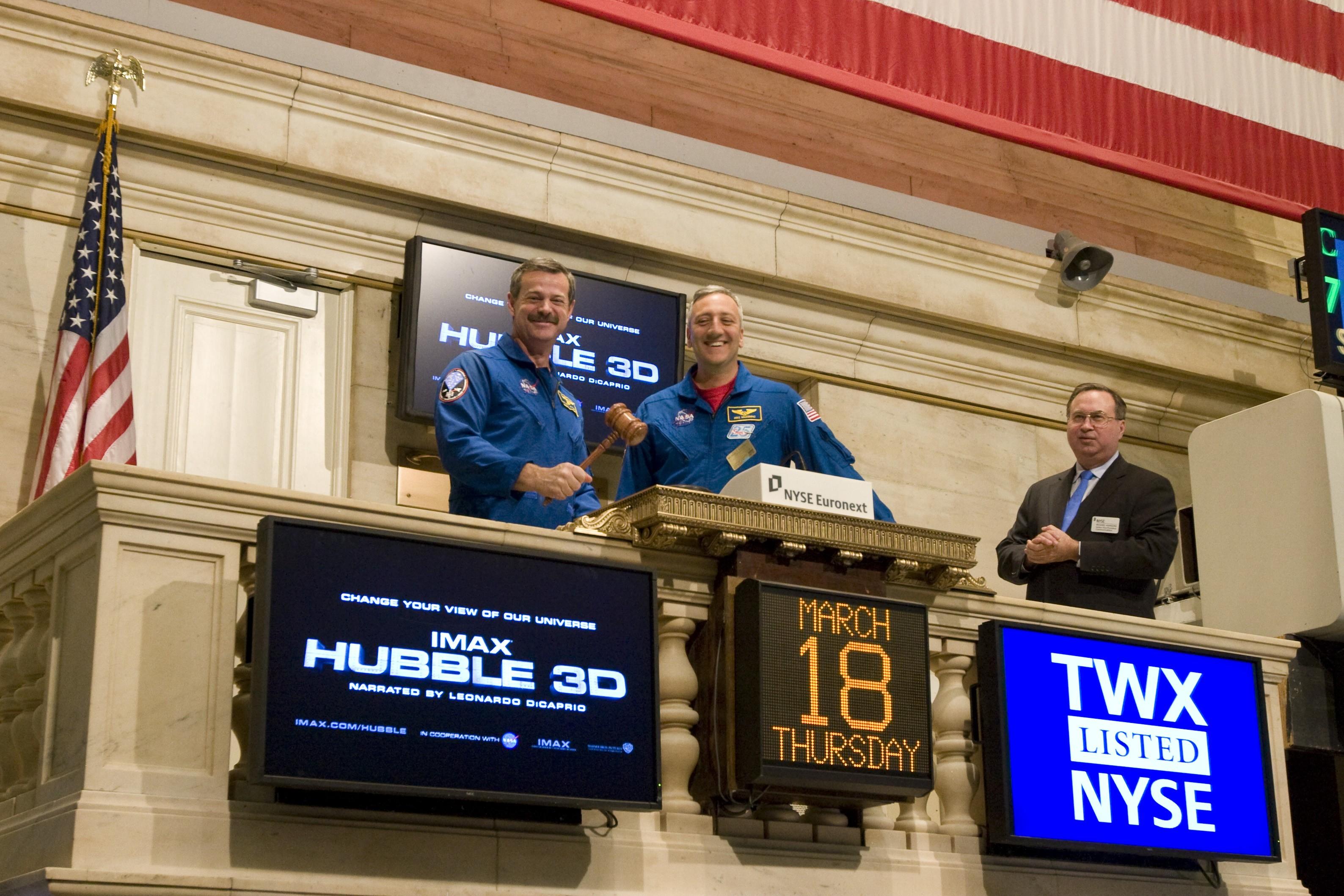
The trading floor that once required 1,366 seat holders and thousands of clerks has been transformed by technology. Electronic trading began supplementing open outcry in the 1990s, and today the vast majority of transactions execute through automated systems at speeds measured in microseconds. The exchange went public in 2006, merged with Euronext in 2007 to form NYSE Euronext, and was acquired by Intercontinental Exchange in 2013. The floor still operates, but its role has shifted from the primary marketplace to a backdrop for opening-bell ceremonies, CNBC broadcasts, and the ritual of watching stock tickers on the kind of screens that replaced the paper tape machines first introduced in 1867. According to a 2022 Gallup poll, approximately 58% of American adults have money invested in the stock market. The buttonwood tree is long gone, but the agreement signed beneath it continues to shape how the world values risk, ambition, and the future itself.
From the Air
Located at approximately 40.707N, 74.011W at the intersection of Broad Street and Wall Street in the Financial District of Lower Manhattan. The Beaux Arts facade of 18 Broad Street faces north toward Wall Street and is identifiable from altitude by its columned entrance and the narrow canyon of Broad Street. Nearby airports: KJFK (JFK International), KLGA (LaGuardia), KEWR (Newark Liberty). The Wall Street Heliport (KJRB) sits at the southern tip of Manhattan, less than half a mile south. Best viewed at 2,000-4,000 ft AGL.