New Zealand Maritime Museum
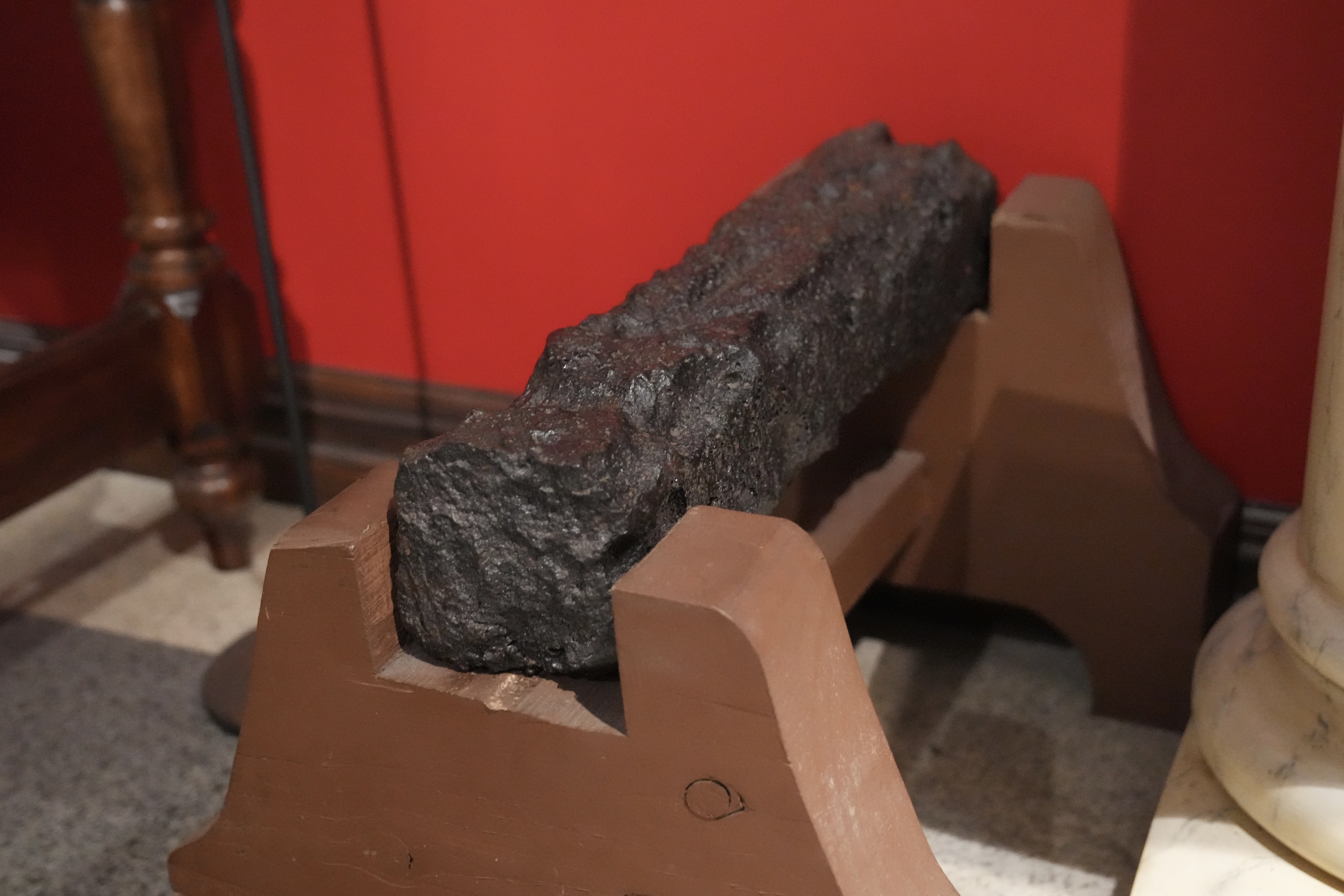
Somewhere inside the New Zealand Maritime Museum, a lump of pig iron sits in a display case. It does not look like much - a rough, dark mass recovered from the Great Barrier Reef in Australia, where Captain James Cook's HMS Endeavour ran aground in 1770. This piece of original ballast, unglamorous and easy to walk past, connects Auckland's waterfront to one of the voyages that reshaped the Pacific. A few galleries away, the yacht NZL 32 - Black Magic - hangs suspended in the center of an exhibition hall, the vessel that won the 1995 America's Cup and brought the trophy to New Zealand for the first time. Between Cook's ballast and Black Magic's hull, the museum spans the full arc of a maritime nation: from the Polynesian navigators who found these islands without instruments to the competitive sailors who proved they could beat the world.
The Dwelling of Tangaroa
The museum's Maori name, Hui Te Ananui a Tangaroa, was gifted by Hugh Kawharu of Ngati Whatua Orakei, and it means "the Dwelling of Tangaroa" - Tangaroa being the atua, or god, of the oceans. The name positions the museum not as a building that contains maritime objects but as a living space belonging to the sea itself. This framing shapes the museum's approach to its Polynesian collections, including the Hawaiki Gallery, which displays oceanic craft like a two-man outrigger canoe built for the museum in 1994 by Futunan boatbuilder Lishi Nakali. The Tatarai, a Baurua voyager canoe from Kiribati, was built in 1976 using traditional methods and sailed from Kiribati to Fiji - a journey of over 1,000 kilometers across open ocean. These are not relics of a dead tradition. The museum's own vessel Aotearoa One, launched in 2013, is described as a modern take on a traditional waka, linking ancient navigation to contemporary practice.
Black Magic and the Cup
New Zealand's America's Cup history dominates the museum's most dramatic gallery. Outside the entrance sits KZ1, the yacht built to compete in the 1988 America's Cup, gifted to the museum by Fay Richwhite in 1990. Inside, the Blue Water, Black Magic exhibition - developed with Te Papa and Peter Blake's daughter Sarah-Jane - memorializes Sir Peter Blake, the yachtsman who led New Zealand's 1995 Cup challenge and was murdered by pirates on the Amazon River in 2001. The NZ$8 million exhibition hall, completed in 2009, suspends the original NZL 32 in its center, the red hull and black underbody hovering above visitors who walk beneath it. For a country of fewer than five million people, winning the America's Cup was not merely a sporting achievement but a declaration of capability - proof that a small, remote nation could outperform the wealthiest yacht clubs in the world.
Vessels That Still Sail
Unlike most maritime museums, this one maintains a working fleet. The Ted Ashby, a reproduction of a ketch-rigged scow typical of late nineteenth-century northern New Zealand coastal trade, was purpose-built for the museum in 1993 and offers public sailings every day except Monday. The Breeze, a 1981 reproduction of a brigantine, was sailed to Moruroa and Tahiti in 1995 as a protest against French nuclear weapons testing in the Pacific - a voyage that combined maritime heritage with political action. The Nautilus, a 1912 motor launch, served as a ferry on the Avon River in Christchurch before being pressed into service ferrying wounded soldiers during the Battle of the Somme in World War I. The oldest vessel is the S.S. Puke, launched in 1872 for the coastal logging trade, salvaged from the Tamaki River in 1977, and restored by enthusiasts. These vessels are not simply exhibits; they are functional connections to the working maritime culture that built New Zealand.
Where the Immigrants Arrived
The museum sits on Hobson Wharf, adjacent to the Viaduct Harbour that was redeveloped for the America's Cup - a location that places it at the intersection of Auckland's recreational and commercial waterfronts. The old Launchman's Building on the wharf gained Heritage New Zealand Category II listing in 1981, and the main museum structure, an industrial-inspired building that won the 2010 Auckland Architecture Award, extends over the water. The Immigrants exhibition explores migration from multiple perspectives, telling stories of Pasifika, Maori, European, and Chinese arrivals to New Zealand. The museum's collection of over 130 watercraft includes Paul Caffyn's kayak Isadora, the Tainui (an 1860 whaling vessel), and the anchor of HMS Bounty. By 2018, the museum received approximately 160,000 annual visitors - a respectable number for an institution that began as a proposal from the Auckland Maritime Society in the 1970s and spent two decades searching for a permanent home before construction finally began in 1992.
From the Air
New Zealand Maritime Museum (36.84S, 174.76E) is located on Hobson Wharf at the Auckland waterfront, adjacent to the Viaduct Harbour. From the air, look for the wharf structures extending into the Waitemata Harbour just west of the Auckland Ferry Terminal. The KZ1 yacht is visible outside the entrance. Auckland Airport (NZAA) is 21 km south. The Sky Tower (328m) is visible nearby to the south. The Harbour Bridge spans the harbor to the north. The museum's heritage vessels are often berthed alongside the wharf. Weather is oceanic temperate with sea breezes common on warm days.