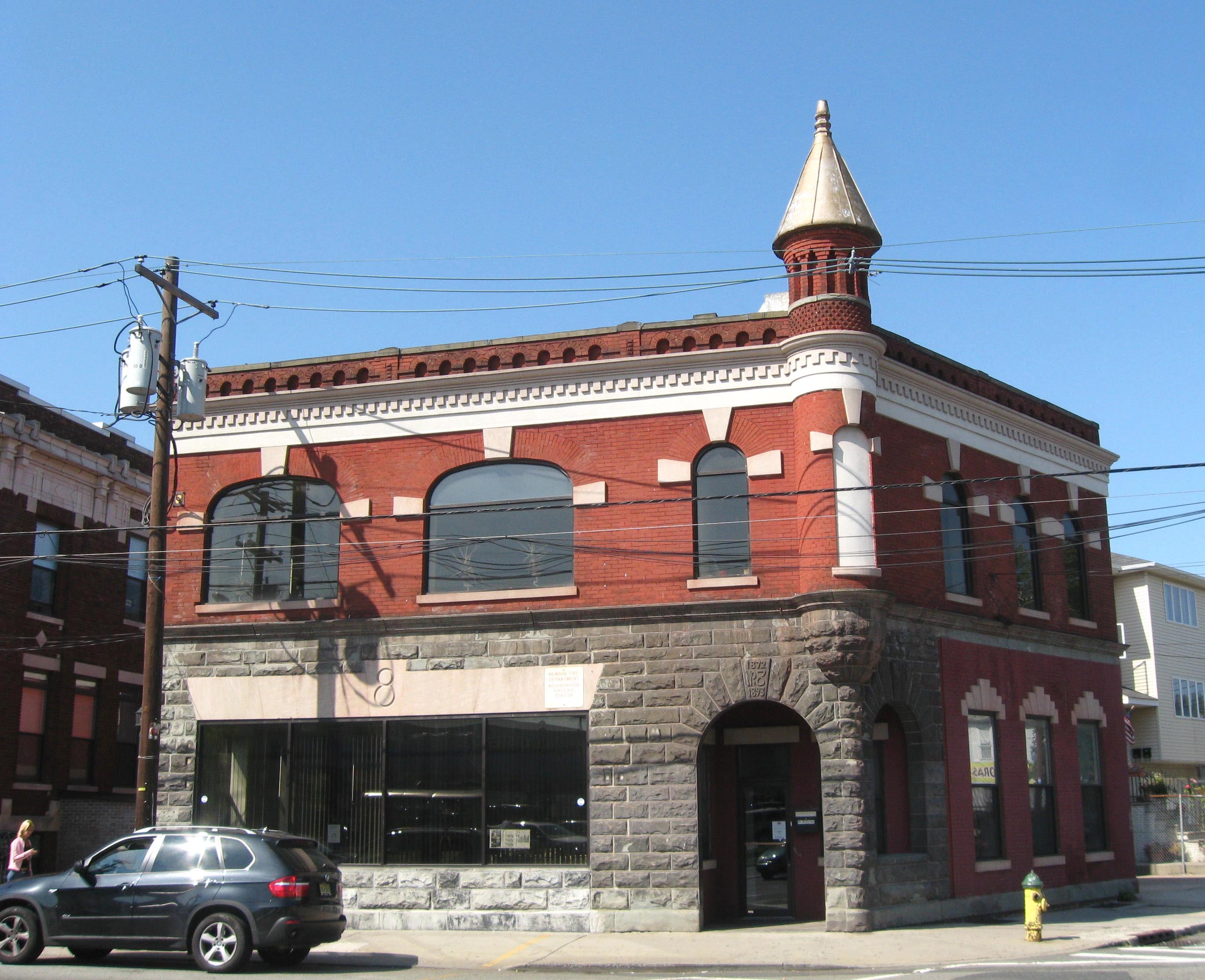
Newark Fire Division
Newark is New Jersey's largest city — 311,549 people packed into 26 square miles of dense urban terrain bounded by the Passaic River, Newark Bay, and the constant roar of one of the busiest airports in the eastern United States. Protecting that city from fire is the job of the Newark Fire Division, the second-largest municipal fire department in the state. The division operates out of 16 firehouses, runs 16 engine companies, 8 ladder companies, and 1 rescue company, and maintains specialized units for hazardous materials, high-angle rope rescue, confined space emergencies, marine operations, and urban search and rescue. It is a full-service emergency response organization built for a city that rarely offers simple incidents.
Structure of the Division
The Newark Fire Division is organized into six battalions. Four of them — Battalions 1, 3, 4, and 5 — handle firefighting operations, each commanded by a battalion chief on every shift. Battalion 6 commands the specialized units, which include hazardous materials response, a decontamination unit, a mobile lab unit, a medical ambulance bus, urban search and rescue, high-angle rope rescue and confined space rescue, a marine division, the arson squad, and the fire prevention bureau. Battalion 2, the Safety Battalion, provides safety oversight at major incidents. A deputy chief, known as a tour commander, oversees all battalion chiefs on each shift. All special operations, hazmat, support, spare, and reserve apparatus are housed at 191 Orange Street.
The USAR Strike Team
The Newark Fire Division is part of the Metro Urban Search and Rescue (USAR) Strike Team — a regional collaboration of nine northern New Jersey fire departments that pool resources for major emergency and rescue situations. Urban search and rescue is a discipline that goes beyond standard firefighting: it involves locating and extracting people from collapsed structures, confined spaces, and other complex emergencies that require specialized equipment and trained rescue teams. Newark's participation in the regional USAR strike team reflects both the scale of its own operations and the understanding that major disasters in densely populated metropolitan areas routinely exceed what any single department can handle alone.
Budget, Consolidation, and the Companies That Closed
The Newark Fire Division's history is also a history of budget pressure. More than two dozen companies have been disbanded since the mid-twentieth century, including Engine 25 in 1933, Water Tower 1 in 1944, and Engine 12 as recently as 2010. The pattern traces the financial difficulties that Newark, like many American industrial cities, faced as manufacturing declined and population shifted. Under Mayor Ras J. Baraka, the fire division was consolidated along with the police department and the Office of Emergency Management and Homeland Security into a single Department of Public Safety — a restructuring that reflected both fiscal pragmatism and an attempt to improve coordination between agencies responding to the same emergencies in the same city.
Protecting New Jersey's Largest City
The geography of Newark creates distinct fire protection challenges. The city includes dense residential neighborhoods, major freight rail yards, a busy seaport, chemical and industrial facilities, the approach corridors of Newark Liberty International Airport, and miles of aging infrastructure in various states of repair. The marine division is not a luxury in a city bounded by water on multiple sides. The hazmat unit operates in a region with a long industrial legacy that left contaminated sites scattered across the landscape. On any given shift, the Newark Fire Division may be dealing with a house fire in the Ironbound neighborhood, a hazmat call near the port, a water rescue on the Passaic River, and a medical emergency in the downtown business district — all at once, all within those 26 square miles.
From the Air
The Newark Fire Division's primary headquarters area is located at approximately 40.73°N, 74.19°W in central Newark, New Jersey. From the air, Newark's dense urban grid is immediately recognizable. Newark Liberty International Airport (KEWR) is 3-4 miles to the south. Pilots should be aware that the area around Newark is one of the most congested airspaces in the United States; approach and departure corridors for KEWR, Teterboro (KTEB), and the New York Class B airspace all converge in this region. The Passaic River and Newark Bay are useful visual references at low altitude.