Newport Jazz Festival
Paul Gonsalves stepped up to the wrong microphone. It was the summer of 1956, and the Duke Ellington Orchestra was deep into "Diminuendo and Crescendo in Blue" at the Newport Jazz Festival when the saxophonist launched into what would become a legendary 27-chorus solo. He had wandered to the Voice of America broadcast mic instead of the band's own, giving his performance an otherworldly, distant tone that sent the crowd into such a frenzy that festival organizers feared a full-blown riot. That moment -- captured, misrecorded, and mythologized -- is pure Newport: a place where jazz stopped being concert hall music and became something electric, unpredictable, and dangerously alive.
A Socialite's Gamble
The Newport Jazz Festival exists because Elaine Lorillard got bored. In 1954, the tobacco heiress and her husband Louis bankrolled what was billed as the "First Annual American Jazz Festival" at the Newport Casino on Bellevue Avenue, the heart of Gilded Age society. The idea was audacious: bring Billie Holiday, Ella Fitzgerald, and Dizzy Gillespie to a town whose upper-class residents had never particularly cared for jazz. Stan Kenton emceed. Academic panel discussions mixed with live performances on the casino lawn. Some 13,000 people attended over two days, and major newspapers hailed it as a triumph. The Lorillards hired George Wein, a Boston jazz club owner, to organize that first event. Wein would spend the next six decades shaping Newport into the template for every outdoor music festival that followed.
Riots, Race, and Reinvention
Newport's old-money establishment did not exactly welcome the jazz crowds. Students slept on sidewalks and in parks. Traffic gridlocked the downtown. And the racial dimension was impossible to ignore: many of the musicians and fans were African American, and racist attitudes fueled much of the local opposition. In 1960, the National Guard was called in. Poet Langston Hughes, on the festival grounds as chaos swirled, scribbled an impromptu lyric called "Goodbye Newport Blues" and handed it to Muddy Waters, who performed it on the spot with pianist Otis Spann. That same year, Charles Mingus and Max Roach organized a rival festival at the Cliff Walk Manor Hotel, protesting that the main festival paid less to jazz innovators -- who were mostly Black -- than to mainstream performers. By 1971, fence-crashing crowds of over 12,000 stormed Festival Field during Dionne Warwick's set, rushing the stage and destroying equipment. The festival was banished from Newport entirely.
Exile and Homecoming
George Wein transplanted the festival to New York City in 1972, staging 30 concerts across venues including Yankee Stadium and Radio City Music Hall. But he missed Newport's open sky and salt air. The festival became a brand that traveled -- Saratoga Springs, Madarao in Japan -- while corporate sponsors like Schlitz, Kool cigarettes, and JVC attached their names. None of it felt right. In 1981, Wein brought Newport home to Fort Adams State Park, a massive stone fortress at the mouth of Narragansett Bay. The return lineup read like a jazz hall of fame: McCoy Tyner, Dexter Gordon, Miles Davis, Dave Brubeck, Dizzy Gillespie, and Art Blakey. Newport welcomed the festival back with open arms, its economy now firmly tied to tourism. Fort Adams has remained the festival's home ever since.
Sounds That Changed Everything
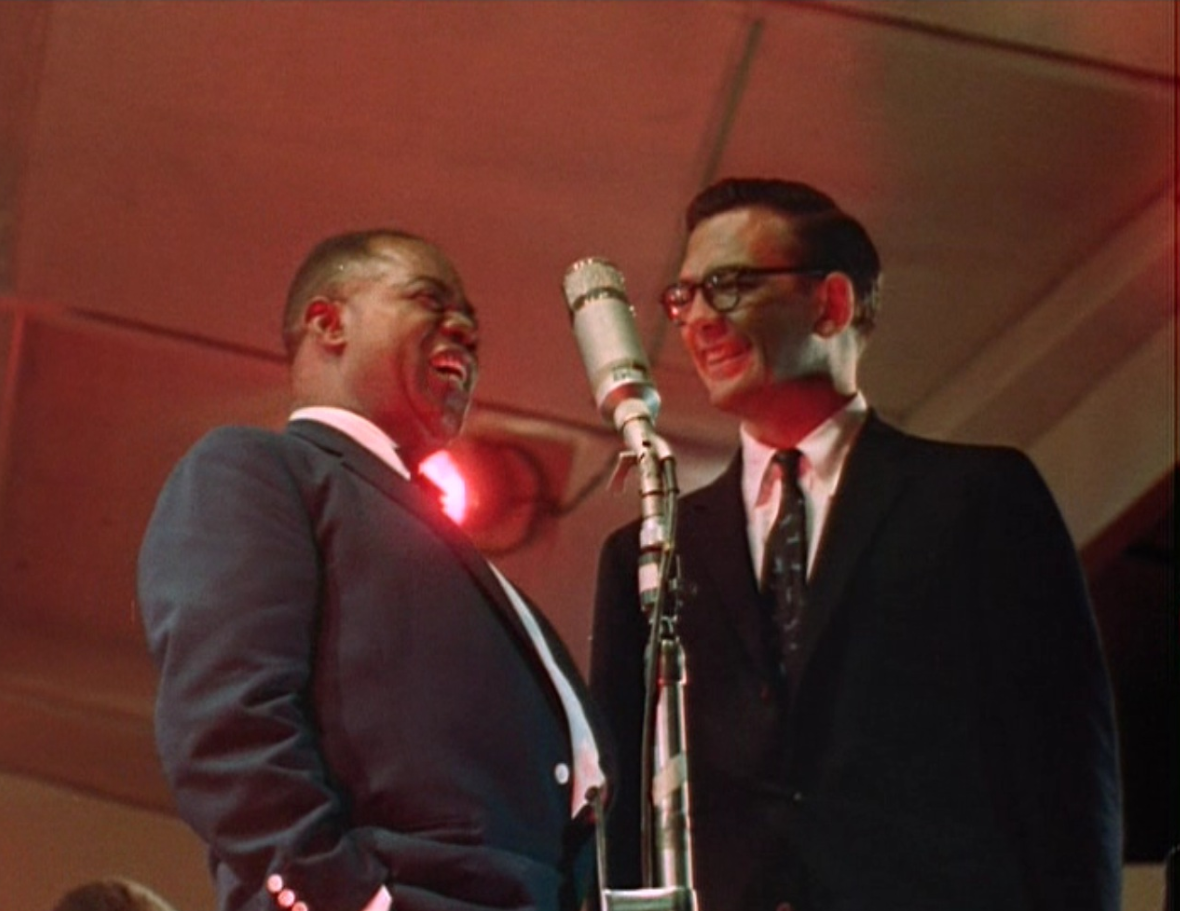
The recordings that came out of Newport rewrote jazz history. Miles Davis's 1955 solo on "'Round Midnight" was so electrifying that it secured him a contract with Columbia Records. The 1957 festival alone produced 12 albums on Verve Records, documenting Ella Fitzgerald, Billie Holiday, and Count Basie at their peaks. The 1958 documentary Jazz on a Summer's Day, filmed by Bert Stern, captured Louis Armstrong, Anita O'Day, and Mahalia Jackson in performances that still feel immediate. Nina Simone's 1960 Newport set became one of her defining live albums. In 1969, the festival tried fusing jazz with rock, booking Led Zeppelin, Sly and the Family Stone, and Frank Zappa alongside Herbie Hancock and B.B. King -- an experiment that drew 50,000 people and nearly tore the festival apart.
The Beat Goes On
George Wein died on September 13, 2021, having missed only two festivals since 1954. Bassist Christian McBride, who made his Newport debut in 1991 as part of the Jazz Futures ensemble, took over as artistic director in 2016. Under McBride, the lineups have stretched from Herbie Hancock and Diana Krall to Jon Batiste, Thundercat, and Andre 3000. The festival continues each summer at Fort Adams, where the stone walls of the 19th-century fort frame stages overlooking Narragansett Bay. What started as a socialite's experiment on a casino lawn has become an institution in its eighth decade -- still the place where jazz meets the open air and anything can happen.
From the Air
Located at 41.49°N, 71.31°W at Fort Adams State Park, on the southwestern tip of Aquidneck Island in Newport, Rhode Island. The star-shaped Fort Adams is clearly visible from altitude, sitting at the mouth of Narragansett Bay where it meets the East Passage. Newport Bridge (Claiborne Pell Bridge) spans the bay to the west. The festival grounds occupy the grassy areas adjacent to the fort. Newport State Airport (KUUU) is 3 miles northeast on Aquidneck Island. T.F. Green International Airport (KPVD) in Warwick is 25 miles north-northwest. Recommended viewing altitude: 3,000-5,000 feet for the best perspective of the fort, harbor, and island setting.