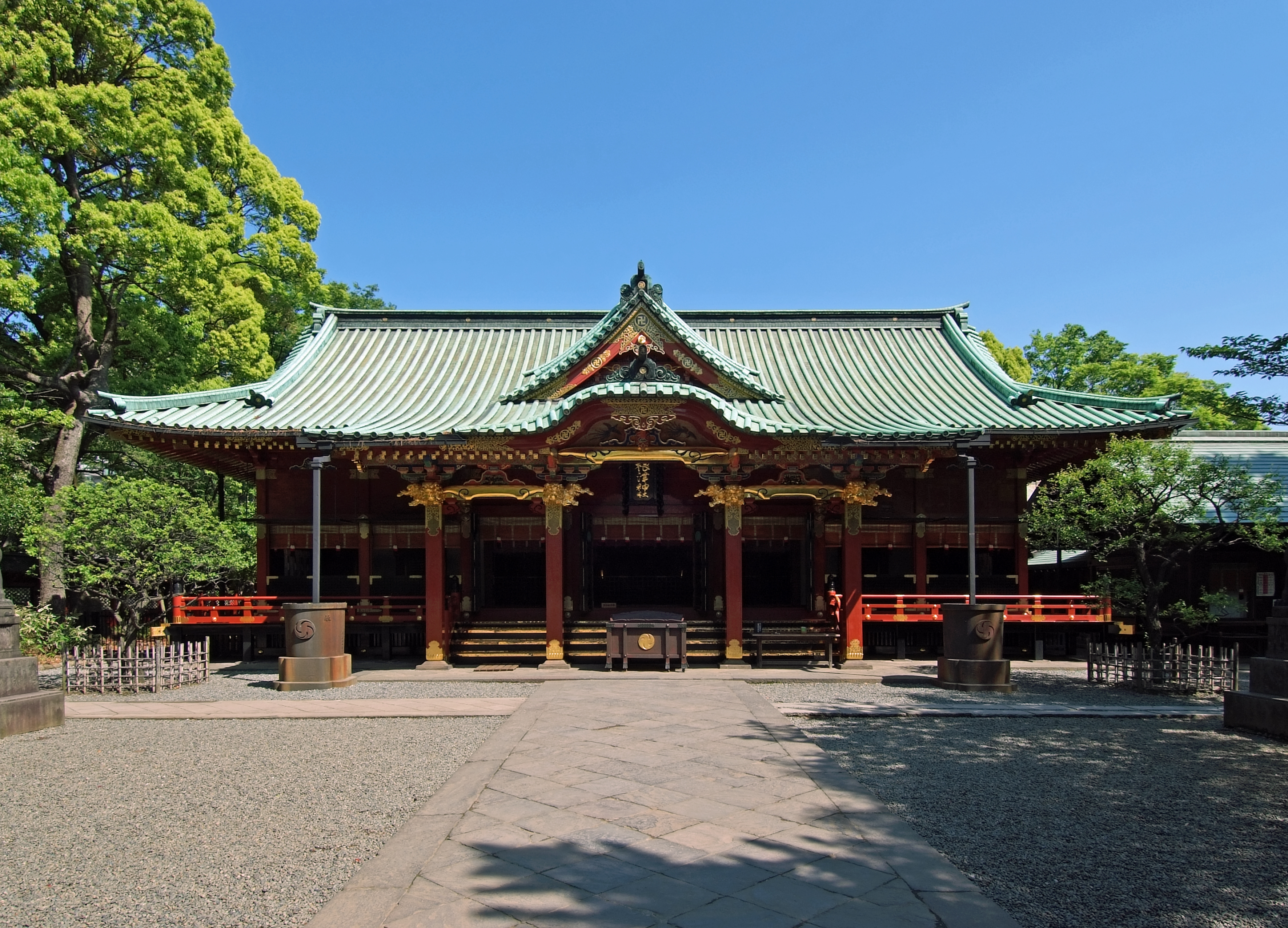
Nezu Shrine: A Shogun's Gift That Outlasted the Shoguns
Every spring, three thousand azalea bushes erupt into color on a hillside in Tokyo's Bunkyo ward, and visitors stream through a winding tunnel of vermilion torii gates toward a koi pond that reflects the shrine buildings above. Nezu Shrine has been called Tokyo's most beautiful shrine, and unlike so many of the city's sacred sites, its beauty is original -- not rebuilt after bombing or earthquake, but standing continuously since 1706. The shrine traces its legendary origins to the 1st century and the warrior prince Yamato Takeru, son of Emperor Keiko, who is said to have founded a sanctuary in nearby Sendagi. But the buildings visitors see today owe their existence to a single political event: Tokugawa Tsunayoshi, the fifth shogun of the Tokugawa dynasty, relocated the shrine to its present site in 1705 to mark his choice of Tokugawa Ienobu as his successor. The result was an architectural masterpiece built to rival the famous Tosho-gu shrine at Nikko.
A Storm God's Address
The chief deity of Nezu Shrine is Susanoo-no-Mikoto, the kami of the sea and storms -- one of the most dramatic figures in Japanese mythology. According to Shinto tradition, Susanoo was the brother of Amaterasu, the sun goddess, and his tempestuous nature led to his banishment from heaven before he redeemed himself by slaying an eight-headed serpent. It is a fitting patron for a shrine that has weathered more than three centuries of Tokyo's own storms. When Emperor Meiji moved his residence from the Kyoto Imperial Palace to the Imperial Palace in Tokyo in 1868-1869, he sent envoys to Nezu Shrine to have it intercede with the gods on his behalf -- a mark of the shrine's standing that placed it among the most important sacred sites in the new capital. Today it is recognized as one of the Tokyo Ten Shrines, a designation reserved for the city's most historically significant places of worship.
Stone, Wood, and the Shogun's Ambition
The shrine complex is built in the Ishi-no-ma-zukuri style, a sophisticated form of Shinto architecture in which the worship hall, the offertory hall, and the main sanctuary are all interconnected under a single roof. The entire structure dates from 1706, and its craftsmanship was intended to evoke the ornate Tosho-gu shrine at Nikko, the final resting place of Tokugawa Ieyasu, founder of the shogunate. The honden, haiden, and heiden -- main hall, worship hall, and offertory hall -- are each separately designated as Important Cultural Properties of Japan. So too is the romon, a two-storied gate built the same year, guarded by two zuishin statues -- kami warrior-guardians depicted holding bows and arrows. A karamon gate connects to a 200-meter sukibei wall that encircles the honden, both also designated Important Cultural Properties. That so many original Edo-period structures survive intact in a single Tokyo location is remarkable; most of the city's historic architecture was lost to the 1923 earthquake, wartime firebombing, or modern development.
The Vermilion Passage
One of the most photographed scenes in Tokyo unfolds on the hillside to the left of the main hall, where a winding path of vermilion torii gates climbs through the trees. The gates are packed closely together, creating a tunnel of saturated red-orange that shifts in tone with the light filtering through the canopy. Midway along the path, a viewing platform opens over a pond of koi, offering a panoramic look back across the main shrine precincts. The subsidiary Otome Inari Shrine sits at the end of this passage -- a smaller, more intimate space dedicated to Inari, the kami of rice and prosperity. A second, shorter path of torii descends from the Komagome Shrine above. The two main entrances to the larger complex are marked by tall red torii in the myojin style, characterized by their curved upper lintels, with plaques reading the shrine's name in kanji. The gates and pathways create a sense of layered depth and discovery that makes Nezu feel larger and more complex than its footprint suggests.
When the Hill Turns Pink
From early April to early May, Nezu Shrine hosts the Tsutsuji Matsuri -- the Azalea Festival -- and the grounds transform into what visitors have described as one of Tokyo's most spectacular spring scenes. Approximately three thousand azalea bushes, representing around a hundred different varieties, blanket the hillside in waves of pink, red, white, and purple. The festival draws enormous crowds, particularly on weekends, and the combination of blooming azaleas with the ancient shrine architecture and the vermilion torii creates a layering of color that is distinctly Japanese in its careful arrangement of natural and built beauty. The shrine charges no admission to enter the precincts year-round, and the nearest stations -- Nezu on the Chiyoda Line and Todaimae on the Namboku Line -- are both within a short walk. For a place founded in legend by a warrior prince and rebuilt by a shogun, Nezu Shrine remains remarkably accessible, tucked into a residential neighborhood where the old Tokyo of narrow streets and quiet gardens still persists.
From the Air
Located at 35.720N, 139.761E in Tokyo's Bunkyo ward, near the University of Tokyo campus. The shrine grounds are surrounded by dense urban neighborhood but the tree canopy and open spaces are visible from altitude. Nearest major airport is Tokyo Haneda (RJTT), approximately 15 nautical miles south-southwest. Tokyo Narita (RJAA) lies about 37 nautical miles east-northeast. The shrine is roughly 1 nautical mile west-northwest of Ueno Park. Best viewed at 3,000-5,000 feet AGL; the shrine's green space and surrounding residential grid help distinguish it from nearby blocks.