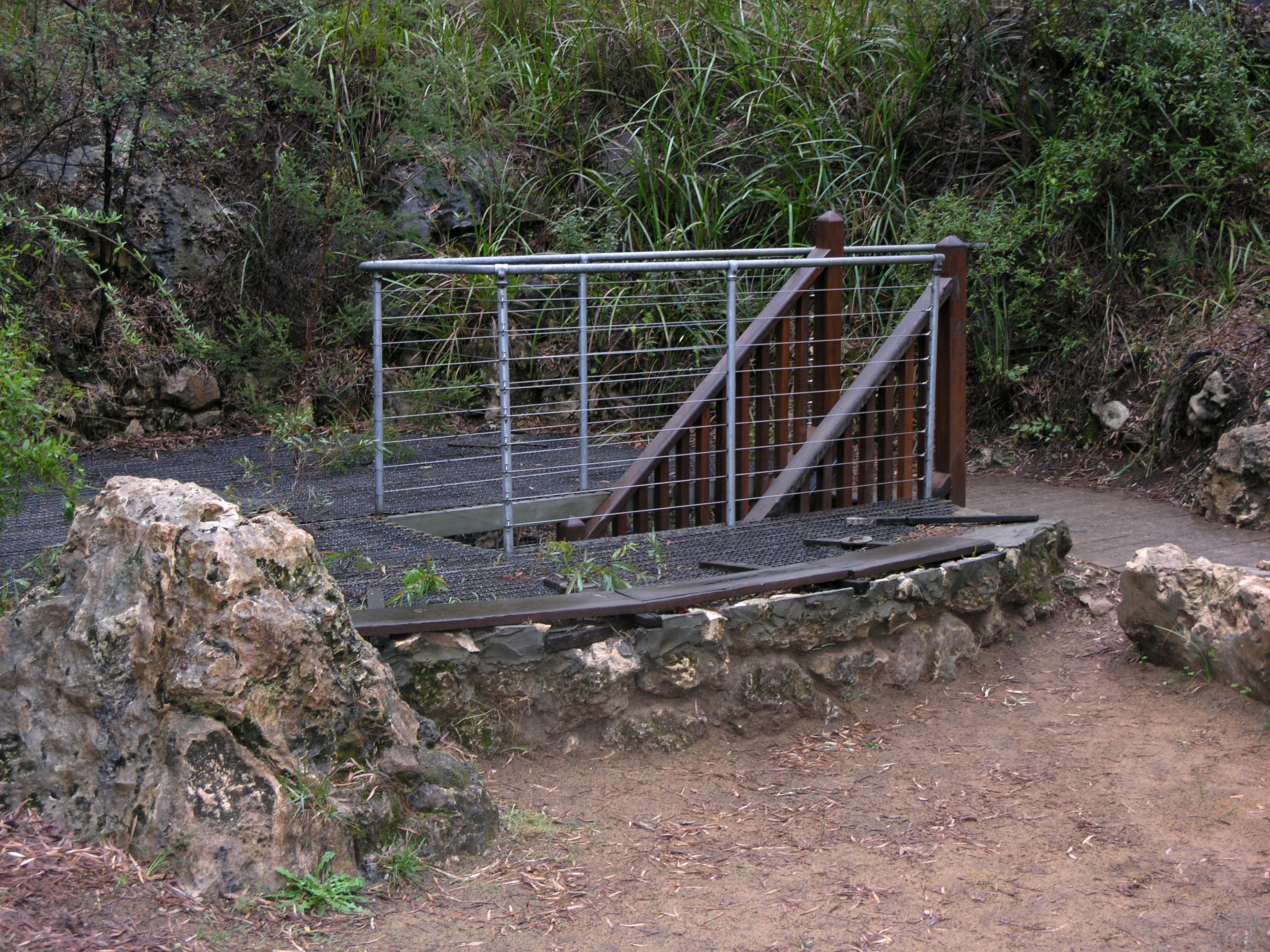
Ngilgi Cave
In 1963, a 35-year-old woman named Dorothy Williams descended into the limestone darkness beneath Yallingup and did not come back up for three months. She had gone underground to break a world endurance record, but what she found down there -- the skeleton of a seven-foot kangaroo, the bones of a Tasmanian tiger, fossils of marsupials unknown to Western Australian science -- turned a publicity stunt into genuine discovery. The cave she chose for her vigil had been known to the Wardandi people for far longer than any European record could measure. They called the good spirit who dwelt here Ngilgi, pronounced "Neelgee," and believed this place was their passage to the afterlife.
Where the Good Spirit Won
Ngilgi Cave lies northeast of Yallingup, in the karst country of southwest Western Australia where limestone dissolves into galleries and chambers over millennia. The Wardandi people understood the cave as a spiritual threshold. In their telling, Ngilgi was a benevolent spirit who fought and triumphed over Wolgine, an evil presence, in a battle that shaped the landscape itself. The cave was not merely geological to them but cosmological -- a doorway between this world and whatever comes after. Red paleosol streaks the walls in many sections, layering the interior with bands of ancient soil that mark shifts in climate stretching back tens of thousands of years. European settlers learned of the cave's existence and began promoting it as a tourist attraction in the early twentieth century, with guide services operating from December 1900. By the 1920s, it was appearing in tourism materials with headlines like "Beautiful Folded Shawls" and "The Wonderland of the West."
Ninety Days Underground
Dorothy Williams entered Ngilgi Cave determined to outlast every previous solo cave-sitter on record. The existing mark belonged to Wyndham Rendell, who had spent 87 days in the same cave earlier that year. Williams surpassed him and kept going, emerging after 90 days as the first woman to hold the world's endurance record for time spent alone beneath the earth's surface. About 200 people gathered to greet her when she finally climbed out. "I have proved that women can endure solitude as much as men," she told reporters. "I would have stayed down another three months were it necessary to break the record." Her achievement held until September 30 of that year, when Jeffrey Workman, an English potholer, spent 105 days in Stump Cross Caverns in Yorkshire. But what Williams accomplished beyond the endurance feat made her stay far more significant than a line in a record book.
Bones from a Lost World
At the request of the Western Australian Museum, Williams spent her underground months digging through the cave's sandy floors. What she found reshaped understanding of the region's deep past. Among the bones were the remains of a seven-foot-tall megafauna kangaroo -- one of the enormous marsupials that roamed Australia before the end of the last ice age. She also uncovered the skeleton of a thylacine, the Tasmanian tiger, a species long thought absent from Western Australia's fossil record. In total, she filled 20 bags with fossils and donated every one of them to the museum. Williams did not limit herself to paleontology. She befriended four possums living in the cave and wrote a scientific paper on their habits, which she also gave to the museum. Her contributions bridged amateur determination and genuine research, all conducted in near-total solitude in a place the Wardandi understood as sacred ground.
A Name Restored
For most of its European-known history, the cave went by the name Yallingup Cave, after the nearby coastal settlement. The renaming to Ngilgi Cave was an act of acknowledgment -- a recognition that the Wardandi people's relationship with this place predates any settler timeline by thousands of years. The name honors both the good spirit of Wardandi mythology and the cave's role as a site of Aboriginal spiritual significance. Today visitors descend past formations with names like the "Two Tonne Stalactite" and through chambers where the red paleosol bands glow faintly under artificial light. The cave remains a working geological and ecological site. But its deepest resonance is human: a Wardandi passage between worlds, a place where a woman alone in the dark pulled ancient bones from the sand, and a reminder that what lies beneath the surface -- of the earth, of the official record -- often matters more than what sits above it.
From the Air
Located at 33.64S, 115.03E near Yallingup on the southwest coast of Western Australia. From the air, look for the Leeuwin-Naturaliste ridge running along the coast with dense karst terrain and bushland. The cave entrance is northeast of the small coastal town. Nearest airport is Busselton Margaret River Regional Airport (YBLN), approximately 25 km southeast. Best viewed at 2,000-3,000 ft to appreciate the coastal ridge landscape. The Indian Ocean coastline and Cape Naturaliste lighthouse are prominent visual landmarks.