Ngukurr
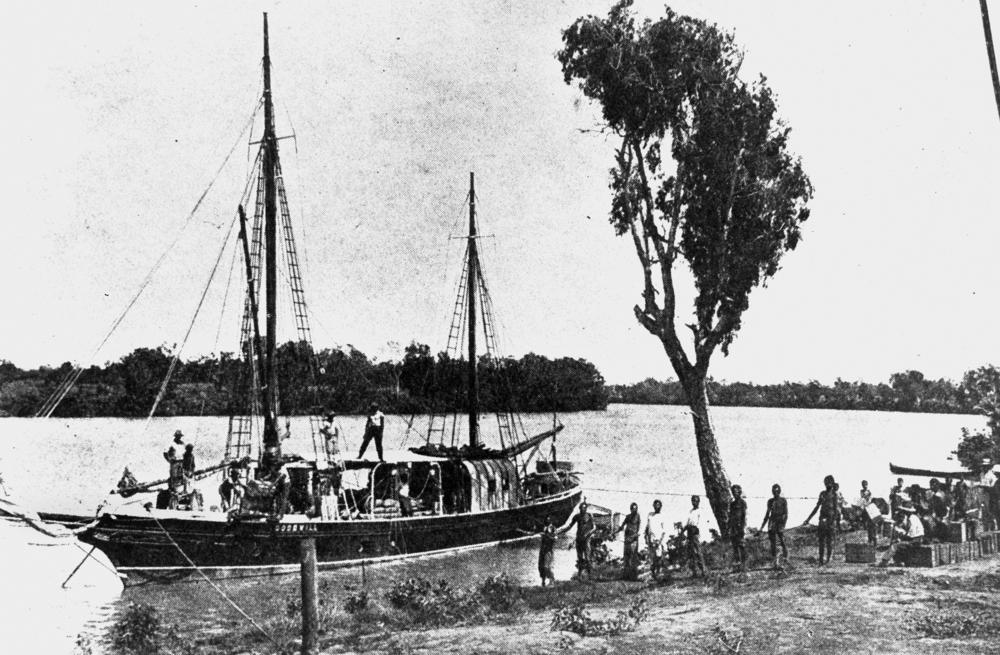
A man named Gajiyuma, one of the Marra people, made a decision in 1908 that changed everything for his community. The Eastern and African Cold Storage Company had been driving Aboriginal people off their country to set up cattle stations — starvation and massacre were genuine possibilities. When the Church Missionary Society established a mission on the Roper River, Gajiyuma helped guide his people there, believing the mission offered protection. He was right, in the narrowest sense. The missionaries shielded them from the worst violence. They also banned their languages and their ceremonies. That is the complicated founding of Ngukurr: refuge and rupture, both at once.
The Weight of History
The mission ran from 1908 to 1968, known as Roper River Mission, before the Northern Territory Government's Welfare Department took control. It handed governance to the community in 1988, when the township took its current name — Ngukurr, the name the place had always had in Aboriginal understanding, now officially acknowledged.
Children at the mission had been separated from their parents and housed in dormitories. A leprosy compound was established in 1928. In 1940, a major flood destroyed the mission station, forcing the community to move to its present site. These are not distant abstractions — the people who carry this history are still here, and their descendants fill the community today. The community of Ngukurr numbers around 1,000 people, approximately 95% of whom identify as Aboriginal, drawn from the various clan groups of southeast Arnhem Land collectively known as the Yugul Mangi.
A Community of Languages
What makes Ngukurr remarkable is what survived despite the suppression. The community is heir to eight traditional Australian Aboriginal languages: Alawa, Marra, Warndarrang, Ngandi, Ngalakgan, Nunggubuyu, Ritharrngu, and Wagilak. All eight are endangered. The Ngukurr Language Centre runs programs to support their revitalization — keeping them alive not as museum pieces but as living speech.
The day-to-day language of the community is Kriol, an English-based creole that grew organically from the meeting of Aboriginal languages and English in mission environments. Kriol is not a broken form of English; it's a fully developed language with its own grammar, vocabulary, and literature. The local program Meigim Kriol Strongbala — 'make Kriol strong' — works to document and strengthen it alongside the traditional languages. English remains the language of government services, but that is a thin layer over a much deeper linguistic landscape.
Artists, Musicians, Activists
Ngukurr has produced people of remarkable achievement, across fields as different as visual art and labor rights. Dexter Daniels made significant contributions to the 1960s movement to win Aboriginal stockmen equal pay — a cause that culminated in the famous Wave Hill walk-off, a turning point in Australian history. The Reverend Canon Michael Gumbuli Wurramara became the Northern Territory's first Indigenous Anglican priest in 1973, serving as rector of St Matthew's Church in Ngukurr itself.
Visual artist Ginger Riley Munduwalawala learned to paint in Ngukurr; his work, filled with the vivid reds and blues of country, is now held in major Australian collections. Artist Djambu 'Sambo' Barra Barra is a custodian of traditional law for the Wagilak people. Actor Tom E. Lewis grew up at the Roper River Mission before playing the lead role in the film 'The Chant of Jimmie Blacksmith.'
In 2004, jazz pianist Paul Grabowsky traveled to Ngukurr to meet the traditional songmen. The following year, he returned with singer-songwriters Archie Roach and Ruby Hunter and ten members of the Australian Art Orchestra. Five days of collaboration produced a concert and a recording called 'Crossing Roper Bar' — a genuine exchange between manikay, the Wagilak song cycles, and jazz improvisation. The European musicians described coming away with entirely new ways of hearing sound.
Learning Two Ways
Two hours' drive from Ngukurr lies Wuyagiba, a remote community and the home of the Wuyagiba Study Hub — known informally as the 'bush university.' The program offers 'two-way learning' to students who have completed Year 12: academic skills needed for further study combined with traditional knowledge, including bush medicine and bush tucker. Students attend full days for a ten-week term.
It is a deliberate response to the tension that has defined this region for a century — the pressure to choose between the knowledge systems of the mainstream and the knowledge systems of country. The bush university says: both. Students leave with the credentials to enter tertiary education and the grounding in culture that makes that education something other than assimilation.
From the air, the Roper River winds through one of the most remote landscapes in Australia — the broad eucalyptus savanna of southern Arnhem Land, broken by the dark lines of seasonal creeks. Ngukurr sits on its southern bank, small against the country's scale, but holding something that country always contained: a community that has not finished with its story.
From the Air
Ngukurr sits at approximately 14.73°S, 134.73°E on the southern bank of the Roper River in southern Arnhem Land. The Roper River is visible from cruising altitude as a significant watercourse winding through savanna country. Recommended viewing altitude: 2,000–4,000 feet AGL. Nearest airport: Ngukurr Airport (YNGU), located adjacent to the town. No scheduled air services; charter flights only. The surrounding country is accessible by road only in the dry season (April–November); seasonal flooding cuts access during the wet. From the air, the community appears as a small cluster of buildings in a vast landscape of eucalyptus woodland.