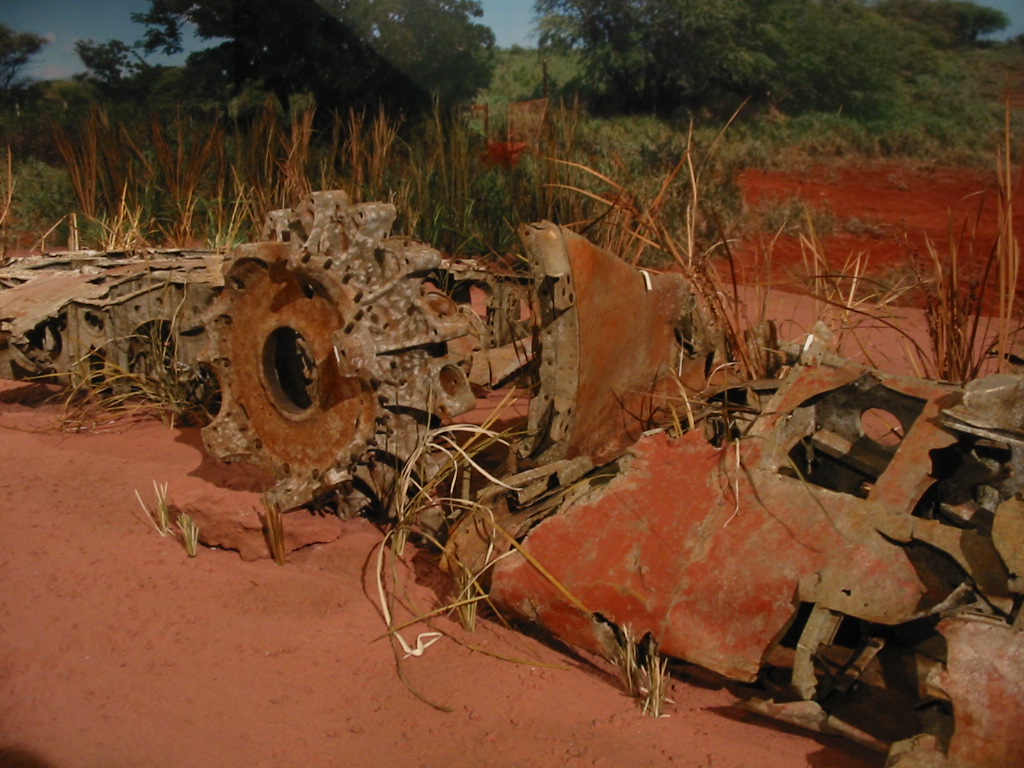
Niihau Incident
Hawila Kaleohano was standing in a field on Niihau when a Zero fighter, trailing smoke, dropped out of the sky and skidded to a stop in the dirt beside him. It was December 7, 1941. Kaleohano had no telephone, no electricity, and no way of knowing that the pilot climbing from the wreckage had just helped bomb Pearl Harbor. What he did know -- from newspapers that arrived by boat -- was that relations between the United States and Japan were deteriorating. So before the pilot could reach for it, Kaleohano grabbed his pistol and his papers. That instinct would shape the next six days on Hawaii's most isolated inhabited island.
Hospitality Before the News
The pilot was Airman First Class Shigenori Nishikaichi, who had launched from the carrier Hiryu as part of the second wave of the Pearl Harbor attack. His A6M2 Zero, designated B11-120, had been damaged by ground fire. The Imperial Japanese Navy had marked Niihau as uninhabited on its maps -- a place where downed pilots could land and wait for submarine rescue. The maps were wrong. About 130 Native Hawaiians lived on the privately owned island, along with three residents of Japanese descent. Kaleohano and the other Hawaiians who gathered treated Nishikaichi with courtesy and traditional hospitality, even throwing a party for him that afternoon. They could not understand his limited English, so they sent for Ishimatsu Shintani, a Japanese immigrant married to a Hawaiian woman, to translate. Shintani spoke with the pilot but revealed little of what was said.
Six Days Without Rescue
That evening, the islanders heard a radio report of the Pearl Harbor attack on a battery-powered set. Everything changed. They confronted Nishikaichi, and this time Yoshio Harada, an American-born resident of Japanese descent, translated. The island's owner, Aylmer Robinson, was due for his weekly visit from Kauai the next morning, and the plan was to hand Nishikaichi over. But Robinson never came -- martial law had been declared across Hawaii, and boat traffic was suspended. Days passed. The islanders posted guards around the Harada house, where Nishikaichi was being held. Then, on the night of December 12, Nishikaichi and Yoshio Harada overpowered a guard while Irene Harada played music on a phonograph to cover the sounds of the struggle. They retrieved the pilot's pistol and a shotgun from a warehouse and went looking for Kaleohano and the confiscated papers.
The Battle of Niihau
Kaleohano, hiding in his outhouse, watched Harada and Nishikaichi approach with a captive 16-year-old guard. He slipped away and ran to the village to warn residents, who fled to caves and remote beaches. Nishikaichi tried the downed Zero's radio without success, then torched his own plane and set fire to Kaleohano's house, hoping to destroy the papers that contained maps, radio codes, and Pearl Harbor attack plans. Kaleohano, meanwhile, made a desperate nighttime crossing by rowboat to Kauai -- a journey across seventeen miles of open channel -- to bring word of the crisis. On the morning of December 13, Nishikaichi and Harada captured Benehakaka "Ben" Kanahele and his wife Kealoha "Ella" Kanahele. What happened next entered Hawaiian legend. When Nishikaichi threatened Ben, Ella Kanahele struck the pilot in the head with a rock. Ben, despite being shot three times, grabbed Nishikaichi and slammed him against a stone wall, then killed him. Yoshio Harada turned a shotgun on himself.
Consequences Beyond the Island
Ben Kanahele recovered at Waimea Hospital on Kauai and was awarded the Medal for Merit and the Purple Heart in 1945. Ella Kanahele, whose actions had made the confrontation's outcome possible, received no official recognition. Irene Harada was imprisoned for 31 months but was never charged with a crime. In a 1992 interview, she said simply that she had felt sorry for Nishikaichi and wanted to help him. The incident's consequences reached far beyond the island. A Navy report dated January 26, 1942, noted that the Haradas, who had "previously shown no anti-American tendencies," had aided the pilot when Japanese dominance of the island seemed possible. Historian Gordon Prange argued that this observation fed the paranoia that contributed to the internment of Japanese Americans on the mainland. Hawaii's large Japanese-American population -- over a third of the territory's total, comprising the majority of its carpenters, transportation workers, and agricultural laborers -- was largely spared from mass internment, but the islands were placed under martial law for the duration of the war. Composer R. Alex Anderson wrote "They Couldn't Take Niihau, Nohow!" -- a song that was played on August 15, 1945, when Kanahele was decorated for his bravery in Honolulu.
From the Air
Niihau lies at approximately 21.87N, 160.22W, about 17 miles southwest of Kauai across the Kaulakahi Channel. The island has no airport and no public access. The nearest commercial airport is Lihue Airport (PHLI) on Kauai. From the air, Niihau appears as an arid, low-lying island with no visible development. The crash site was in a field in the island's interior. Pacific Missile Range Facility (PMRF/Barking Sands, PHBK) on Kauai's western coast is the closest military airfield.