Niagara-on-the-Lake
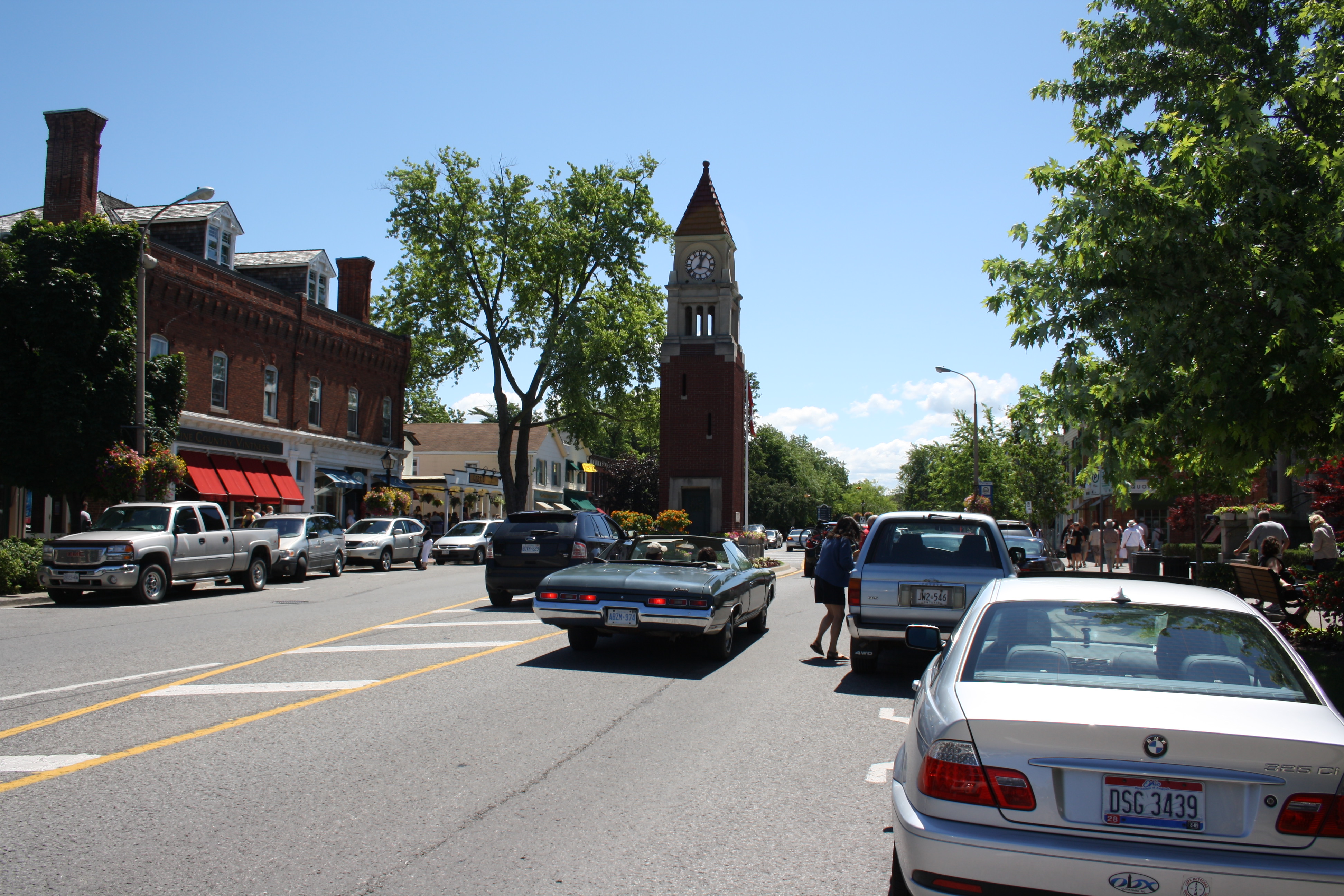
Niagara-on-the-Lake presents a peculiar cognitive dissonance: the charming Victorian streetscape, the horse-drawn carriages, the wine tastings and the Shaw Festival's theatrical seasons all exist in a town that was once burned to the ground by invading American forces. This small Ontario community at the mouth of the Niagara River served as Newark, the first capital of Upper Canada, from 1792 to 1797. During the War of 1812, it became a primary battlefield as American troops crossed the river, captured Fort George, and torched the town in December 1813. The British retaliated by burning Buffalo. This frontier violence seems impossibly distant from today's quaint main street, where the biggest conflicts involve finding parking or securing dinner reservations. Yet the history remains visible: Fort George stands reconstructed, Brock's Monument commemorates the general who died defending the territory, and the oldest churches in Ontario survived the flames to continue services today.
Capital and Conflict
When Lieutenant Governor John Graves Simcoe established Upper Canada's first capital in 1792, he named the settlement Newark and built the beginnings of colonial infrastructure. The location made strategic sense: the Niagara River provided a natural boundary with the United States, and the mouth of the river offered harbor access. But strategic locations attract conflict. When war erupted in 1812, the town's position became its vulnerability. American forces crossed the river in May 1813, captured Fort George after heavy fighting, and occupied the town. When they retreated in December, they burned Newark's buildings - including homes that sheltered women and children in brutal winter weather. The conflagration left four hundred people homeless and established patterns of retaliation that would continue throughout the war. Britain moved the capital to the more defensible York (Toronto) and never moved it back.
The Battlefields
The Niagara frontier saw some of the War of 1812's most significant fighting. Fort George, the British stronghold just outside town, anchored the defense until its capture. Queenston Heights, a few miles upriver, witnessed the death of Major General Isaac Brock - a loss that became foundational to Canadian national mythology. Brock's Monument, the tall column visible for miles, marks where he fell leading a charge against American positions. Laura Secord, later famous for trekking twenty miles to warn British forces of American plans, lived nearby. The reconstructed Fort George offers tours and reenactments; Brock's Monument provides panoramic views alongside historical interpretation. Together these sites tell a story largely forgotten south of the border but remembered in Canada as a defining moment - the successful defense against American invasion that helped forge a separate national identity.
Victorian Revival
The town that rose from the 1813 ashes developed through the 19th century into the picturesque community visible today. Georgian and Victorian architecture lines Queen Street, the main commercial thoroughfare where independent shops replaced the reconstruction-era general stores. The oldest golf course in North America - Niagara-on-the-Lake Golf Club, established 1875 - continues operation. St. Mark's Anglican Church and St. Vincent de Paul Catholic Church both date to the pre-war era and survived the burning to continue services. The Prince of Wales Hotel anchors the main intersection with period elegance. The Shaw Festival, founded in 1962 to perform the works of George Bernard Shaw and his contemporaries, transformed the town's summer economy and established its cultural reputation. What emerged from colonial violence became, almost paradoxically, one of Canada's most genteel destinations.
Wine Country
The Niagara Peninsula's climate - moderated by Lake Ontario and Lake Erie - creates conditions suitable for viticulture that have turned the region into Ontario's primary wine destination. Over thirty-seven wineries operate within Niagara-on-the-Lake's boundaries alone, producing everything from ice wine (a specialty possible thanks to reliable cold snaps) to Chardonnay, Pinot Noir, and Riesling. Wine touring has become the town's second economic pillar alongside heritage tourism. Tours by bicycle, bus, or private vehicle visit multiple wineries offering tastings and sales. The industry's growth from a handful of wineries in the 1970s to today's density represents agricultural transformation comparable to California's Napa Valley - though earlier cold-hardiness was the major limitation that selective breeding and climate change have partially overcome.
Visiting Today
Niagara-on-the-Lake lies roughly ninety minutes from Toronto, making day trips feasible if rushed. The town rewards longer stays: Shaw Festival performances run April through November, wine touring requires designated drivers or tour arrangements, and the historic sites deserve unhurried exploration. Queen Street's independent shops - cheese, fudge, antiques, hats - reward browsing. Horse-drawn carriage tours provide atmospheric transportation. Accommodations range from historic inns to bed-and-breakfasts; book ahead for festival season. Fort George charges admission for its reconstructed fortifications and interpretive programs. Brock's Monument is free to visit. The scenic Niagara Parkway connects the town to Niagara Falls, twenty kilometers south, following the river through wine country and past heritage sites. Come for the charm, but remember what lies beneath it: a town born in fire, rebuilt in determination, and transformed into something its 1812 defenders couldn't have imagined.
From the Air
Located at 43.26°N, 79.07°W at the mouth of the Niagara River on Lake Ontario. The town is visible from altitude as a compact settlement on the Canadian shore where the Niagara River meets the lake. Fort George and the town's historic grid are identifiable. Niagara Falls lies 20km upstream to the south. Buffalo, NY is across the lake to the southwest. Toronto Pearson International Airport (YYZ) is 90 minutes west. Hamilton John C. Munro International Airport (YHM) is 75 minutes west. Buffalo Niagara International Airport (BUF) is 45 minutes south.