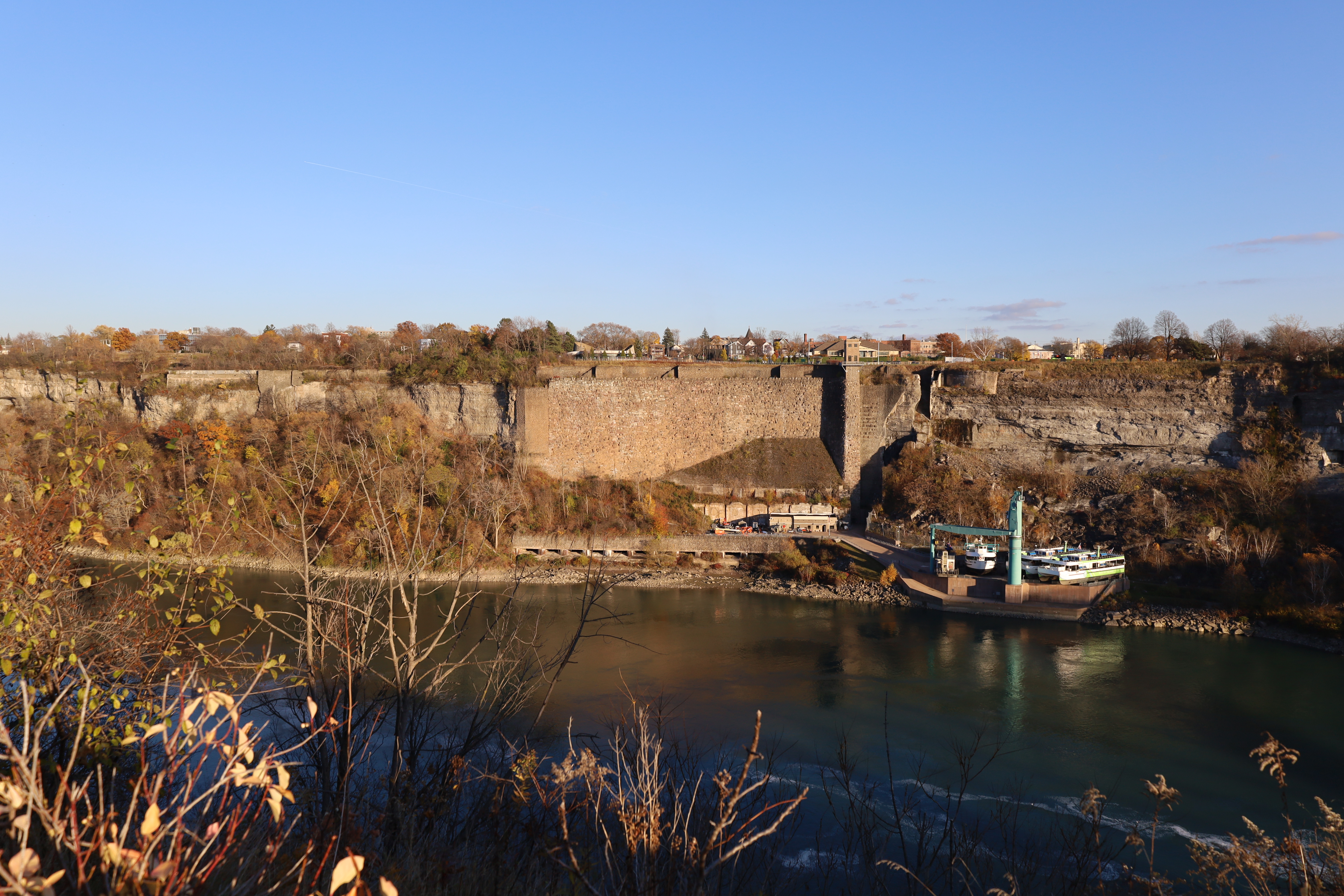
The Schoellkopf Collapse: When Niagara Ate a Power Plant
At 5:15 PM on June 7, 1956, the earth moved at Niagara Falls. Not metaphorically - literally. A 200-foot section of the Niagara Gorge wall collapsed without warning, burying Schoellkopf Power Station under millions of tons of rock. The plant had operated since 1881, one of the first hydroelectric stations in the world, harnessing the falls that were now destroying it. One worker died; the others escaped moments before. The collapse erased three-quarters of a power plant that had lit Buffalo for seventy-five years. It also exposed an uncomfortable truth: Niagara Falls is temporary. The gorge is eating itself backward, three feet per year, and nothing humanity builds on its edge is safe.
The Plant
Schoellkopf Power Station was a pioneer. When it began generating electricity in 1881, it was among the first hydroelectric plants in the world. Nikola Tesla's AC generators were installed here in the 1890s, proving that electricity could be transmitted over distance. The plant grew along the gorge wall: Station 3A, 3B, 3C - massive brick buildings clinging to the cliff face, turbines spinning with Niagara's endless power. By 1956, the complex was aging but still producing. Workers descended into the gorge every day, trusting the rock that had held for millennia. The rock had other plans.
The Collapse
The warning was brief: a rumble, then a roar. The cliff face behind Stations 3A and 3C simply detached, sliding into the gorge and burying the powerhouses. Over 200,000 tons of dolostone - the same rock the falls have been carving for 12,000 years - came down in seconds. One worker, Richard Draper, was killed. Others escaped through tunnels as debris cascaded around them. The two stations were destroyed completely, erased from the gorge wall. Station 3B, slightly upstream, survived. The cause was geological inevitability - frost, water, and time had weakened the cliff until it couldn't hold itself anymore.
The Erosion
Niagara Falls is retreating. The force of water falling 167 feet erodes the soft shale beneath the hard dolostone cap; when the shale goes, the dolostone collapses. The falls have retreated seven miles from their original position at Queenston, carving the gorge as they went. The rate is slowing - water diversion for power generation has reduced the flow - but the retreat continues. The Schoellkopf collapse wasn't an anomaly; it was the gorge doing what it's always done, just faster than anyone expected. Engineers now monitor the gorge walls constantly. The next collapse could come tomorrow or in a century. It will come.
The Aftermath
The Schoellkopf disaster cost $100 million in 1956 dollars and eliminated a third of western New York's generating capacity. Replacement power was rushed in; the Robert Moses Niagara Power Plant, already planned, was accelerated. That plant opened in 1961, built safely away from the gorge edge, its water arriving through tunnels. The Schoellkopf ruins remained visible for years - twisted turbines, crushed brick, the skeleton of industrial ambition buried in rock. Most has been cleared now, though traces remain. The disaster demonstrated that Niagara's power comes with Niagara's danger. Harness the falls, but respect what made them.
Visiting the Site
The Schoellkopf collapse site is visible from several viewpoints in Niagara Falls State Park on the American side. The best view is from the gorge trail that descends toward the base of the falls - look for the section of cliff wall that appears fresher, less weathered, where the 1956 collapse exposed new rock. Interpretive signs explain the disaster. The Robert Moses Niagara Power Plant offers tours showing modern hydropower generation. The Niagara Gorge Discovery Center provides geological context. Cave of the Winds and the Maid of the Mist offer up-close falls experiences. The falls are best visited from both American and Canadian sides; bring your passport. The gorge that ate Schoellkopf continues to deepen - slowly, patiently, inevitably.
From the Air
Located at 43.09°N, 79.06°W in the Niagara Gorge below Niagara Falls. From altitude, the gorge is visible as a deep cut in the landscape, extending from the falls northwest toward Lake Ontario. The falls themselves are the obvious feature - the Horseshoe Falls on the Canadian side, American Falls on the US side. The Schoellkopf site is downstream from the falls on the American gorge wall, now largely overgrown. The Robert Moses Niagara Power Plant is visible upstream, its intake structures diverting water before it reaches the falls. The gorge demonstrates its own history - the falls carved this entire seven-mile canyon, retreating from Queenston over 12,000 years. Buffalo sprawls to the south; Toronto is visible across Lake Ontario.