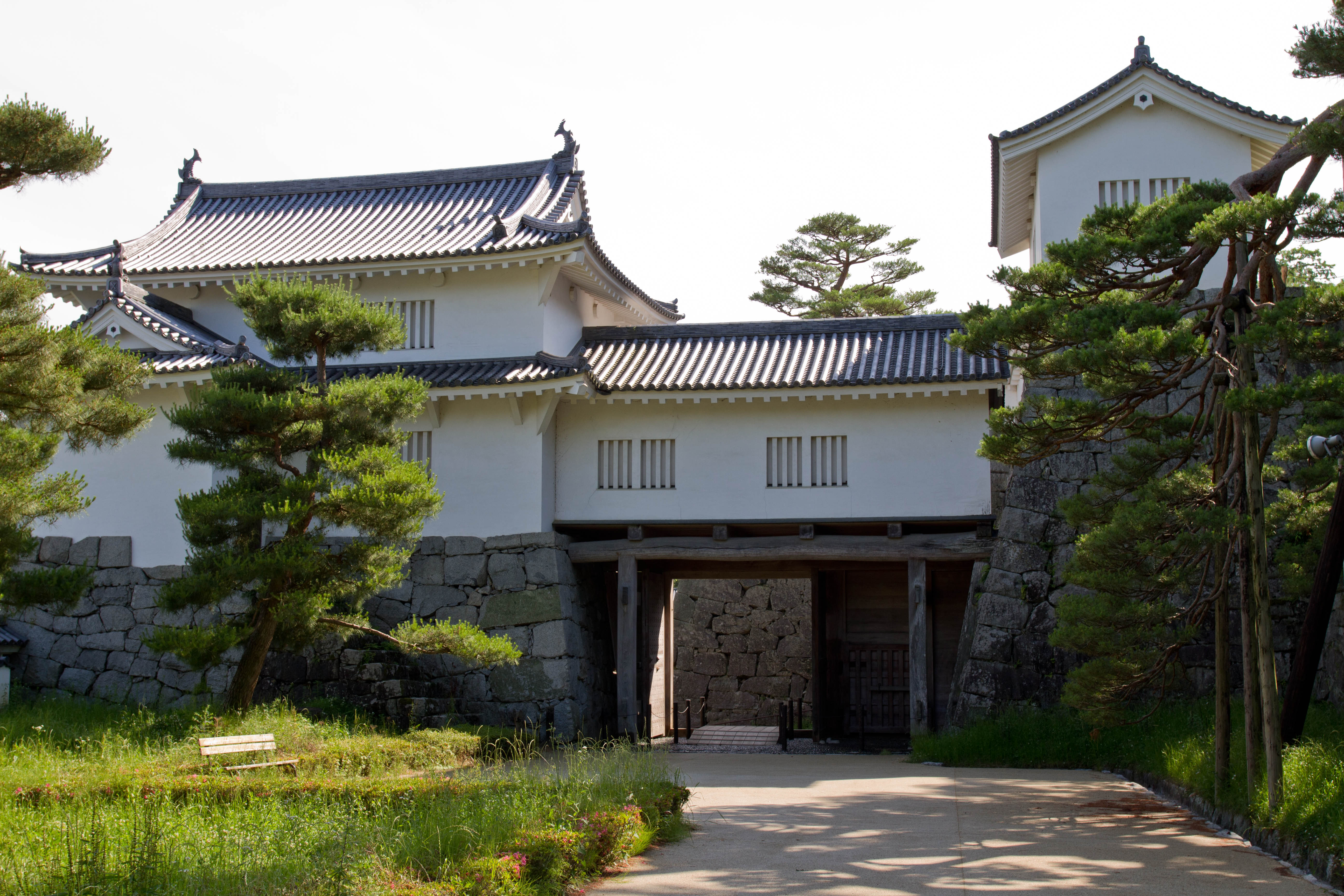
Nihonmatsu Castle
In 1585, a cornered warlord made a gamble that would cost him everything. Nihonmatsu Yoshitsugu, outnumbered and defeated by the Date clan, pretended to surrender -- then seized Date Terumune as a hostage. When Terumune's son, the legendary Date Masamune, sent his forces to rescue his father, the resulting battle killed both men. That act of desperation set off a chain of sieges, betrayals, and power shifts that would reshape northern Japan's political landscape for centuries. The castle that witnessed it all still stands on its hillside spur of the Adatara mountains in Fukushima Prefecture, one of only 100 castles honored on Japan's list of Fine Castles, its stone walls now softened by cherry blossoms in spring and blanketed in chrysanthemums each autumn.
The Hostage, the Warlord, and the One-Eyed Dragon
Nihonmatsu Castle's story begins in 1341, when Hatakeyama Takakuni was appointed military governor of the northern provinces by the Ashikaga shogunate and built a fortified residence on this strategic hilltop. He took the name Nihonmatsu, but his power was always more title than territory -- the Date clan and Ashina clan hemmed him in on all sides. For over two centuries, the Nihonmatsu lords clung to their castle in this narrow valley along the Abukuma River, where the Oshu Kaido highway connecting Edo with northern Japan squeezed through a natural chokepoint. When Nihonmatsu Yoshitsugu made his fatal gamble in 1585, kidnapping Date Terumune, it was the act of a man who had run out of options. Date Masamune -- the famed 'One-Eyed Dragon' -- responded with overwhelming force. After both his father and his enemy lay dead, Masamune took the castle for himself, installing his trusted general Katakura Kagetsuna as its keeper.
A Castle That Changed Hands Like a Card Game
Few Japanese castles passed through as many powerful hands in so short a time. After Masamune, the castle went to Toyotomi Hideyoshi's favorite, Gamo Ujisato, who controlled the enormous 900,000-koku Aizu Domain. When Gamo died, it passed to Uesugi Kagekatsu. The Uesugi backed the wrong side at the Battle of Sekigahara in 1600, and Tokugawa Ieyasu stripped away their holdings. Under the Tokugawa shogunate, the castle bounced to the Matsushita clan, then to Kato Yoshiakira -- a veteran of the Battle of Shizugatake and builder of Matsuyama Castle. Finally, in 1643, the Niwa clan arrived. They abandoned the battered hilltop fortifications entirely and rebuilt the castle at the base of the hill, where they would rule for over two centuries until the Meiji Restoration upended the feudal order.
Fourteen Boys Who Never Came Home
The castle's most wrenching chapter came during the Boshin War of 1868. Nihonmatsu Domain sided with the pro-Tokugawa alliance against the modernized imperial forces. On the morning of July 29, roughly 7,000 government troops descended on the castle, which was defended by only about 1,000 men. Among them were members of the Nihonmatsu Shonentai -- boy soldiers between the ages of 12 and 17, drafted into service as the domain scrambled for defenders. The castle fell in a single day. In the fighting, 337 Nihonmatsu samurai and 206 allied samurai were killed. Fourteen of the boy soldiers perished. The Shonentai became a symbol of the war's human cost, their story echoing that of the more famous Byakkotai boy soldiers of nearby Aizu. Today, memorials on the castle grounds honor those young lives cut short in the final convulsions of feudal Japan.
Chrysanthemums Where Cannons Roared
After the Meiji government demolished the remaining castle structures in 1872, the hilltop was transformed into Kasumigajo Park, and the old fortress found a gentler identity. Cherry trees were planted across the grounds, and each spring the former battlements disappear under clouds of pink and white sakura. But the castle's signature reinvention comes in autumn. Since 1955, the Nihonmatsu no Kiku Ningyo festival has filled the park with life-sized figures crafted entirely from living chrysanthemum flowers -- samurai, historical scenes, and fantastical displays, all sculpted from blooms that the people of Nihonmatsu have cultivated with special devotion for centuries. It is now Japan's largest chrysanthemum doll festival, drawing visitors from across the country. The reconstructed Minowa Gate and yagura turret, rebuilt in 1982, and the restored foundation of the main tenshu tower from 1993 provide a skeletal reminder of the fortress that once controlled access to all of northern Japan.
From the Air
Located at 37.60N, 140.43E on a hillside spur of the Adatara mountains in Fukushima Prefecture. The castle grounds sit in a valley along the Abukuma River, roughly halfway between Fukushima City and Koriyama. From the air, look for the distinctive park on the hillside with the reconstructed gate structures amid dense cherry tree cover. Nearest airport: Fukushima Airport (RJSF) approximately 40nm south. Sendai Airport (RJSS) lies about 80nm to the north. The Adatara mountain range rises prominently to the west. Best visibility in spring (cherry blossoms) and autumn (chrysanthemum festival). Winter conditions may bring snow cover to the castle grounds.