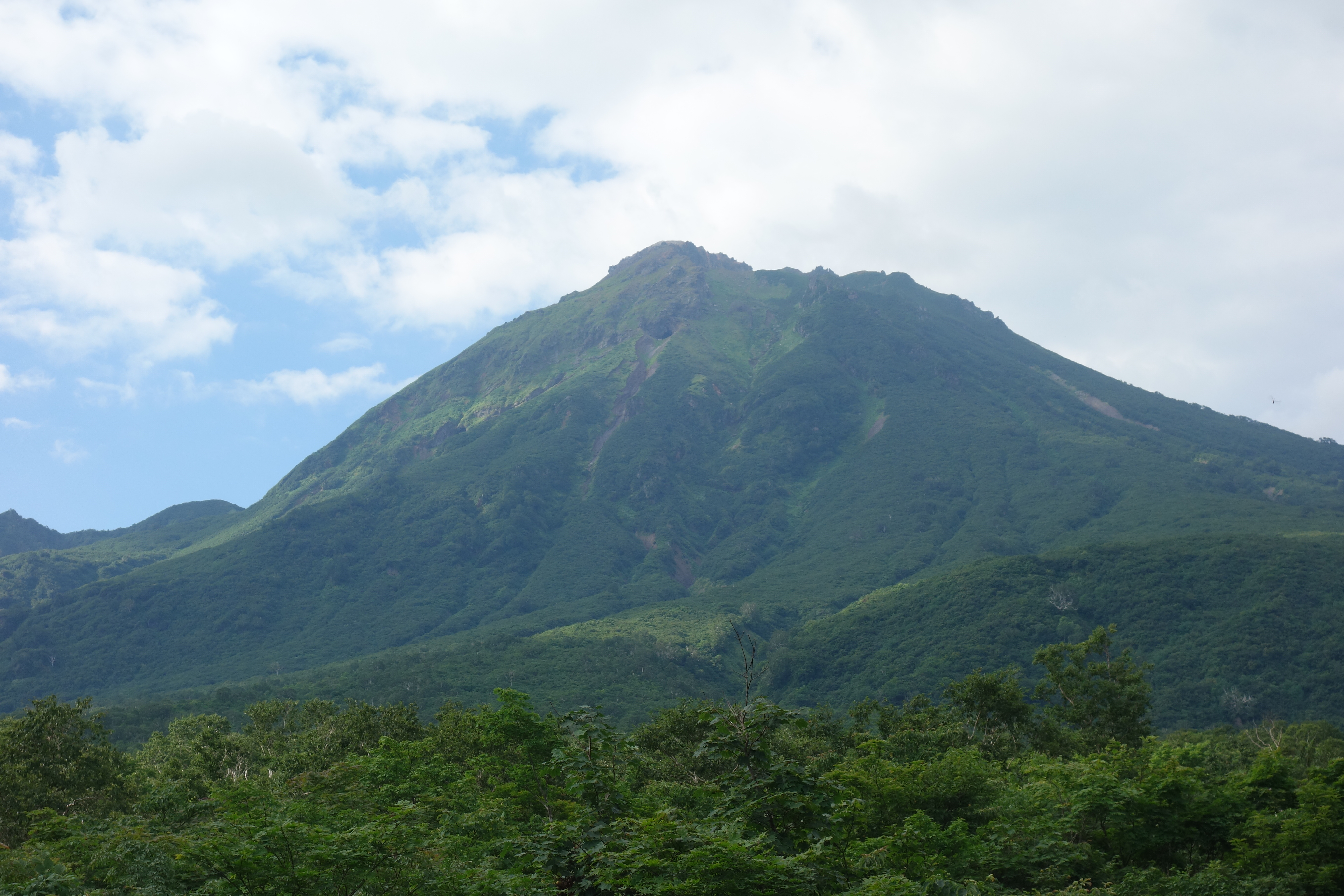
Niigata-Yakeyama
Three students were climbing the flanks of Niigata-Yakeyama on July 28, 1974, when the mountain ripped open. Fissures split the side of the summit dome, 200 meters below the peak, and a column of ash and toxic gas blasted outward. The students did not survive. They were killed by either poisonous volcanic gases or flying ejecta -- no one could determine which in the aftermath. The eruption was phreatic, meaning it was driven by superheated groundwater rather than fresh magma, but the distinction offered no comfort. Niigata-Yakeyama had been quiet for 25 years. It awoke without meaningful warning, as it has done repeatedly across its brief and violent geological life.
Three Thousand Years of Fury
Niigata-Yakeyama is, in geological terms, an infant. Estimated at roughly 3,100 years old, it is one of the youngest volcanoes in all of Japan. It takes the form of a lava dome -- a bulging plug of viscous rock -- that grew atop a ridge of a much older Tertiary mountain range near the coast of Niigata Prefecture on the island of Honshu. The dome's summit is scored with fissures, each one a scar from eruptions past. Three major magmatic events have defined the volcano's recorded history: eruptions in 887 AD, 1361, and 1773. All three ranked VEI 3 to 4 on the Volcanic Explosivity Index, powerful enough to send lava and pyroclastic flows cascading downslope all the way to the Sea of Japan coastline. The 1361 eruption built the current summit dome. Since 1773, every eruption has been phreatic -- steam-driven blasts from fissures and craters rather than flows of fresh molten rock -- but no less dangerous for the people living below.
The Coastline Killer
What makes Niigata-Yakeyama particularly menacing is its proximity to the sea. Most Japanese volcanoes sit deep in mountain ranges, their destructive flows absorbed by valleys and ridges long before reaching populated lowlands. Yakeyama's dome perches near the Niigata coastline, and when it erupts with force, pyroclastic flows -- superheated avalanches of gas, ash, and rock that travel at hundreds of kilometers per hour -- have historically reached the shore. The 887 AD eruption sent pyroclastic material all the way to the Sea of Japan, a distance that leaves almost no margin for the communities in between. The volcano's coastal position also means that any large eruption could potentially trigger secondary hazards where hot volcanic material meets seawater. The Japan Meteorological Agency and the Geological Survey of Japan both monitor the mountain continuously, watching for the telltale signs of unrest.
A Restless Decade
The 1974 tragedy marked the beginning of a particularly restless period. A smaller eruption followed in 1987, when two ash plumes rose simultaneously from the northeast and southeast flanks. Steam vented from eight separate spots across the mountain. Residents in surrounding areas were forced to evacuate. Two years later, on March 30, 1989, a steam column issued from the summit, and four days afterward a second column carrying ash erupted. Then came paired events in 1997 and 1998: an eruption beginning October 26, 1997, that continued intermittently until December 10, followed by another on March 30, 1998. Both were rated VEI 1 -- small by Yakeyama's historical standards -- and both originated from the east flank of the summit dome. The pattern is clear: this volcano does not sleep for long. Each quiet interval breeds a false sense of security that the next eruption dispels.
Living Beside the Dome
Despite its record, Niigata-Yakeyama remains a presence that local communities have learned to live alongside rather than abandon. The surrounding Niigata countryside is green, mountainous, and deeply tied to agriculture and hot spring tourism. The volcano's thermal energy feeds the geothermal resources that make this part of Japan a destination for onsen visitors. Hiking trails cross the lower slopes, though access to the summit area is restricted during periods of elevated volcanic activity. From the air, the dome is unmistakable: a pale, scarred bulge rising from the dark green ridgeline, its fissured crown a contrast to the forested flanks below. It sits apart from the higher peaks of the Japanese Alps to the south, a solitary and conspicuously young landform on a coastline shaped by far older geological forces.
From the Air
Niigata-Yakeyama is located at 36.921N, 138.036E on the western coast of Honshu, Japan, in Niigata Prefecture. The lava dome is visible from cruising altitude as a pale, scarred formation on a forested ridge near the Sea of Japan coastline. Nearest major airport: Niigata Airport (RJSN), approximately 60nm to the northeast. The volcano sits near the boundary between Niigata and Nagano Prefectures. Caution: active volcano with periodic phreatic eruptions; volcanic ash advisories may affect flight operations in the area. The Japan Meteorological Agency monitors the site continuously. Mountain weather and Sea of Japan moisture can produce low cloud cover and reduced visibility, particularly in autumn and winter.