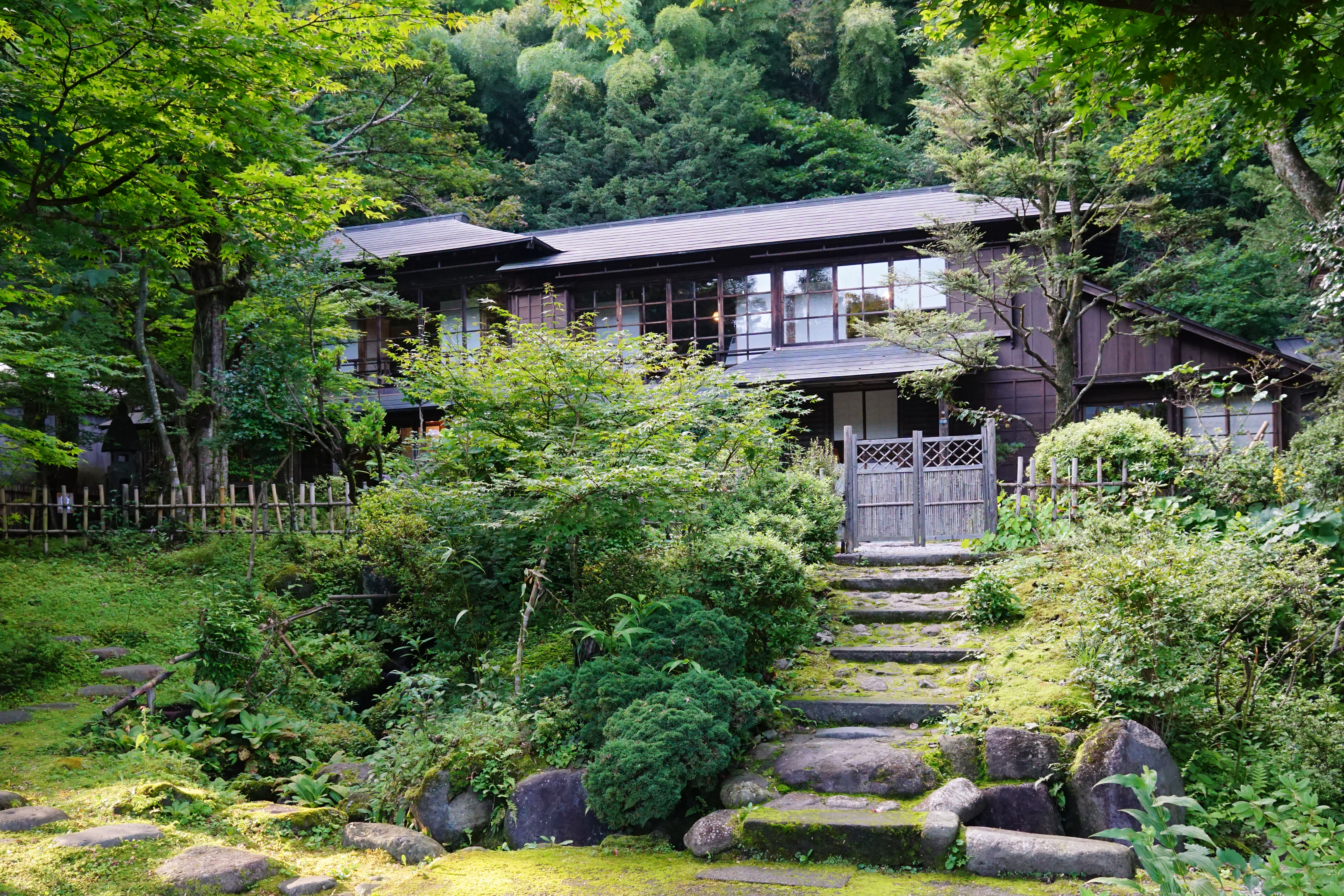
Nikko Kanaya Hotel
In 1871, a man named Kanaya Zenichiro played the sho, a bamboo mouth organ, at Nikko Toshogu, the great Tokugawa shrine in the mountains of Tochigi Prefecture. One evening, an American arrived at the shrine complex with nowhere to stay. James Curtis Hepburn was no ordinary traveler. A physician and missionary, he had already spent years in Japan and would later be credited with developing the standard system for romanizing the Japanese language. Kanaya invited the stranger into his home, a former samurai residence from the Edo period. Hepburn stayed, told others about his host's hospitality, and two years later convinced Kanaya to convert his house into an inn. That simple act of generosity in 1871 created what would become the oldest Western-style resort hotel in Japan.
From Samurai House to Grand Hotel
The first guests at Kanaya's converted home arrived in June 1873, drawn by Hepburn's enthusiastic accounts and by the growing desire among Western visitors to see Nikko's legendary shrines. The early operation was modest, a samurai house repurposed for foreign travelers who needed beds instead of futons and chairs instead of tatami. But word spread quickly through diplomatic and scholarly circles. Harry Parkes, the British minister to Japan, came in 1874. The French collector Emile Guimet followed in 1876. American zoologist Edward S. Morse arrived in 1877, and the intrepid British explorer Isabella Bird stayed in 1878. When former U.S. President Ulysses S. Grant visited in 1879, Kanaya's reputation was secured. By 1893, the family had constructed a grand new building on 14 acres adjacent to Nikko Toshogu, the Main Building that still stands today.
A Crossroads of Cultures
What made the Kanaya Hotel remarkable was not just its age but its role as a meeting point between Japanese tradition and Western expectation. The hotel served coffee from pots decorated with red maple leaves, a design created at the time of its opening that became an enduring symbol of the property. The architecture blended Western comforts with Japanese craftsmanship, creating spaces that felt neither fully foreign nor entirely local. The hotel sat in the shadow of Nikko Toshogu, one of the most elaborately decorated shrine complexes on earth, and its guests moved between carved golden gates and Victorian dining rooms, between incense-filled temple halls and European-style parlors. This proximity to the sacred and the international gave the Kanaya a character no other Japanese hotel could replicate.
Occupied and Enduring
The hotel's history mirrors Japan's own turbulent 20th century. In 1945, following Japan's surrender, the Supreme Commander for the Allied Powers requisitioned the Kanaya Hotel. For nearly seven years, through February 1952, it operated as a rest and recreation facility for Allied military personnel on vacation. The grand rooms that once hosted presidents and explorers now served a very different clientele. Yet the hotel survived the occupation with its character intact, reopening to civilian guests and continuing its tradition of welcoming international visitors. In 2016, the Tobu Railway Company acquired 60 percent of the hotel's shares, bringing it into the Tobu Group while preserving its independent identity.
The Samurai House Lives On
The original building where Kanaya Zenichiro first hosted Hepburn still exists, located 1.3 kilometers west of the current hotel. Known to early foreign visitors as the 'Samurai House,' it has been preserved in nearly the same condition as when it opened its doors in 1873. In 2015, the house was registered as a cultural property and opened to the public as the Kanaya Hotel History House. Walking through its rooms, visitors can trace the origins of Japanese hospitality to international travelers, from the Edo-period architecture built for a warrior class to the improvised guest rooms where a shrine musician and an American doctor accidentally invented a new kind of Japanese tourism.
A Dynasty of Innkeepers
The Kanaya family's influence on Japanese hospitality extended well beyond Nikko. In 1907, Kanaya Zenichiro's second son, Kanaya Shozo, was adopted into the Yamaguchi family, founders of the Fujiya Hotel in Hakone, and became its second-generation manager. The two hotels, Kanaya in Nikko and Fujiya in Hakone, became pillars of Japan's earliest tourism industry, welcoming the foreign visitors who would introduce the country to the wider world. Over 150 years after that chance encounter between a musician and a doctor, the Nikko Kanaya Hotel continues to operate on the same grounds, adjacent to the same shrine, serving guests who still arrive seeking the same combination of mountain tranquility and cultural richness.
From the Air
Located at 36.75N, 139.60E on the slopes above the town of Nikko, Tochigi Prefecture, adjacent to the Nikko Toshogu shrine complex. The hotel's Main Building and surrounding grounds are nestled in dense forest on the hillside. Nearest airports: Utsunomiya (RJTU) approximately 35 km south, Ibaraki Airport (RJAH) approximately 120 km southeast, and Tokyo Narita (RJAA) approximately 190 km south. The Nikko shrine district is identifiable from the air by the dense cryptomeria forest and the distinctive rooflines of the temple complex. Best viewed at 3,000-4,000 feet AGL.