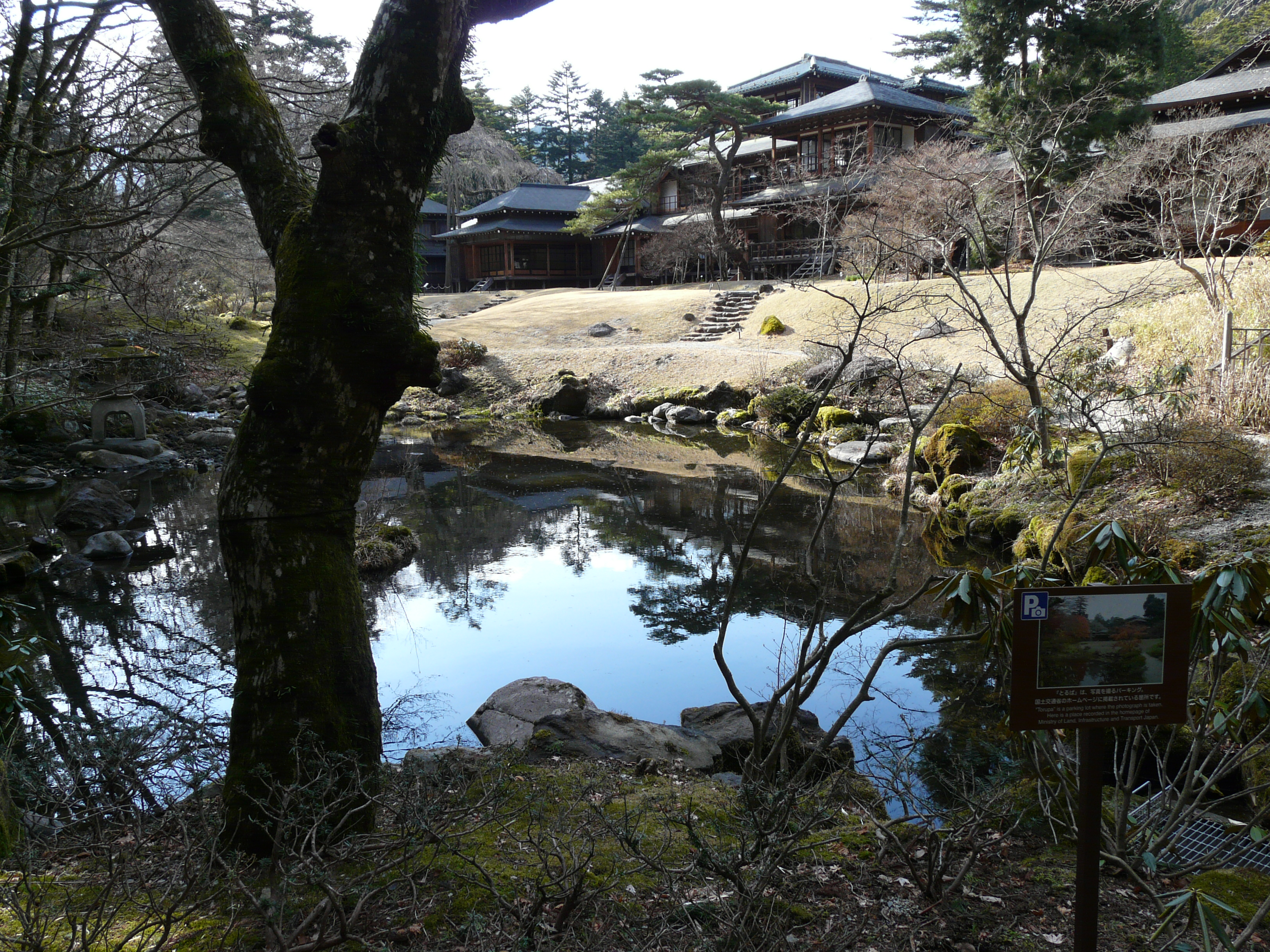
Nikko: Where a Shogun Became a God
Three small monkeys carved on a stable wall have become more famous than the shogun they were built to honor. That is the strange fate of Nikko, a mountain town in Tochigi Prefecture where Tokugawa Ieyasu -- the warrior who unified Japan and founded a dynasty that ruled for over 250 years -- asked to be enshrined as a god. His successors obliged with a complex so lavishly decorated that it broke every rule of Japanese aesthetic restraint. Gold leaf, multicolored carvings, 508 sculpted figures on a single gate. And yet visitors line up longest at a modest wooden stable to photograph the see-no-evil, hear-no-evil, speak-no-evil trio, attributed to the legendary sculptor Hidari Jingoro. The monkeys are part of an eight-panel cycle depicting the stages of life -- from carefree youth to anxious old age -- but it is those three, hands clasped over eyes and ears and mouth, that have traveled the world as a proverb. Nikko itself operates on a similar contradiction: famous for gilded excess, best remembered for simplicity.
A Dying Wish, Cast in Gold
In 1616, the dying Tokugawa Ieyasu made his final request: "Build a small shrine in Nikko and enshrine me as the God. I will be the guardian of peace keeping in Japan." The first temple on this mountainside along the Daiya River had already stood for over 1,200 years, founded by the Buddhist monk Shodo Shonin in the eighth century. But the Tokugawa shoguns transformed the site into something unprecedented in Japanese architecture. The Tosho-gu shrine, completed and expanded under Ieyasu's grandson Iemitsu, abandoned the austere elegance typical of Shinto sacred spaces. Instead, the buildings drip with gold leaf, polychrome carvings, and unmistakable Chinese influence. The Yomeimon Gate alone bears 508 detailed carvings of children, sages, and mythical creatures. Nearby, a tiny carving of a sleeping cat -- the Nemuri-neko -- guards the path to Ieyasu's tomb. Sparrows carved on its reverse side flutter freely while the cat dozes, a symbol of the peace Ieyasu's unification brought to Japan.
Thirty-Five Kilometers of Living Architecture
Before visitors reach a single shrine, Nikko announces itself through trees. Starting in 1625, a loyal retainer named Matsudaira Masatsuna spent twenty years planting some 200,000 cedar trees along three roads leading to the sacred complex. Today, roughly 12,000 of those trees survive, forming the Cedar Avenue of Nikko -- at 35.41 kilometers, the longest tree-lined avenue in the world, recognized by the Guinness Book of World Records. Walking beneath their canopy, the trunks rising straight as columns into green darkness, the noise of the modern world falls away. The cedars were Masatsuna's offering to Ieyasu's spirit, donated to the shrine on the thirty-third anniversary of the shogun's death. Together with the UNESCO-listed shrines and temples they shelter -- Tosho-gu, Futarasan Shrine dating to 767 AD, and the Tendai Buddhist temple Rinno-ji -- the forest creates a landscape where human devotion and natural grandeur are inseparable. Over 13,000 cedars still blanket the sacred precinct itself, providing the dignity that all the gold leaf cannot.
The Inner Mountains
Most visitors day-trip from Tokyo and never leave the shrine district, but Nikko sprawls across a quarter of Tochigi Prefecture, climbing from 200 to 2,000 meters in elevation. An hour west by bus, the road switchbacks up to Lake Chuzenji, sitting at 1,269 meters -- the highest natural lake in Japan -- where the Kegon Falls plunge 97 meters from the lake's outlet in a single white column, ranked among Japan's three most beautiful waterfalls. Beyond the lake, the landscape opens into the wetlands of Senjogahara Plateau, where legend says the gods of Mount Nantai and Mount Akagi once battled for possession of the lake, shape-shifting into giant serpents and centipedes. The plateau's raised wooden boardwalks wind through marshland bright with wildflowers. Further still, the 70-meter Yudaki Falls tumble into Lake Yunoko, and hot-spring villages like Yumoto offer the steaming onsen baths that have drawn travelers to these mountains for centuries.
Tofu Skin and Borrowed Umbrellas
Nikko's local specialty is yuba -- the delicate skin that forms on the surface of heated soy milk during tofu production. Restaurants throughout town serve it in every conceivable preparation: draped over soba noodles, wrapped into small parcels, layered into multi-course Buddhist vegetarian meals. It is also the signature edible souvenir, sold fresh and dried in shops along the main road. The town reveals its character in smaller gestures too. At the tourist information center halfway between the train station and the shrines, visitors can drink from a ladle-drawn waterfall and borrow umbrellas for rainy walks to the temples -- returning them on the way back. Along the side street called Hippari Dako, secondhand shops sell vintage kimono and antiques. Oddly, Western-style cheesecake has also become a Nikko specialty, with no historical or cultural explanation anyone can offer. The shrines glow at dawn and dusk when the tour buses have gone, and the cedar shadows lengthen across stone lanterns -- reason enough to stay the night in a traditional ryokan rather than rushing back to Tokyo.
From the Air
Located at 36.75N, 139.60E in the mountains of Tochigi Prefecture, approximately 140 kilometers north of Tokyo. The shrine complex sits along the Daiya River in a heavily forested mountain valley, with elevations ranging from 200 to 2,000 meters across the broader area. Lake Chuzenji and Kegon Falls are visible to the west at 1,269 meters elevation. Mount Nantai (2,486 meters) dominates the western skyline. Nearest significant airport is Tokyo Narita (RJAA), approximately 180 kilometers southeast, or Tokyo Haneda (RJTT). The Nikko National Park boundaries extend across a large mountainous area visible at cruising altitude. Best viewed at 3,000-5,000 feet AGL approaching from the south, where the forested sacred precinct contrasts with the town below.