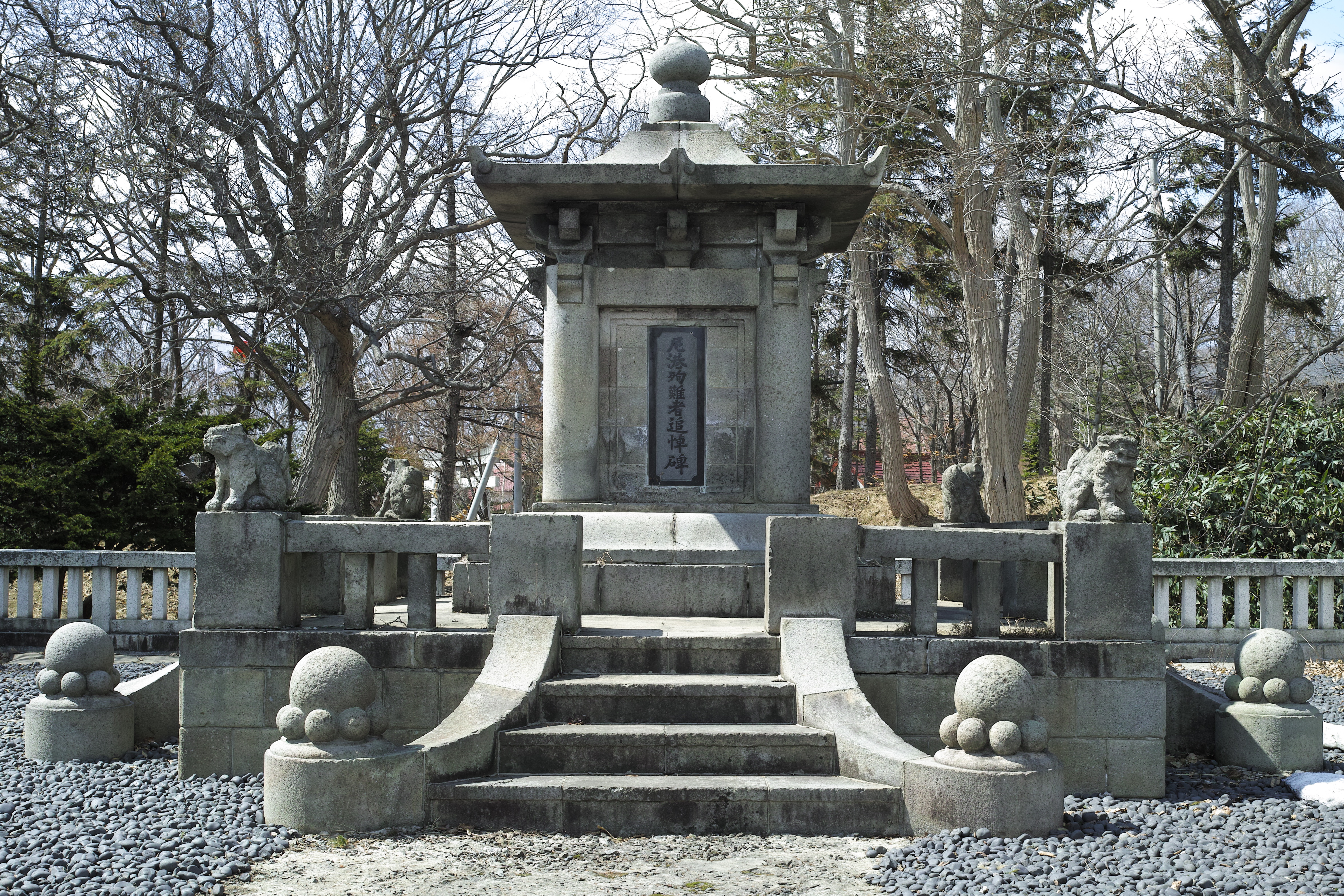
Nikolayevsk Incident
Nikolayevsk-on-Amur sits at the mouth of one of Asia's great rivers, where the Amur empties into the Strait of Tartary opposite Sakhalin Island. In 1920, it was a small but strategically important gold-mining town with a Japanese garrison, a Japanese consulate, and a civilian population that had so far survived the chaos of the Russian Civil War at a safe distance from the main fighting. That distance vanished in February, when a partisan force of roughly a thousand fighters under the anarchist commander Yakov Tryapitsyn marched out of the taiga and entered the city. What followed over the next several months was one of the most brutal episodes of the Russian Civil War -- a systematic campaign of mass killing that destroyed Nikolayevsk and reshaped the geopolitics of the Russian Far East.
The March from the Taiga
Tryapitsyn was a World War I volunteer from Petrograd who had risen to the rank of non-commissioned officer before joining the Red Army partisans in the Russian Far East. At the end of 1919, he was dispatched -- or possibly departed on his own initiative, dissatisfied with the passivity of the partisan command -- to the lower Amur to organize an insurgency. His force included roughly two hundred Chinese and two hundred Korean fighters recruited from the gold mines of the taiga, commanded by Ilya Pak. Tryapitsyn reportedly paid them cash up front, promising gold and plunder. His lieutenants, including Ivan Lapta, had already been raiding villages and gold mines along the Amgun River, killing Indigenous people and civilians who refused to surrender their gold. By the time the force reached Nikolayevsk, it had left a trail of murdered civilians and looted settlements behind it.
The Destruction of a City
Tryapitsyn's forces entered Nikolayevsk under a negotiated agreement with the Japanese garrison. The agreement lasted days. On the night of March 8-9, partisans killed 93 prisoners. When the Japanese garrison commander, Major Ishikawa, refused an ultimatum to disarm on March 12, he launched a preemptive strike. Tryapitsyn was wounded but organized resistance, and after fierce fighting the outnumbered Japanese garrison was overwhelmed. The Japanese consul and his staff died in the consulate, which the partisans set ablaze. What followed was indiscriminate slaughter. Eyewitnesses described piles of hundreds of mutilated bodies -- men, women, and children -- bearing evidence of bayoneting, dismemberment, and torture. By one account, over 600 prisoners, mostly intellectuals and professionals, were killed in the prisons and detention facilities on March 12 and 13 alone. The killing continued daily, with partisans using swords, axes, and bayonets.
The Aftermath That Would Not End
The violence did not stop with the destruction of Nikolayevsk. When thousands of surviving civilians were forcibly evacuated on a march through the taiga, partisan riders trampled people on horseback, and those too weak to keep pace -- women and children among them -- were killed where they fell. Bodies floated down the Amgun River for days. Khabarovsk authorities eventually moved to eliminate Tryapitsyn, not out of moral outrage but because he was hostile to both the Far Eastern Republic and the Communist Party and had become a military provocation to the Japanese. His removal did not undo the damage. Japan cited the Nikolayevsk massacre as justification for occupying northern Sakhalin in the summer of 1920, an occupation that would last until 1925.
Memory and Manipulation
At the time, Japan emphasized and exaggerated its own losses at Nikolayevsk, using the incident as propaganda to justify its broader intervention in the Russian Far East. The reality was that the overwhelming majority of those killed were Russian civilians, not Japanese soldiers or nationals. Japanese propaganda largely omitted the thousands of Russian dead who constituted the bulk of Tryapitsyn's victims. The incident became a pretext rather than a reckoning -- useful to Tokyo for territorial ambitions, buried by Moscow as an embarrassment. The people of Nikolayevsk-on-Amur, the Russian professionals and families and Indigenous communities who were murdered, became footnotes in both countries' narratives. The city itself never fully recovered. Today it remains a small, remote settlement at the mouth of the Amur, its population a fraction of what it was before 1920.
From the Air
Located at 53.13N, 140.73E at the mouth of the Amur River where it meets the Strait of Tartary, opposite Sakhalin Island. The town of Nikolayevsk-on-Amur (UHNN) has a small airport. Approach from the east over the Sea of Okhotsk or follow the Amur downstream from Komsomolsk-on-Amur. At 3,000-5,000 ft, the wide Amur estuary and the town's position at the river mouth are clearly visible. Sakhalin Island rises across the strait to the east.