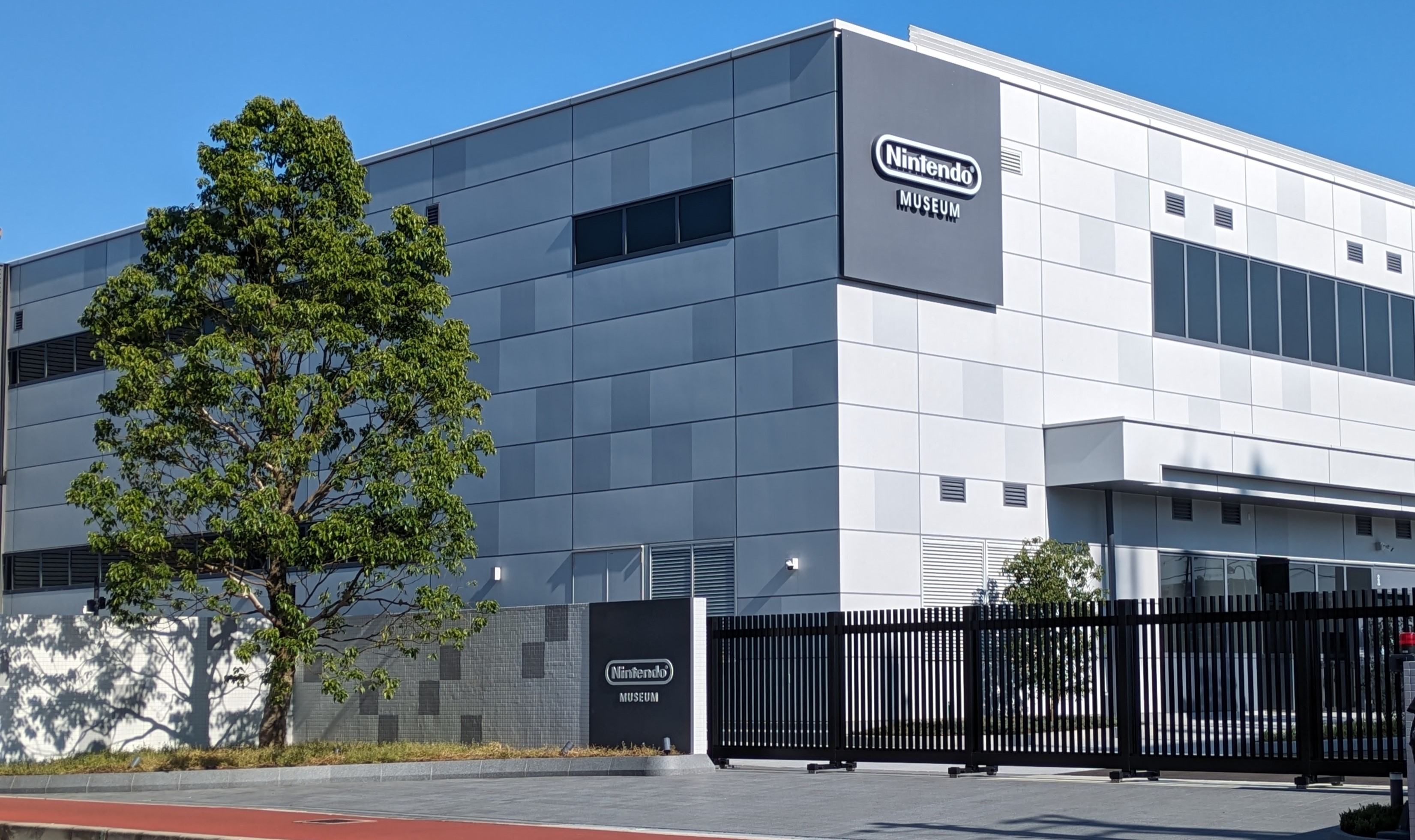
Nintendo Museum
In 1889, a craftsman named Fusajiro Yamauchi began hand-painting flower cards in a small workshop in Kyoto. Those hanafuda cards -- 48 delicate illustrations representing the twelve months of the year -- became the foundation of a company that would reshape entertainment worldwide. Now, in the quiet city of Uji just south of Kyoto, the very factory where Nintendo once manufactured those traditional cards has been reborn as the Nintendo Museum, a place where the full arc of that improbable journey is laid out across two floors of interactive wonder.
From Flower Cards to Factory Floor
The Ogura Plant in Uji was built in 1969 as Nintendo's manufacturing hub for toys and playing cards. For decades, this unassuming industrial building churned out the physical products that sustained the company through its pre-digital years -- hanafuda decks, Western-style playing cards, and karuta sets. By the 1990s, as Nintendo's empire shifted decisively toward electronic gaming, the Ogura Plant's manufacturing duties migrated to a larger facility nearby. The old factory sat quietly, holding its history in concrete walls and loading docks. When Nintendo announced in 2021 that the site would become a museum, it was a decision that honored the company's roots in the most literal way possible: bringing visitors back to the place where it all began to be made.
Playing With the Past
The museum's second floor houses the main exhibition, a chronological walk through every era of Nintendo's output. But Uji is not a place for passive observation. Downstairs, oversized replicas of vintage Nintendo toys invite visitors to experience the company's pre-digital ingenuity firsthand. The Ultra Hand, a mechanical grabbing arm that was Nintendo's first major toy hit in the 1960s, gets supersized. The Love Tester, a novelty gadget that claimed to measure romantic compatibility, returns in interactive form. Giant NES Zappers await trigger fingers, and colossal controllers -- so large they require two people to operate -- turn classic Nintendo 64 games into cooperative physical challenges. A workshop lets visitors cut and stamp their own set of hanafuda cards, connecting the museum's digital present to its analog origins.
The Lottery at the Gate
Getting into the Nintendo Museum is itself a game of chance. Rather than conventional ticket sales, Nintendo implemented a lottery system when the museum opened on October 2, 2024. Visitors apply for a specific date in advance and wait to learn whether they have been selected. The system controls crowd sizes in a building that was never designed as a public attraction, and it adds an element of anticipation that any gamer recognizes -- the suspense before the reveal. With no plans to expand to additional locations outside Japan, as confirmed by Nintendo's Shigeru Miyamoto himself, the Uji museum remains a singular destination, a pilgrimage site for the devoted.
Uji's Quiet Stage
Uji is better known for matcha tea and the ancient Byodo-in temple than for video games, and the contrast is part of the museum's charm. The city sits along the Uji River in southern Kyoto Prefecture, a landscape of tea fields and forested hills that feels far removed from the neon-lit entertainment districts of Tokyo or Osaka. Nintendo's choice to keep its museum here rather than relocating to a more commercially prominent city speaks to something fundamental about the company's identity. It was in Kyoto, not Tokyo, that Yamauchi painted his first flower cards. It was in this quiet corner of the Kansai region that Nintendo grew from a card manufacturer into an entertainment giant. The museum simply asks visitors to come to where the story actually happened.
From the Air
Located at 34.89N, 135.78E in Uji, Kyoto Prefecture, Japan. The museum building is a converted industrial facility in a suburban area south of central Kyoto. Nearby airports include Kansai International Airport (RJBB, approximately 75 km south) and Osaka Itami Airport (RJOO, approximately 35 km west). The Uji River and the distinctive green roofline of Byodo-in temple are useful visual landmarks when approaching from the air. Best viewed at 3,000-5,000 feet AGL for context within the broader Kyoto-Uji urban corridor.