Nipissing First Nation
Every trade route in the region eventually passed through their territory. The Nbisiing Anishinaabeg -- the people of Lake Nipissing -- lived at one of North America's great geographic crossroads, the narrow divide where waters split east toward the Saint Lawrence and west toward the Great Lakes. Canoes heading from Montreal to the continental interior portaged through Nipissing country. Furs heading east to European markets did the same. For centuries before European contact, and for generations after, the Nipissing leveraged this position into a trading network that reached from James Bay in the north to Quebec City in the east, from Lake Nipigon in the west to the Huron country in the south. Their homeland was not just a place on the map but a junction -- the point where cultures, commerce, and waterways converged.
People of the Crossroads
The Nipissing homeland sits between two watersheds. Lake Nipissing drains west through the French River into Georgian Bay and, ultimately, the Great Lakes. To the east, Trout Lake feeds the Mattawa River, which flows into the Ottawa River and down to the Saint Lawrence. This geographic hinge made the Nipissing indispensable to anyone moving goods or people across the region. French voyageurs portaged extensively across this watershed divide to reach the Great Lakes by canoe from their settlements around Montreal. The Nipissing traded west as far as Lake Nipigon with their Ojibwa neighbors, north to James Bay with the Cree, and east along the Saint Lawrence to present-day Quebec City. Archaeological evidence shows they incorporated Huron pottery techniques -- a sign of the cultural exchange that flowed along with the trade goods. The Nbisiing Anishinaabeg have roots in both the Ojibwe and Algonquin nations, their dual heritage itself a product of living where two Indigenous worlds overlapped.
Five Clans at the Water's Edge
Nipissing society is organized around five clans, or doodems, each with its own territory and identity: Blood (Miskwaa'aa), Birchbark (Wiigwaas), Heron (Ashagi), Beaver (Amikwaa), and Squirrel (Asanagoo). During early contact with Europeans, the Blood, Birchbark, and Squirrel clans lived on and around Lake Nipissing. The Heron clan held territory stretching south to the eastern coast of Georgian Bay. The Beaver clan occupied the northern coast of Georgian Bay, adjacent to Heron country. Each clan governs independently along family lines but cooperates as part of the broader Nipissing Nation. This structure -- autonomous clans within a collaborative whole -- allowed the Nipissing to manage a sprawling trade network while maintaining the flexibility to respond to threats from any direction.
The Fur-Trade Wars
When French colonists arrived, the Nipissing's existing trade routes became enormously valuable. European demand for beaver pelts transformed regional commerce, and the Nipissing found themselves caught between competing empires. The Iroquois Confederacy, based south of Lake Ontario, launched military campaigns against the Huron and the Nipissing to dominate the fur trade. By 1647, the pressure was severe enough to force the Nipissing to regroup far to the west at Lake Nipigon. They continued to use their historical trade routes but at far greater risk. The Jesuit missionary Claude-Jean Allouez visited the Nipissing at Lake Nipigon in 1667. By 1671, he reported they had returned to their ancestral lake. Some Nipissing later relocated to missions at Trois-Rivieres and Oka, Quebec, but the core of the nation held to the north shore of Lake Nipissing, the crossroads they had occupied for generations.
Treaty and Survival
In 1850, facing increasing European encroachment by settlers, the Nipissing signed the Robinson Treaty with the Canadian representatives of the British Crown. The treaty confirmed their claim to the north shores of Lake Nipissing and its main waterways. Today the Nipissing First Nation reserve -- formerly known as Nipissing 10 -- stretches along the north shore between the city of North Bay and the municipality of West Nipissing. The reserve encompasses the communities of Beaucage, Jocko Point, Yellek, Duchesnay, and Garden Village. Garden Village connects directly to Sturgeon Falls by municipal roads, while the other communities access Highway 17 West. As of 2009, the nation had a total registered population of 2,201 people, with 886 living on the reserve.
Writing Their Own Law
In January 2014, the Nipissing First Nation adopted what is believed to be the first constitution for any First Nation in Ontario. The document is intended to replace the federal Indian Act as the supreme law governing the nation, though it has not yet been tested in court. It represents something the Nipissing have practiced for centuries in a different form: self-governance rooted in local knowledge and clan-based consensus. The nation is governed by an elected chief, deputy chief, and six councillors under a custom electoral system. They are members of the Waabnoong Bemjiwang Association of First Nations and the Union of Ontario Indians. Among notable Nipissing are NHL hockey player Dan Frawley, who captained the Pittsburgh Penguins in 1987, and Ian Campeau of the electronic music group A Tribe Called Red. The crossroads endures -- still a place where different worlds meet.
From the Air
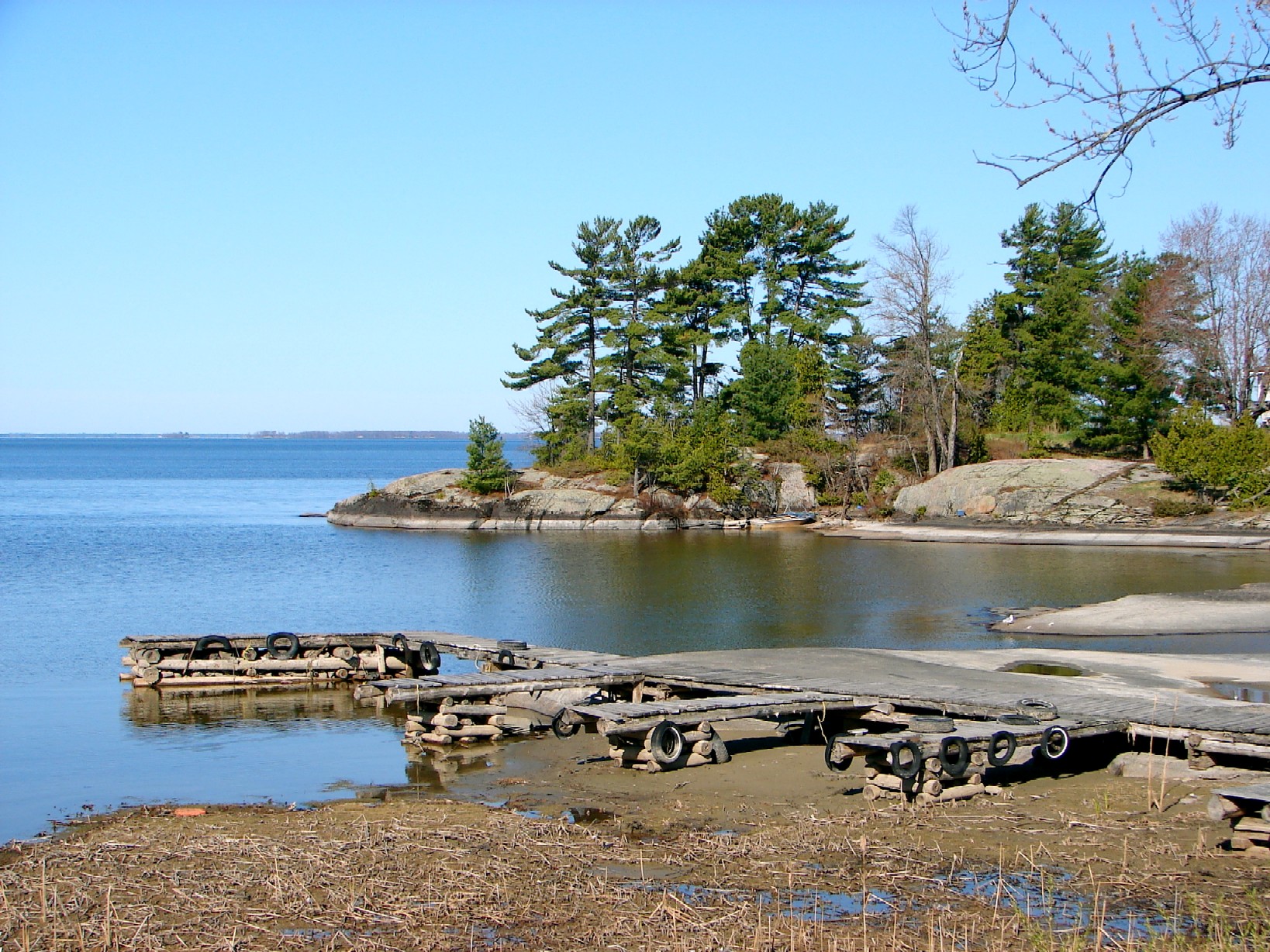
Located at 46.37N, 79.77W on the north shore of Lake Nipissing in northeastern Ontario. The Nipissing First Nation reserve is visible along the lakeshore between North Bay to the east and West Nipissing to the west. Lake Nipissing is a large, easily identifiable body of water roughly 65 km long. The communities of Garden Village, Duchesnay, and Jocko Point line the shoreline. Best viewed below 3,000 feet AGL. Nearby airports: North Bay/Jack Garland Airport (CYYB) approximately 10nm east. The French River outlet to the west and the Mattawa River corridor to the east are prominent landscape features visible from altitude.