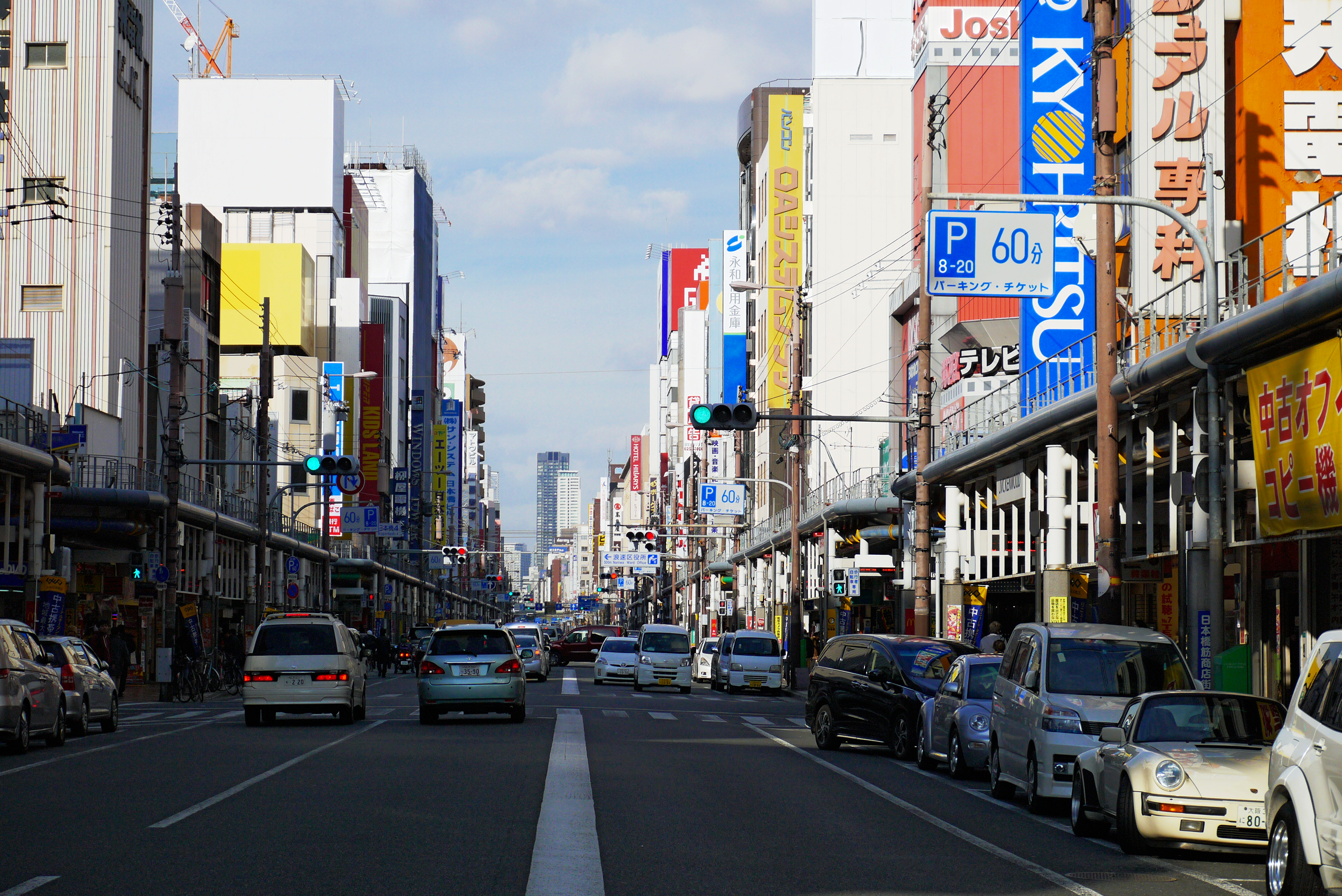
Nipponbashi
The saying goes: "Akiba in the East, Ponbashi in the West." If Tokyo's Akihabara is Japan's most famous electronics and otaku district, then Nipponbashi -- known locally as Den Den Town -- is its Osaka counterpart, with a personality all its own. Stretching along Sakaisuji Avenue through Naniwa Ward, this strip of shops, arcades, and cafes has reinvented itself at least three times over four centuries, shifting from Edo-period merchant lodgings to postwar electronics bazaar to anime-and-cosplay mecca. What never changed is the energy. Osaka's mercantile culture runs deep here, and Den Den Town still rewards the shopper willing to browse, haggle, and discover.
From Nagamachi to Neon
During the Edo period, the district that would become Nipponbashi was known as Nagamachi, a lodging quarter for travelers along one of Osaka's major commercial routes. The name Nipponbashi -- literally "Japan Bridge" -- properly refers to the bridge crossing the Dotonbori canal to the north, though the shopping district that borrowed the name never quite reaches that far. Written with the same kanji as Tokyo's prestigious Nihonbashi district, the Osaka version carries a distinctly different pronunciation and character. Through the Meiji and Taisho eras, the neighborhood filled with secondhand bookshops. Then came the postwar boom: consumer electronics stores proliferated through the 1950s and 1960s, earning the area its enduring nickname Den Den Town -- from denki, the Japanese word for electricity.
The Art of the Deal
What distinguished Den Den Town from other electronics districts was its embrace of haggling. Where Japanese retail culture typically maintains fixed prices, Nipponbashi's shops made negotiation part of the experience -- a trait rooted in Osaka's centuries-old merchant traditions and the Kansai region's famously direct commercial culture. Several retailers also offered tax-free and duty-free purchasing, drawing international shoppers. The arrival of big-box competitors changed the equation: when Yodobashi Camera opened in Umeda and Bic Camera planted its flag in Namba, Den Den Town's furniture and home-appliance sales dropped sharply. But the district adapted, as it always had, pivoting toward the booming market for anime, manga, video games, and otaku culture.
Otaku Road and Maid Cafes
Today, walk down the stretch locals call Otaroad and the transformation is vivid. Stores like Mandarake overflow with vintage manga and rare collectibles. Tora no Ana stocks doujinshi and fan-produced works. A two-story outlet called Osaka Gundams dedicates itself entirely to the iconic mecha franchise. Maid cafes and cosplay cafes have proliferated alongside, ranging from simple coffee shops staffed by women in frilled aprons to full sit-down cabarets with elaborate themed interiors. The electronics heritage persists too -- Joshin and Sofmap still anchor the avenue -- but the cultural center of gravity has shifted decisively toward pop culture, drawing a younger, more international crowd that treats Den Den Town as a pilgrimage destination.
Street Festa
Every spring since 2005, the entire main street of Den Den Town shuts down to traffic for the Nipponbashi Street Festa, an event that now draws over 200,000 people. Cosplayers from across Japan converge on Sakaisuji Avenue in elaborate handmade costumes, parading between performance stages set up along the closed road. The festival doubles as a qualifying event for the World Cosplay Summit, meaning the craftsmanship on display can be genuinely extraordinary -- armor fabricated from foam and thermoplastics, wigs sculpted into gravity-defying shapes, costumes that took months to assemble. The Street Festa has become one of the Kansai region's signature cultural events, a celebration that captures Den Den Town's current identity as a place where fandom is taken seriously and displayed proudly.
Getting There
Den Den Town is easily accessible by rail. Ebisucho Station on the Sakaisuji Line drops visitors at the district's southern end, while Nipponbashi Station -- served by both the Sakaisuji and Sennichimae lines -- opens onto the northern stretch. The district runs roughly north-south along Sakaisuji Avenue, from the Ebisu-cho interchange of the Hanshin Expressway up toward Nansan-dori, just east of Nankai Namba Station. Walking the full length takes perhaps twenty minutes, though most visitors find that browsing stretches the trip considerably longer.
From the Air
Located at 34.6597°N, 135.5058°E in Naniwa Ward, central Osaka. The Sakaisuji Avenue corridor running through Den Den Town is visible as a north-south arterial in the dense urban grid south of Dotonbori. The nearby Hanshin Expressway interchange at Ebisu-cho marks the southern boundary. Nearest airports: Osaka Itami (RJOO) approximately 14 km north, Kansai International (RJBB) approximately 40 km south. Best viewed at lower altitudes when tracking the commercial corridor between Namba and Tennoji districts.