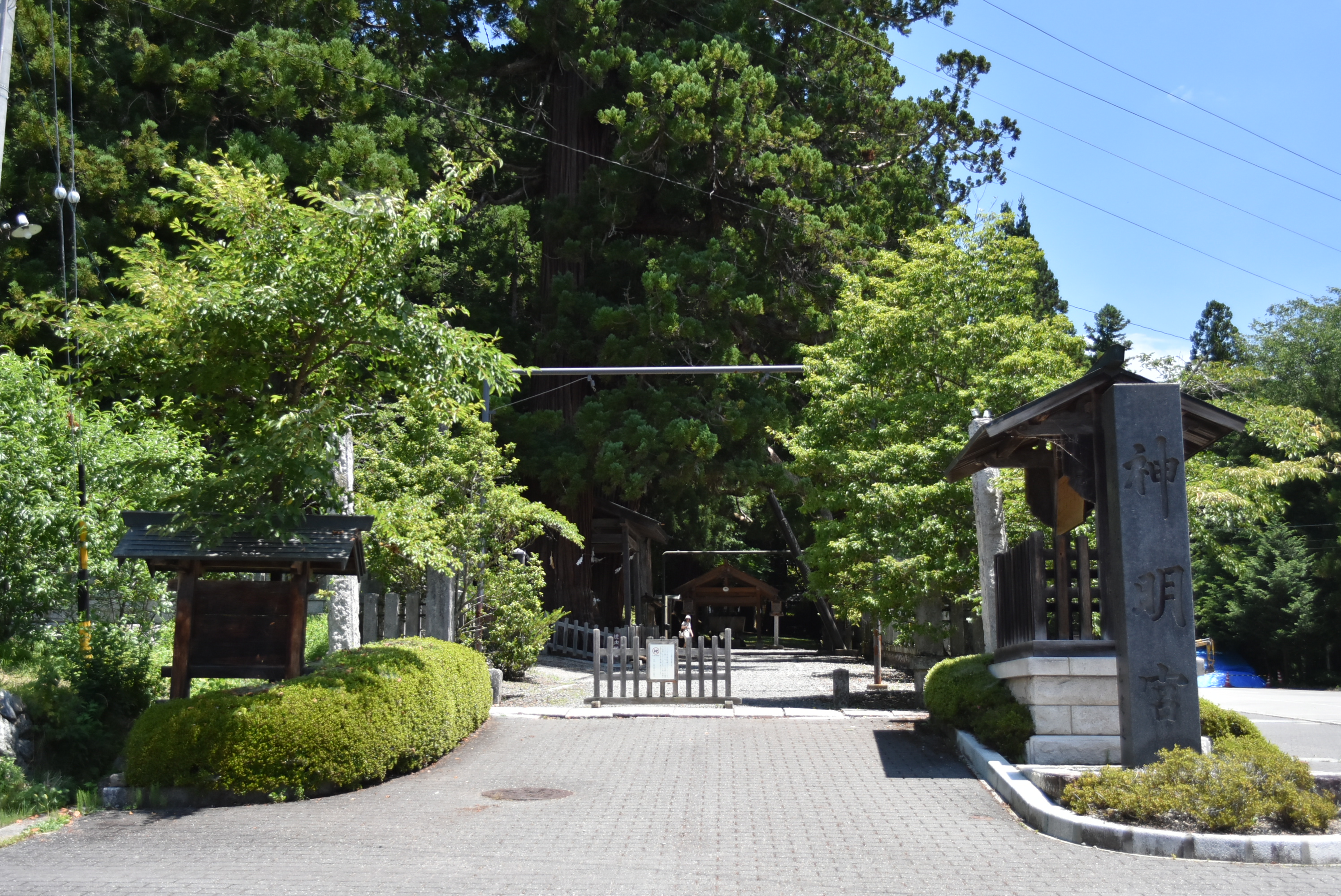
Nishina Shinmei Shrine: Older Than Ise, Simpler Than Anything
The most celebrated shrine in Japan is rebuilt from scratch every twenty years. Ise Shrine, home of the sun goddess Amaterasu, is dismantled and reconstructed in a cycle that has continued since antiquity, meaning no single timber at Ise is ever truly old. But tucked into a cedar forest in the mountain town of Omachi, Nagano Prefecture, stands a shrine that shares Ise's architectural style -- and unlike Ise, has survived in its original form. Nishina Shinmei Shrine is the oldest extant example of shinmei-zukuri, a building tradition so ancient it predates the arrival of Buddhism in Japan. Two of its structures are designated National Treasures. And while Ise draws millions of pilgrims each year, Nishina Shinmei sits quietly among eight-hundred-year-old cedars, visited mostly by those who know what they are looking at.
Architecture Before Buddhism
Shinmei-zukuri is one of three Shinto architectural styles conceived before Buddhist temples began reshaping the Japanese landscape. The prototype is thought to be the raised-floor granaries of the Yayoi period -- practical storehouses built high off the ground for ventilation and to prevent humidity from spoiling rice. Over centuries, the form was refined into sacred architecture. The hallmarks are extreme simplicity: straight lines of Japanese cypress, planed but left unfinished, allowing the natural beauty of the wood to speak. The honden -- the main sanctuary -- sits on a raised floor with a gabled roof, its entry on the non-gabled side. Purely decorative logs called chigi protrude vertically from the roof ridge, while horizontal katsuogi logs cross the ridgeline. There is no upward curve at the eaves, no ornament, no color. The style features can be traced in Japanese architecture from the Kofun period, roughly 250 to 538 CE, and it is considered the purest expression of traditional Japanese building.
The Nishina Clan's Gift
The shrine's history is bound to the Nishina clan, a powerful family that ruled the Azumi County area surrounding Omachi for approximately five hundred years, from the Heian period through the Kamakura period. When the Nishina Mikuriya estate was established as a manor belonging to Ise Shrine, the Nishina built this local shrine to protect it, enshrining the same deity as Ise itself: Amaterasu Omikami, the mythical sun goddess. The connection was deliberate -- Nishina Shinmei was to be a satellite of the great Ise, carrying the same sacred purpose and the same architectural language to the mountain interior. When the Nishina clan was eventually destroyed alongside their overlords the Takeda, the shrine passed into the care of successive lords of Matsumoto Castle. But the buildings themselves endured, their cypress timbers darkening with age while Ise was rebuilt again and again.
National Treasures in Cedar Shadow
The honden and the chumon -- the main hall and the inner gate -- along with the tsuriya, a suspended roof connecting the two, carry the designation of National Treasures of Japan. They are the oldest surviving examples of shinmei-zukuri architecture anywhere in the country. The buildings are small, intimate, and startlingly plain. The cypress construction uses hiwadabuki, a roofing technique in which thin layers of cypress bark are stacked and compressed into a weatherproof surface. The surrounding forest is designated a Natural Monument by Nagano Prefecture, and three Japanese cedars on the grounds are estimated to be more than eight hundred years old, their trunks thick enough that several people linking arms could not encircle them. The shrine sits at the foot of the Northern Alps, in a landscape of deep valleys, rushing rivers, and snow-heavy winters that makes the survival of these wooden structures all the more remarkable.
Twenty-Year Renewal
Like Ise, Nishina Shinmei Shrine observes the tradition of Shikinen Sengu -- periodic ritual renewal. Every twenty years, the roof is stripped and re-thatched with fresh cypress bark using the hiwadabuki method, and damaged timbers are repaired. Thirty-five wooden ridge plaques called munafuda survive at the shrine, each recording the details of a past renewal ceremony. The oldest dates to 1376, providing a written record of maintenance stretching back over six centuries. The most recent Shikinen Sengu was carried out in November 2019, on schedule, the bark layers carefully peeled and replaced by craftspeople trained in techniques that have changed little since the Heian era. Where Ise's renewal is a spectacle involving the complete reconstruction of every building, Nishina Shinmei's is quieter -- a careful preservation of what already exists, a reminder that the oldest way is sometimes simply to keep repairing what you have.
From the Air
Located at 36.450°N, 137.879°E in the foothills east of Omachi, Nagano Prefecture, at the base of the Northern Japanese Alps (Hida Mountains). The shrine is set within dense forest and not easily spotted from high altitude, but the town of Omachi and nearby Lake Kizaki are useful visual references. Matsumoto Airport (RJAF) lies approximately 15 nautical miles to the south. The Tateyama Kurobe Alpine Route begins from nearby Ogizawa. Best viewed at 2,000-3,000 feet AGL, with the forested hillside and cedar canopy visible along the eastern foot of the Alps.