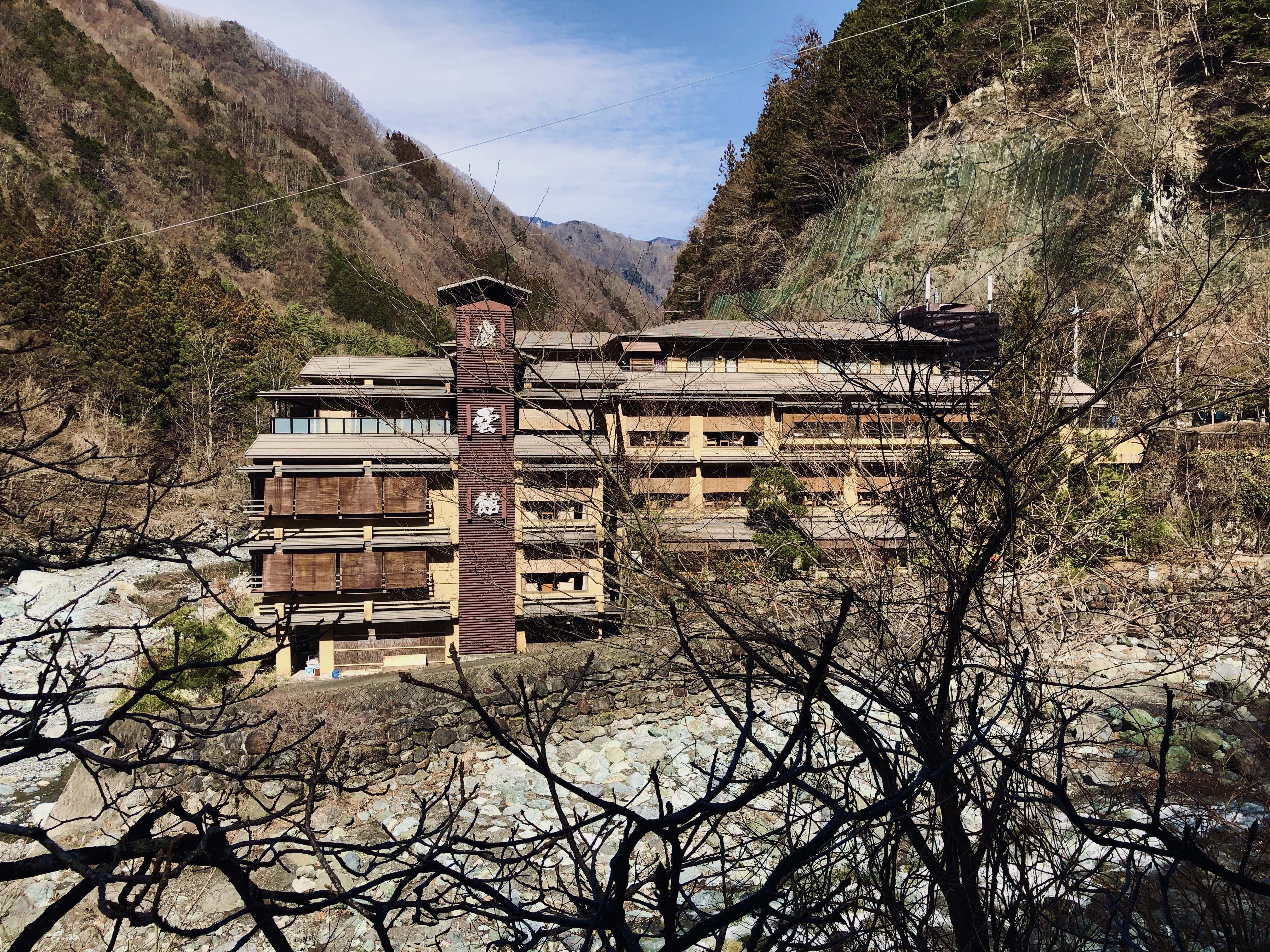
Nishiyama Onsen Keiunkan
Fifty-two generations of innkeepers. Thirteen centuries of hot water rising from the same springs. When Fujiwara no Mahito founded a hot spring inn at the foot of the Akaishi Mountains in 705 AD, the Nara period had not yet begun, the Viking Age was two lifetimes away, and Charlemagne's grandparents had not been born. Nishiyama Onsen Keiunkan has been receiving guests ever since, making it, according to Guinness World Records, the oldest hotel in the world.
Born in the Keiun Era
The inn takes its name from the Keiun era (704-708) during which it was established. Its founder, Fujiwara no Mahito, was the son of an aide to Emperor Tenji, the 38th Emperor of Japan. Mahito discovered the Hakuho Springs bubbling up at the base of the Southern Alps and built a place where travelers could rest and soak. The springs gained a reputation that spread across the provinces, drawing bathers from distant regions of Japan. The location itself tells you something about the appeal: tucked into the remote mountain town of Hayakawa in Yamanashi Prefecture, a settlement of fewer than a thousand residents even today, the inn has always offered an escape from the world rather than easy access to it.
Warlords in the Water
The guest register at Keiunkan reads like a who's who of Japanese history. Takeda Shingen, the fearsome Tiger of Kai who dominated the region during the Sengoku period, bathed in these springs. So did Tokugawa Ieyasu, the man who would unify Japan and establish the shogunate that ruled for over 250 years. In more recent times, Emperor Naruhito has visited the inn. Through civil wars, the rise and fall of the samurai class, the Meiji Restoration, two world wars, and the digital age, the hot water kept flowing and the doors stayed open. The machinery that pumps the naturally heated water now delivers 1,000 liters per minute, with plans to double that capacity.
The Weight of Continuity
The Japanese have a word for businesses like this: shinise, meaning a long-established enterprise worthy of respect. Keiunkan is perhaps the ultimate shinise, having operated continuously since the early eighth century. For most of that span, ownership passed through the founding family, sometimes by blood and sometimes through the Japanese tradition of adopting capable heirs to carry on the family name and business. But in 2017, the chain finally broke. No family members were willing to take over the inn. Kenjiro Kawano, the general manager who had dedicated his career to Keiunkan, was selected as the new president. Because Kawano was unrelated to the founding family, he could not inherit Yushima, the original holding company. A new entity, Nishiyama Onsen Keiunkan Limited, was created to take ownership, and Yushima was dissolved. The transition marked the end of one tradition and the beginning of another.
Springs Older Than Memory
The modern inn facilities are only a few decades old, a fact that Guinness acknowledged when conferring its record. What makes Keiunkan the oldest hotel in the world is not the building but the unbroken act of hospitality at this site. The Hakuho Springs have never stopped flowing. The 37 rooms offer views of the surrounding mountains and the Hayakawa valley, some with private open-air baths where guests can soak while watching mist rise through the forest canopy. The kaiseki cuisine draws on mountain ingredients, and there is a moon-viewing platform where guests can sit in the evening air. The experience is not about luxury in the Western sense but about something the Japanese call omotenashi, a deep and attentive hospitality that Keiunkan has been refining for longer than most nations have existed.
From the Air
Located at 35.554N, 138.306E in the narrow Hayakawa valley at the foot of the Akaishi Mountains (Southern Alps). The inn sits in extremely mountainous terrain with limited flat ground. The nearest airport is Matsumoto Airport (RJAF) to the northwest. Shizuoka Airport (RJNS) lies to the south. The Hayakawa valley runs roughly north-south and can be identified from altitude by the river corridor cutting through steep forested slopes. Elevation at the inn is approximately 800 meters. Mountain weather with low clouds and limited visibility is common in this deeply incised valley.