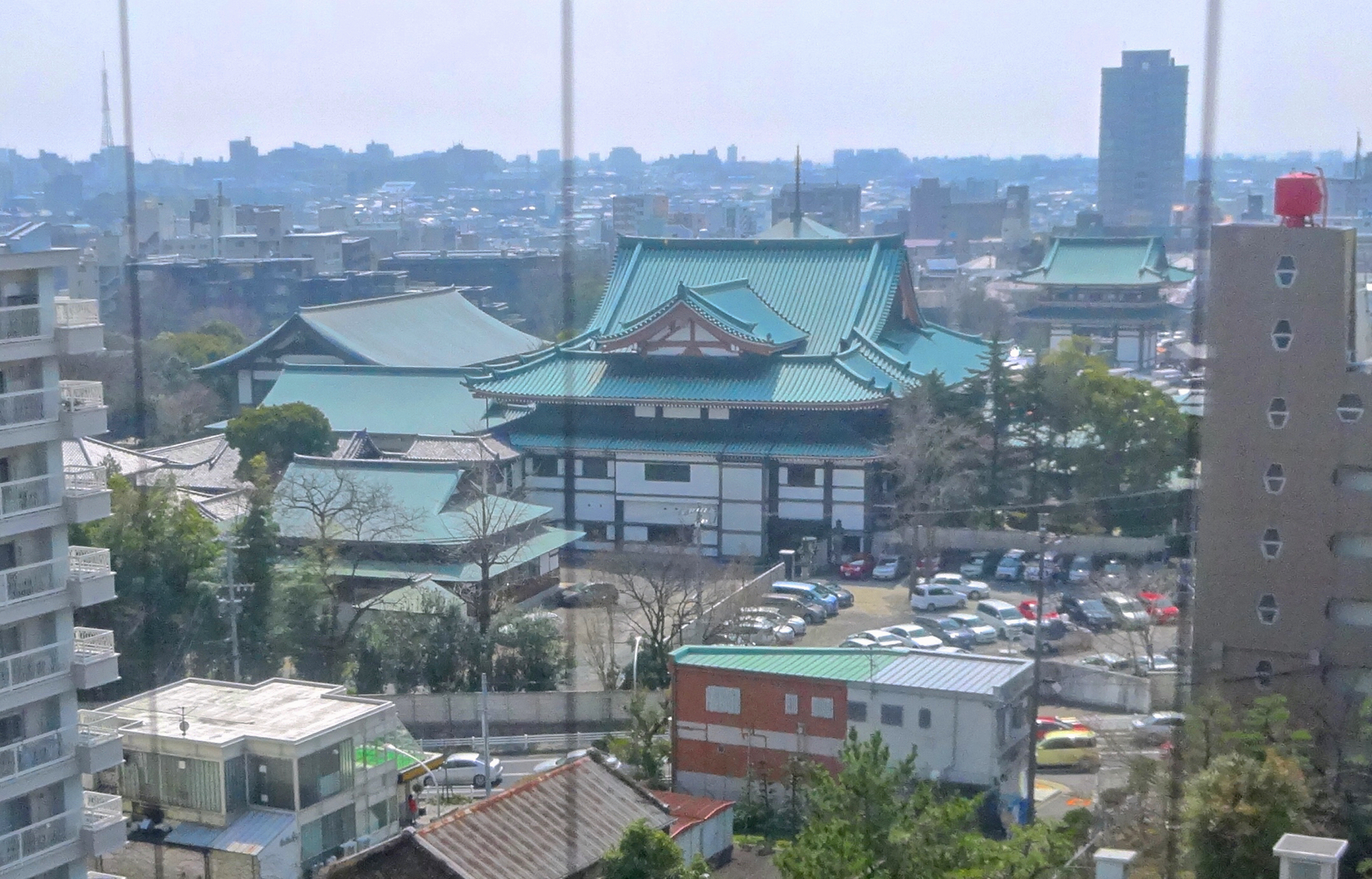
Nittai-ji
A pot unearthed in northern India in the nineteenth century changed everything scholars thought they knew about the historical Buddha. The inscription on its side, dated to roughly the third century BC, read: "The pot of the holy remains of Buddha is enshrined with a heart of trust by wife, children, brothers and sisters, together with a Sakya clan in India." It was physical proof that the Buddha was not merely a figure of legend. The ashes inside that pot eventually traveled halfway across the world to Nagoya, where they rest today inside Kakuozan Nittai-ji, a temple whose very name -- meaning "Japan-Thailand Temple" -- encodes a remarkable story of diplomacy between two nations bound by Buddhist faith.
A King's Gift
When the Indian government examined the ancient relics, they kept the pot at the Indian Museum in Kolkata but entrusted the ashes of the Buddha to the royal family of Thailand. King Chulalongkorn placed the relics at Wat Saket in Bangkok, then divided portions as gifts to Buddhist nations including Ceylon and Burma. Japan's minister to Siam, Manjiro Inagaki, heard the news and petitioned the king directly. Chulalongkorn agreed, and in 1900 the royal family of Thailand presented a portion of the sacred ashes to the Japanese people. Along with the relics came a gold-bronze statue of the Buddha and a bronze footprint of the Buddha, all personal gifts from the king. The diplomatic act forged a bond between the two countries that the temple's name still honors: "Nichi" for Japan, "Tai" for Thailand.
A Temple Without a Sect
When Foreign Minister Shuzo Aoki received word of the incoming relics, he commanded the chiefs of all major Buddhist sects -- 13 sects and 56 sub-sects at the time -- to prepare for their reception. The temple built to house them, completed in 1904, was deliberately placed outside any single tradition. This makes Nittai-ji unique in Japan, where virtually every temple belongs to a specific religious sect. Instead, every three years a different one of 19 Buddhist sects dispatches a chief priest to serve at Nittai-ji, rotating stewardship of the sacred relics in a gesture of ecumenical unity found nowhere else in the country. The name "Kakuozan" means "Enlightenment King Mountain," a reference to the Buddha himself.
Treasures Behind the Gate
Visitors passing through the main gate encounter a five-storied pagoda and the Shariden, the reliquary hall that shelters the ashes. The relics themselves -- the holy ashes known in Japanese as Busshari -- remain the temple's most sacred object. The gold-bronze statue of the Buddha, or Shakakondobutsu, stands nearby. A bronze footprint of the Buddha, the Bussokuseki, also given by King Chulalongkorn in 1900, is displayed at the temple. Two additional statues, crafted by sculptor Katsuzo Entsuba in 1988, complement the older treasures. Framed calligraphy by the Buddhist leader Etai Yamada reads "Turning of the Wheel of Dharma," the phrase used to describe the Buddha's first sermon.
The 21st Day Market
Every month on the 21st, the streets in front of Nittai-ji transform. Vendors set up stalls selling food, antiques, pottery, and handicrafts in a fair held in celebration of Kobo Daishi, the founder of Shingon Buddhism. The market draws crowds from across Nagoya and gives the Kakuozan neighborhood its lively, bazaar-like character. The temple's annual calendar is equally full: Nirvana Day on March 15, the Flower Festival celebrating the Buddha's birthday on April 8, the Vesak Festival in May, a memorial ceremony for the enshrinement of the relics on June 15, a ceremony marking the temple's opening on November 15, and Bodhi Day on December 8. Each event draws pilgrims and visitors who climb the hill into the Chikusa-ku district to pay respects at a temple that, for over a century, has quietly stood as a monument to both Buddhist devotion and international friendship.
From the Air
Nittai-ji is located at 35.17N, 136.96E in the Chikusa-ku district of eastern Nagoya. The five-storied pagoda is the most visible feature from altitude. The temple sits on elevated ground in a residential neighborhood east of central Nagoya. Nearest major airport is Chubu Centrair International Airport (RJGG/NGO) to the south. Nagoya Airfield (RJNA/NKM) in Komaki is closer to the north. Nagoya Castle to the west and Higashiyama Zoo to the southeast are useful visual references.