Niuheliang
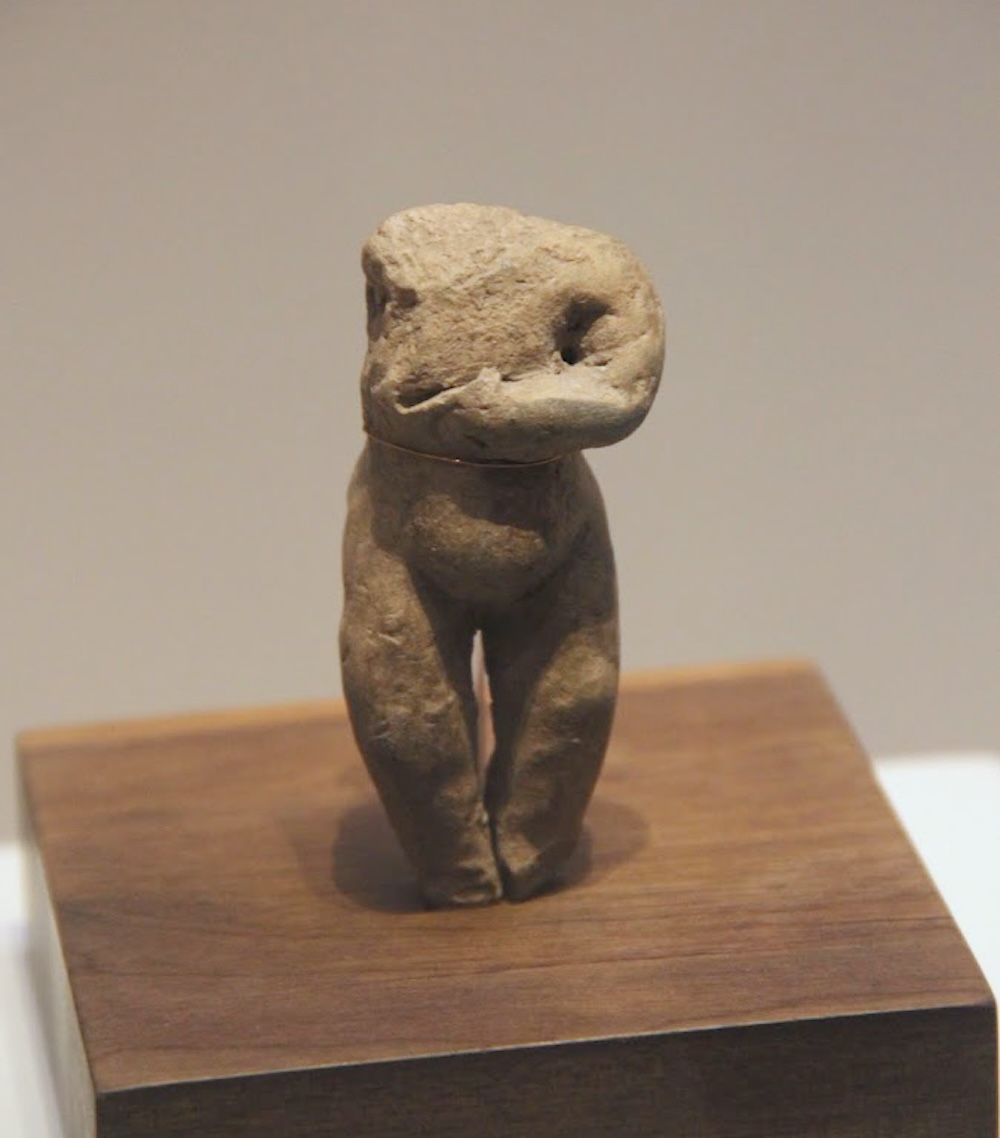
She stares across five and a half millennia with eyes made of jade. The clay head of the Goddess of Niuheliang -- unearthed from a subterranean temple decorated with painted walls -- is one of the oldest known representations of a deity in East Asia. Discovered in 1983 on a chain of hilltops in western Liaoning Province, the Niuheliang archaeological site belongs to the Hongshan culture, a Neolithic civilization that flourished between 4700 and 2900 BC. What archaeologists found here -- temples, altars, cairns, jade burial goods, and figurines three times life-size -- upended assumptions about when complex religious societies first emerged in what is now China.
A Landscape of the Sacred
Niuheliang is not a single site but a vast ritual landscape scattered across hilltops spanning 50 square kilometers, at elevations between 550 and 680 meters above sea level. Dating to roughly 3500-3000 BCE, it served as a burial and sacrificial center during the late Hongshan period. Remarkably, no residential settlements have been found here. People came to Niuheliang to bury their dead, to worship, and to perform rituals -- then they left. The site's north-south axis connects its temple complex with the central peak of the Zhushan Mountains, known as Pig Mountain, suggesting the entire landscape was organized according to cosmological principles that remain only partly understood.
The Goddess Temple
The most striking discovery is the subterranean ritual complex that Chinese archaeologists named the Goddess Temple. Built on a ridge and decorated with painted walls, it sits on a loam platform alongside an altar and cairn complex covering roughly five square kilometers. Inside, excavators found the jade-eyed clay head that gave the temple its name, along with pig dragons -- curled jade figures combining porcine and serpentine features -- and enormous nude figurines structured internally with wood and straw. Six groups of stone cairns were found south and west of the temple, their graves yielding jade artifacts as the primary burial goods, though most had been looted long before modern archaeologists arrived.
Boars, Bears, and a Wider World
Archaeologist Guo Dashun, who led the excavation, identified two distinct animals in the jade carvings: boars, with narrow eyes and flat snouts, and bears, with round eyes and short perky ears. He found similar symbolism at the nearby Xiaoheyan site, and noted that bear worship was widespread across Northeast Asia, practiced by the Ainu in northern Japan and various Siberian peoples. This connection places Niuheliang within a cultural sphere far broader than the boundaries of any single civilization, hinting at shared spiritual traditions that stretched across the forests and grasslands of the northern Pacific Rim thousands of years before recorded history.
The Hidden Pyramid
A year after the temple complex was identified, researchers realized that a nearby hill called Zhuanshanzi was not entirely natural. Beneath its slopes lay a pyramidal structure built with earth and imported stone, more elaborate than the surrounding cairns. During the Han Dynasty, this ancient monument was incorporated into a section of the Great Wall, disguising it further. The pyramid's existence -- along with the temples, cairns, and platforms surrounding it -- demonstrates that the essential elements of Chinese ancestor worship were already present at Niuheliang five thousand years before the Ming emperors built their famous tombs. What emerged here in the hills of Liaoning was not primitive but precocious: a society sophisticated enough to build monuments that later civilizations would unknowingly echo.
From the Air
Located at 41.33°N, 119.53°E in western Liaoning Province, near the border of Chaoyang and Jianping County. The site spans hilltops over a 50 km2 area. Nearest major airport: Chaoyang Airport (ZYCY). Recommended viewing altitude: 8,000-15,000 ft to appreciate the hilltop distribution. The rolling terrain and scattered archaeological zones are visible from the air in clear conditions.