Niujie
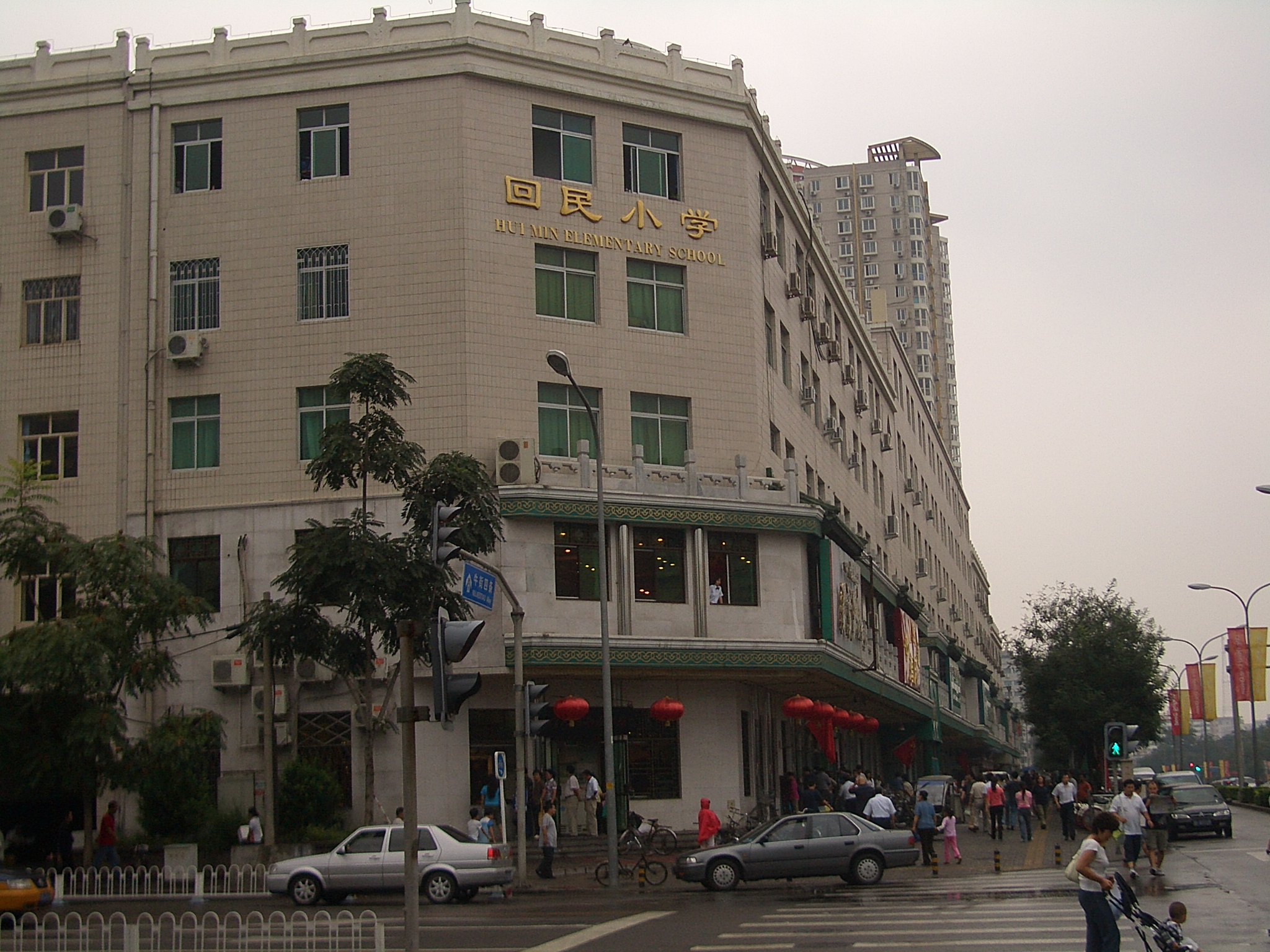
Walk down Niujie Street in southwest Beijing and the first thing you notice is the color. Apartment blocks painted in white and green -- the colors of Islam -- rise alongside a post office decorated in a hybrid Islamic-Chinese style found nowhere else in the capital. The scent of roasting mutton drifts from dozens of halal restaurants, and Arabic script curves alongside Chinese characters on shop signs. This is the heart of Beijing's Hui Muslim community, a neighborhood whose roots reach back to the armies of Genghis Khan.
Soldiers, Scholars, and Gravestones
The Niujie Mosque, built in 996 CE during the Liao dynasty, anchors the neighborhood's identity. Gravestones of imams found at the mosque confirm that a significant Hui community has lived here since at least the Yuan dynasty, when Muslims who had joined the Mongol armies settled in the capital. During that era, the settlement sat just outside the main city wall, a peripheral location that scholars say reflected the separation between the Hui residents and the Mongolian population within the walls. The neighborhood's original name was Willow River Village -- Niujie, meaning 'Ox Street,' came later. Through the Qing dynasty, the community remained distinct from the ruling Manchu population, maintaining its own religious practices, foodways, and social networks across centuries of imperial rule.
An Enclave That Feeds a City
Niujie is not merely a neighborhood where Hui people live. It functions as the supply hub for Muslim food and services across all of Beijing. A 2002 survey found that shops on Nanhengxi Street alone sold roughly 6,000 kilograms of beef and mutton daily, with over 30 Islamic restaurants lining a single block. Across the wider district at that time, there were 51 Islamic meatshops, 51 Islamic restaurants, and several halal foodstuff stores. The core area holds a Hui primary school, a halal supermarket, and a concentration of getihu -- small private vendors -- selling fruit, pastries, and noodles. As the ethnic economy of other Hui enclaves like Madian declined, Niujie absorbed the demand, strengthening its role as Beijing's preeminent Muslim commercial quarter.
Renovation and Resilience
In the late 1990s, the neighborhood underwent a major renovation that temporarily displaced some 3,000 families. The rebuilt Niujie emerged with its Islamic-Chinese architectural identity deliberately preserved -- not erased -- in the new construction. As of the 2000 census, more than half of the 24,088 residents in the core area were Hui, with the percentage decreasing in concentric rings outward. The total Niujie subdistrict held over 64,000 residents, about 22 percent of them Hui. This demographic pattern -- a dense ethnic core surrounded by mixed neighborhoods -- has characterized Niujie for centuries and survived both imperial-era upheavals and modern urban planning.
Eight Centuries on Ox Street
Tourism now supplements the traditional economy, with visitors drawn to the mosque and the neighborhood's distinctive streetscape. But Niujie remains, at its core, a working neighborhood rather than a museum. The rhythms of daily commerce -- butchers breaking down halal carcasses at dawn, noodle shops steaming through the lunch rush, pastry vendors stacking trays for the afternoon crowd -- connect the present to a commercial tradition that stretches back to the Ming dynasty. In a city that reinvents itself constantly, Niujie is notable for what it has held onto: a continuous Hui presence spanning eight centuries, sustained not by preservation orders but by the persistent demand for what this neighborhood has always provided.
From the Air
Located at 39.885N, 116.357E in southwest Beijing's Xicheng District. The neighborhood sits about 3 km southwest of Tiananmen Square. From altitude, look for the dense urban grid near the Second Ring Road's southwest quadrant. The Niujie Mosque's distinctive green-roofed Chinese-Islamic architecture is the visual anchor. Nearest major airport: Beijing Daxing International (ZBAD) to the south, Beijing Capital International (ZBAA) to the northeast. Best viewed at 3,000-5,000 ft AGL for neighborhood-level detail.