No Gun Ri Massacre
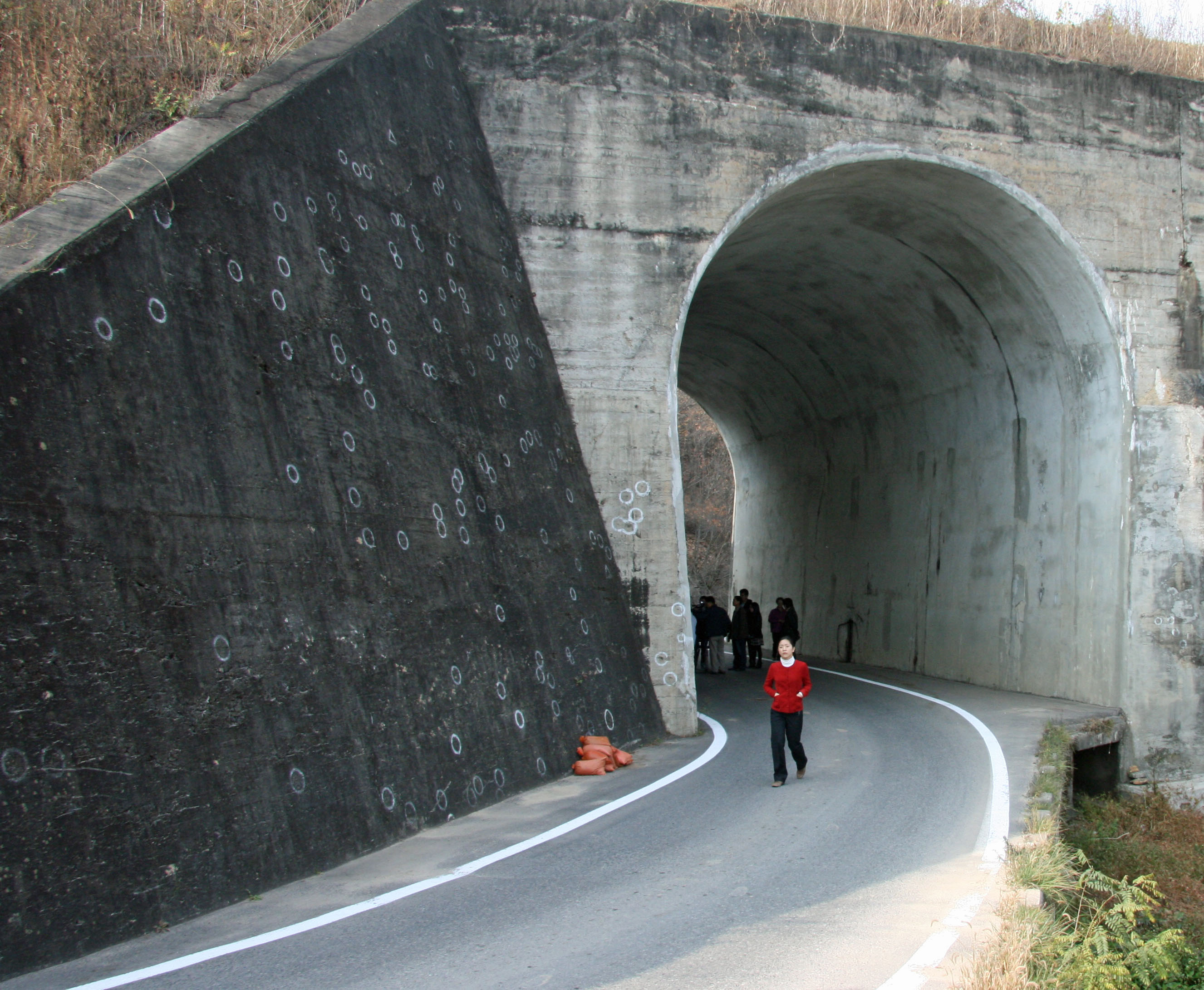
The concrete railway overpass at Nogeun-ri still stands. Twin tunnels, each about 80 meters long, pass beneath the tracks in a quiet stretch of central South Korea that looks like countless other patches of farmland between hills. Nothing about the landscape announces what happened here. Between July 26 and 29, 1950, in the chaos of the Korean War's first weeks, U.S. soldiers of the 7th Cavalry Regiment killed an estimated 250 to 300 South Korean refugees who had sought shelter under this bridge. Most of the dead were women, children, and elderly people. For nearly half a century, their story went untold.
Fear on the Road South
In late July 1950, the front lines were collapsing. North Korean forces had driven deep into the south, and hundreds of thousands of Korean civilians were fleeing ahead of the advance. American commanders, exhausted and terrified of infiltrators disguised as refugees, issued orders to stop civilian movement through their lines. On July 25, U.S. aircraft strafed a group of refugees near Nogeun-ri, killing and wounding an unknown number. The following day, soldiers of the 2nd Battalion, 7th Cavalry Regiment directed several hundred refugees toward the twin railroad underpasses at Nogeun-ri. What happened next has been the subject of investigation and dispute for decades, but the core facts are not in question: American soldiers fired into the group of civilians sheltering under the bridge, and the killing continued intermittently for three days.
Decades of Silence
Survivors spoke among themselves but found no wider audience. In South Korea, the authoritarian governments that ruled through the Cold War decades had no interest in publicizing American atrocities against Korean civilians. In the United States, the incident was buried in military records. It took until 1999 for the story to break internationally, when an Associated Press investigation by journalists Charles Hanley, Sang-Hun Choe, and Martha Mendoza documented the massacre through survivor testimony, veteran interviews, and declassified military communications. The reporting won the Pulitzer Prize for Investigative Reporting in 2000 and forced both governments to confront what had happened.
Investigations and Acknowledgment
The U.S. Army conducted its own investigation and in 2001 issued a report acknowledging that civilians had been killed at Nogeun-ri but characterizing the deaths as a tragic result of the war's confusion rather than a deliberate policy. South Korea's government took a different path. In 2005, a government inquest certified the names of 163 people dead or missing and 55 wounded, while acknowledging that many other victims had never been formally identified. The No Gun Ri Peace Foundation, drawing on community records and survivor accounts, estimates the total dead at 250 to 300. In 2004, the South Korean National Assembly designated the site a national historic landmark, and survivors were granted compensation and benefits.
A Bridge Remembered
The No Gun Ri Peace Park now occupies the area around the railroad bridge, with a memorial museum, a peace education center, and the bridge itself preserved as a monument. Bullet marks are still visible in the concrete. Each year, descendants and survivors gather here for a memorial ceremony. The park is not large or imposing. It does not attempt grandeur. What it offers is specificity: the names of the dead on memorial walls, the physical place where they died, and an accounting of what happened that neither government was willing to provide for fifty years. The story of Nogeun-ri reshaped how historians understand the Korean War's early weeks, revealing that the killing of civilians was far more widespread than official histories had acknowledged. Investigations prompted by the AP's reporting uncovered similar incidents across the peninsula, opening a painful but necessary chapter of reckoning.
From the Air
Nogeun-ri is located at approximately 36.02N, 127.88E in central South Korea, in what is now Yongdong County, North Chungcheong Province. The site is a rural area of rice paddies and low hills bisected by the Gyeongbu railway line. The railroad overpass is the key landmark. The nearest significant airport is Cheongju International Airport (RKTU), approximately 60 km to the northwest. Recommended viewing altitude is 3,000-5,000 feet AGL to see the bridge and surrounding landscape.