Noisebridge
The sign on the door does not ask for credentials. Noisebridge, a hackerspace in San Francisco's Mission District, operates on a principle that would give most organizations hives: anyone can come in and use the space. There are no membership requirements for access. The community runs on consensus decision-making. The founding principle, borrowed from Bill and Ted's Excellent Adventure with complete sincerity, is be excellent to each other. Since 2007, this anarchistic experiment in shared resources has survived internal conflicts, lease crises, and the kind of growing pains that test any organization that refuses to have a hierarchy.
Inspired by Vienna and Berlin
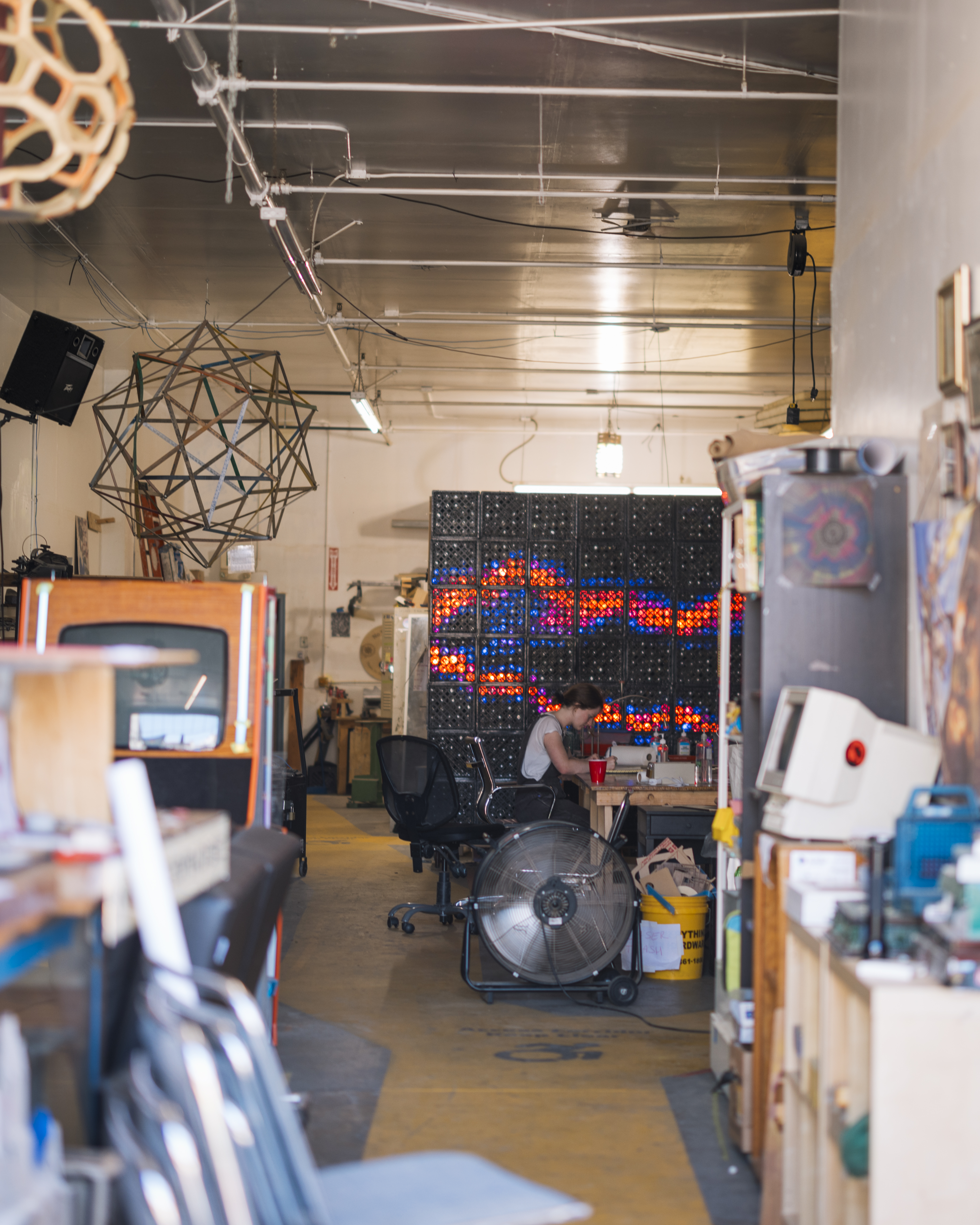
Noisebridge was founded in 2007, inspired by European hackerspaces like Metalab in Vienna and c-base in Berlin. The founders wanted to create a community workshop where people could share tools, teach each other skills, and work on projects ranging from electronics and programming to sewing, art, and biology. The space occupies a loft in the Mission District and contains workbenches, soldering stations, 3D printers, a laser cutter, networking equipment, and whatever tools members have donated. Classes are free and open to the public. The hackerspace has hosted workshops on everything from lock-picking to circuit board design to machine learning.
Consensus and Its Costs
Noisebridge's governance model is deliberately non-hierarchical. Major decisions are made by consensus among participating members, meaning any single person can block a proposal. This has made the space remarkably responsive to its community and remarkably slow to address problems. Conflicts over space usage, cleanliness, and the open-door policy have periodically threatened the organization's survival. The tension between radical openness and functional management is the defining drama of Noisebridge's existence. It has navigated these conflicts without abandoning its principles, though not without scars.
A Different Kind of San Francisco Institution
In a city dominated by venture-funded startups and corporate tech campuses, Noisebridge represents something deliberately counter to that culture. It is nonprofit, volunteer-run, and funded by donations. It does not produce products or seek exits. It produces knowledge shared freely and skills taught without charge. The hackerspace has been featured in numerous media profiles as an example of maker culture and community self-organization. Whether it represents the future of learning or a beautiful anachronism in an increasingly commercialized city depends on your perspective. Either way, the door is open.
From the Air
Located at approximately 37.76°N, 122.42°W in San Francisco's Mission District. The hackerspace occupies a commercial loft and is not visible from altitude. Nearest airports: SFO (KSFO, 10 nm south), Oakland (KOAK, 11 nm east).