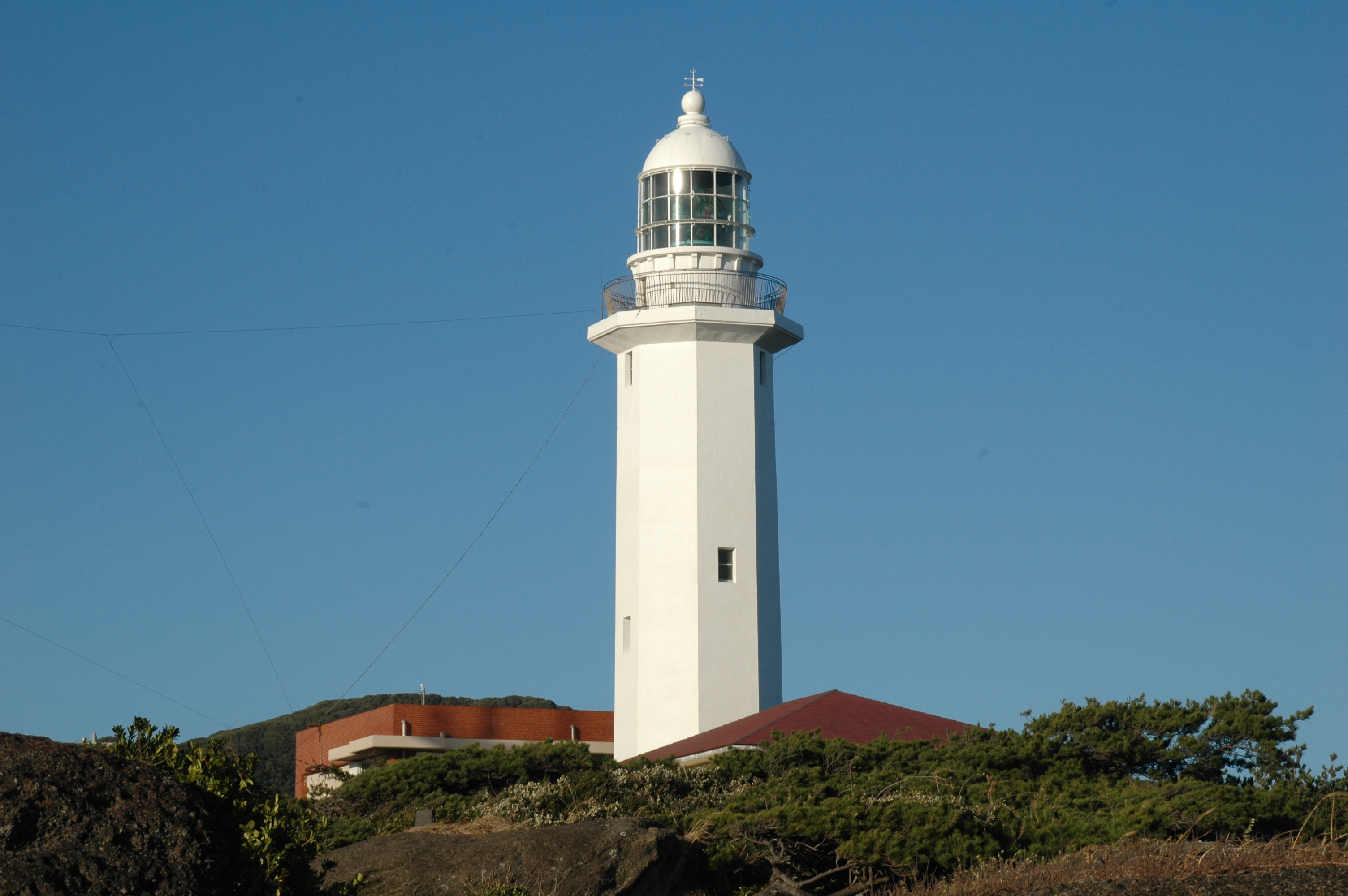
Nojimazaki Lighthouse
A Frenchman designed it. A feudal government commissioned it. An earthquake decapitated it. The United States Navy shelled it. And still it stands, white against the Pacific sky at the very tip of the Boso Peninsula, guarding the southern entrance to Tokyo Bay. The Nojimazaki Lighthouse was only the second Western-style lighthouse completed in Japan, lit for the first time on January 19, 1869, when the Meiji Restoration was barely a year old and most of the country had never seen a Fresnel lens. It has been destroyed and rebuilt twice since then, each time emerging a little different in material but unchanged in purpose -- a fixed point where land yields to open ocean and ships need guidance the most.
A Treaty Written in Light
The lighthouse exists because of a trade agreement signed by a government that would soon cease to exist. The Anglo-Japanese Treaty of Amity and Commerce of 1858, negotiated under pressure by the Tokugawa Shogunate during the turbulent Bakumatsu period, opened Japanese ports to foreign commerce and required the construction of lighthouses to protect the suddenly busy shipping lanes. Eight lighthouses were specified in the treaty. The Tokugawa government hired Leonce Verny, a French naval engineer already working at the Yokosuka shipyard, to design and build them. Verny completed the Kannonzaki Lighthouse on the western shore of Tokyo Bay first, in early 1869. Nojimazaki followed weeks later, positioned on the opposing headland to bracket the bay's entrance with light. The original structure was an octagonal tower of whitewashed brick, equipped with a first-order Fresnel lens -- the largest category, capable of throwing a beam visible for dozens of miles -- powered by kerosene flame.
Shaken and Shelled
The 1923 Great Kanto Earthquake struck at noon on September 1, killing over 100,000 people across the Tokyo region. At Nojimazaki, the top eight meters of the lighthouse collapsed, shattering the lantern room and its precious Fresnel lens. The tower was rebuilt in reinforced concrete rather than brick, a concession to seismic reality, and recommissioned on August 15, 1925. Two decades later, in the final months of World War II, United States Navy warships bombarded the Boso Peninsula coastline, damaging the lighthouse again. After the war, repairs replaced the original first-order Fresnel lens with a smaller second-order lens, and the kerosene flame gave way to electric light. Each rebuilding stripped away something of the original -- the brick walls, the grand lens, the kerosene glow -- but the tower's position at latitude 34.90 North, longitude 139.89 East, marking where Japan's largest bay opens into the Pacific, has never changed.
Where the Bay Meets the Ocean
The Boso Peninsula juts southward from the eastern edge of the Kanto Plain like a crooked finger, separating Tokyo Bay from the open Pacific. Nojimazaki sits at its very tip, where the coastline makes a sharp turn from south-facing to east-facing and powerful currents from the Kuroshio sweep past the rocky headland. For centuries before the lighthouse existed, this cape was a landmark for fishing boats and coastal traders navigating the treacherous waters where bay currents collide with ocean swells. The city of Minamiboso, which surrounds the lighthouse today, is one of the warmest spots in the Kanto region, sheltered from northern winds by the peninsula's mountainous spine. Fields of rapeseed and poppies bloom in winter along the coast, and the air carries the salt tang of the Pacific. From the lighthouse platform, the view stretches unbroken to the south and east -- nothing but water until the Izu Islands, then the open ocean beyond.
Among the World's Hundred Finest
The Nojimazaki Lighthouse holds dual honors that few lighthouses anywhere can claim. The International Association of Lighthouse Authorities recognizes it as one of the "One Hundred Most Important Lighthouses in the World," and the Japanese government has designated it a Historic Monument. The tower is open to the public, offering visitors a climb to the lantern gallery for a panoramic view of the Pacific and a small museum at the base tracing the lighthouse's eventful history. For a structure that has been knocked down twice and rebuilt in different materials each time, Nojimazaki carries its story with a quiet stubbornness. The octagonal footprint remains, the white paint remains, and the light still sweeps across the water where Tokyo Bay surrenders to the Pacific. Leonce Verny, the French engineer who positioned it here in 1869, chose well. The cape has not moved, and ships still need the warning.
From the Air
Located at 34.90N, 139.89E at the southern tip of the Boso Peninsula, marking the eastern entrance to Tokyo Bay. The white lighthouse tower is visible against the dark coastline from moderate altitude. Nearest airports: Tateyama Naval Air Station is approximately 5nm northwest; Tokyo Haneda (RJTT) is about 50nm north across the bay; Narita International (RJAA) is roughly 55nm north-northeast. The cape is a prominent visual landmark when transiting between Tokyo Bay and the Pacific. Expect coastal winds and occasional low visibility from marine layer, especially in summer months. Best viewed at 1,500-2,500 feet AGL approaching from the south or east.