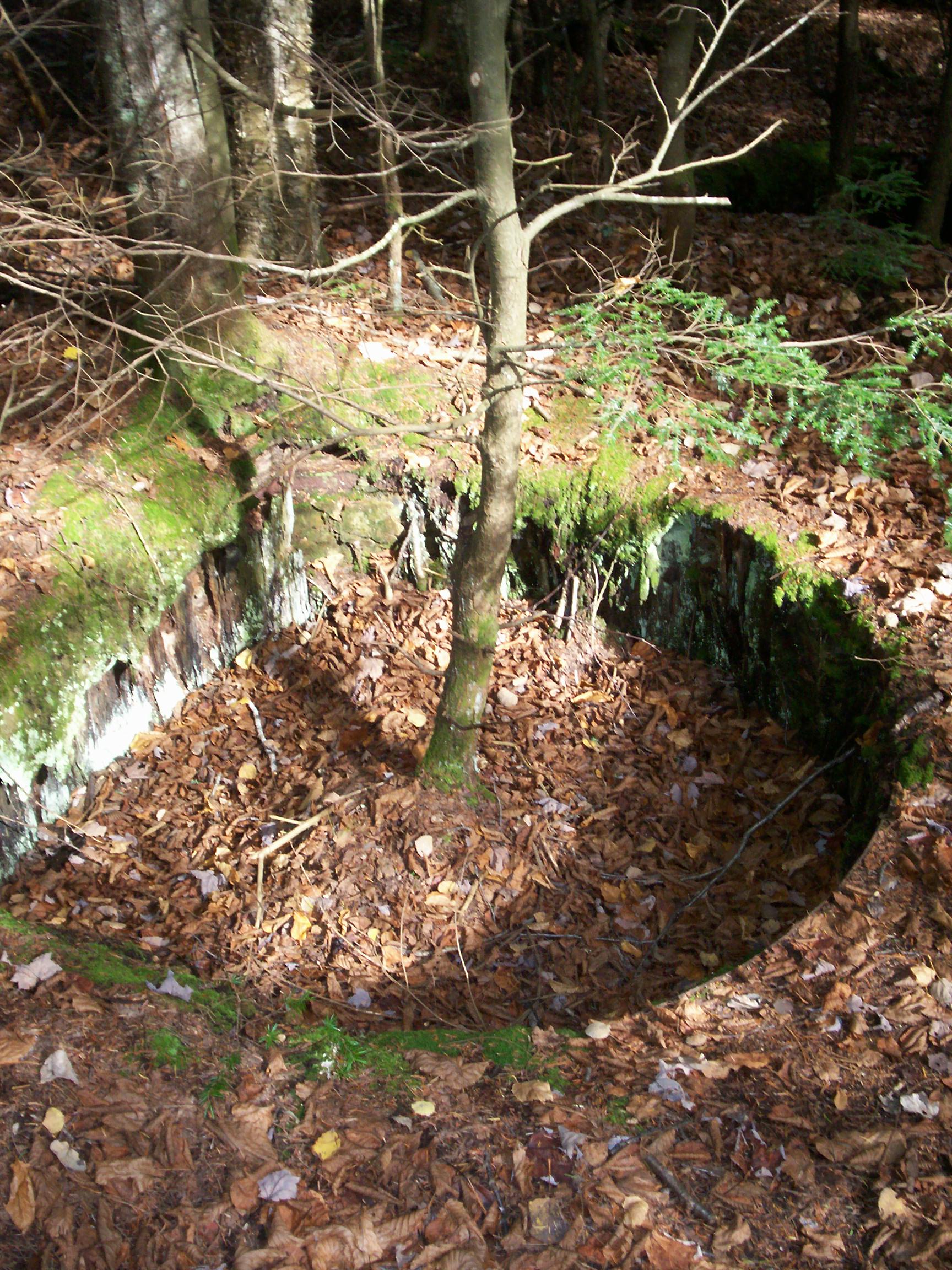
Nonesuch Mine
Copper expert Horace Stevens had a gift for understatement. Writing in 1902, he called the Nonesuch Mine's output "the insignificant amount of 180 tons 1,072 pounds of refined copper from one of the richest beds of copper-bearing rock ever opened." The mine had swallowed several fortunes by then, opened and closed five times under five different owners, and turned a profit exactly once - for two years, between 1879 and 1881. Yet Stevens could see what everyone who looked at the Nonesuch Shale could see: the copper was there, millions and millions of pounds of it, locked in sandstone so fine-grained that no technology of the era could pry it loose. The name itself told the story. When Ed Less discovered the vein on the Little Iron River in 1865, he called it "Nonesuch" because no such copper ore existed anywhere else in Michigan's Copper Country. He meant it as a boast. It became a curse.
Five Lives, Five Deaths
The Nonesuch Mine lived and died on a cycle of hope and physics. First opened in 1867, it drew miners to the southeast corner of what is now the Porcupine Mountains State Park. The copper here was different from the famous native copper deposits elsewhere in the Copper Country. Instead of pure metal chunks that could be hammered free, the Nonesuch copper was dispersed through sandstone and shale in particles so fine they were almost invisible. The standard process - crushing ore in a stamp mill and separating copper by gravity - failed here because the gravity separators of the era simply could not catch particles that small. Too much copper vanished into the waste tailings. The mine's sole profitable run, from 1879 to 1881, coincided with the town's brief peak. By 1884, Nonesuch had swelled to about 300 people, with a school of 30 students, a boarding house, livery stable, markets, stagecoach service, and - in a touch of frontier ambition - a uniformed baseball team.
Stripped to the Bolts
By February 1887, the dream was over again. Workers stripped the Nonesuch Mine of every piece of machinery and hauled it to the dock at Union Bay, where ships carried the equipment to mines that could actually use it. The post office, which had opened in 1876, had already closed. A handful of stubborn residents stayed on, turning to logging and farming on the rugged terrain at 928 feet above sea level. The town shrank from a community to a settlement to a scattering of holdouts. In 1906, the mighty Calumet and Hecla Mining Company arrived with 200 tons of equipment, explored the area, but ultimately opened their mine three miles east at White Pine instead. A final 20-person crew returned to Nonesuch in 1912, working for less than a year before shutting down for the last time. The total recorded production of the mine across its entire fitful existence was just 390 thousand pounds of copper - a pittance from a deposit that everyone agreed held vast wealth.
The Problem, Solved
Stevens had predicted in 1902 that someone would eventually crack the riddle of the Nonesuch Shale and make "a new crop of millionaires." He was half right. In 1955, the Copper Range Company opened the White Pine mine near the old Nonesuch site, finally solving the problem that had defeated a half-century of miners. New milling and flotation technology could recover the fine copper particles that gravity separation had always lost. The White Pine mine became enormously successful, producing copper from the same Nonesuch Shale for the next 40 years. The irony cuts deep: the copper that bankrupted generation after generation at Nonesuch was profitably mined just three miles away, using rock from the same geological formation. The difference was not the ore. It was the century.
What the Forest Took Back
Today the Nonesuch mine site lies within the Porcupine Mountains Wilderness State Park, swallowed by the dense hardwood and hemlock forest of Michigan's Upper Peninsula. The foundations of the stamp mill still stand, slowly crumbling into the underbrush. The ruins of the chemical leaching equipment - a last desperate attempt to separate copper from rock using chemistry instead of gravity - lie scattered among the trees. The Little Iron River, where Ed Less first spotted the copper vein in 1865, still runs through the site. There is no town. There are no people. The uniformed baseball team, the stagecoach, the boarding house - all are memories held only in county records and mining journals. What remains is the landscape itself: the ancient Precambrian sandstone and shale, the copper still threaded through the rock in particles too fine for the eye to see, the ghost of a place whose name was its own prophecy. Nonesuch: there was nothing else like it, and nothing could be done about it.
From the Air
Located at 46.755N, 89.620W in the southeast corner of the Porcupine Mountains Wilderness State Park, Ontonagon County, Michigan. The mine site sits at an elevation of 928 feet (283 m). The nearest airport is Ontonagon County Airport (KONM), approximately 20 miles to the northwest. Houghton County Memorial Airport (KCMX) near Hancock/Calumet is about 55 miles northeast. From the air, look for the Porcupine Mountains ridgeline along Lake Superior's south shore and the Little Iron River drainage. The mine site is largely reclaimed by forest and difficult to spot from altitude, but the Salmon Trout River and surrounding wilderness terrain provide good visual landmarks. Silver City on the Lake Superior shoreline is the nearest recognizable settlement.