Nonomiya Shrine: The Gate That Never Stayed
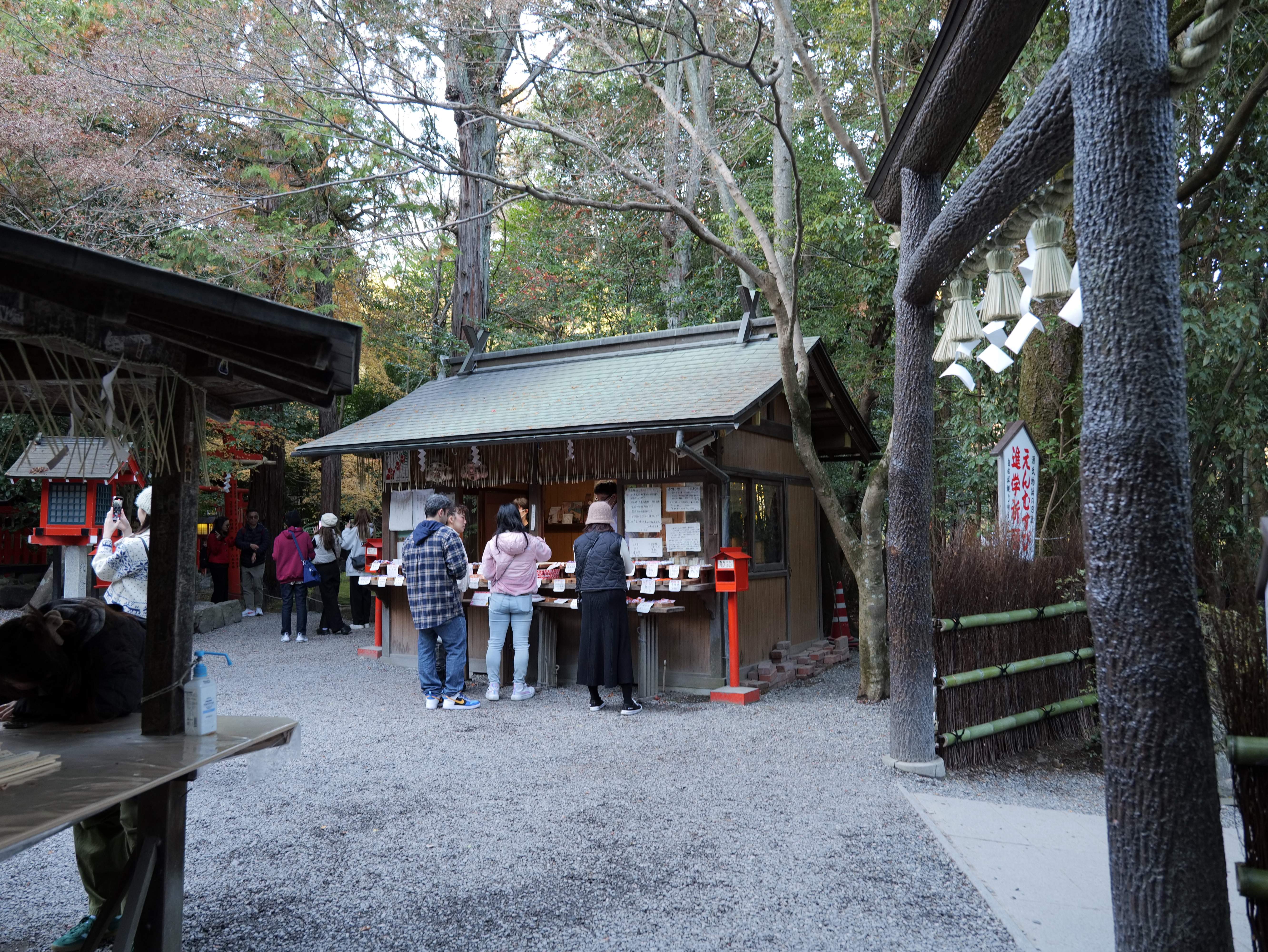
The torii gate at Nonomiya Shrine is black. Not the familiar vermilion of a thousand postcards, but the dark, rough texture of unbarked oak -- a style so ancient and so difficult to maintain that this is said to be the only surviving example of its kind in Japan. The gate, called a kuroki torii, must traditionally be replaced every three years because unstripped wood decays quickly. That impermanence is fitting, because the shrine itself was once impermanent. In the Heian period, Nonomiya -- the 'Shrine in the Fields' -- was not a fixed place. Each time a new emperor ascended the throne and an imperial princess was selected to serve as the Saio, the sacred representative of the imperial family at the great Ise Shrine, the location of Nonomiya was determined fresh by divination. The shrine existed to prepare her, and when her preparation ended, it moved.
A Princess in the Fields
The Saio system was one of the most solemn institutions of Heian-era Japan. When a new emperor took power, an unmarried imperial princess or woman of the royal bloodline was chosen to serve as his representative at Ise Shrine, the most sacred Shinto site in the country, located in what is now Mie Prefecture. Before making the long journey to Ise, the selected princess spent a year or more at Nonomiya, undergoing elaborate purification rituals. The shrine sat deliberately outside the capital, in the open fields and forests west of Kyoto -- its name literally means 'shrine of the fields.' The separation was intentional: the princess needed to leave the world of court politics and human attachments behind before she could enter sacred service. Contemporary annual processions still recreate the scene of the Saio's departure, starting from the shrine and processing as far as the Togetsukyo Bridge in Arashiyama.
Genji's Moonlit Farewell
Nonomiya Shrine would have remained a footnote of Heian ritual practice were it not for one of the greatest novels ever written. In the tenth chapter of the Tale of Genji, composed around the year 1000 by the court lady Murasaki Shikibu, the shrine becomes the setting for a scene of devastating emotional complexity. Lady Rokujo, one of Prince Genji's lovers, is staying at Nonomiya with her daughter, who has been appointed as the new Ise priestess. Rokujo has come partly to escape her jealousy and the humiliations of competing for Genji's attention. Genji travels to the shrine for a final visit, passing through the brushwood fences and the black torii under moonlight. She resolves to leave for Ise with her daughter, and the shrine becomes the stage for their bittersweet farewell. The scene inspired the Noh play 'Nonomiya' by the great dramatist Zeami, in which a priest encounters a mysterious woman who retells the story of Rokujo's heartbreak.
The Shrine That Stayed
The institution of the Saio was abolished during the era of Emperor Go-Daigo in the early fourteenth century. Without imperial princesses to purify, the moveable shrine had no reason to move. But rather than disappearing, Nonomiya remained where it last stood, beside the bamboo groves of Sagano in Arashiyama. Recognizing its historical and spiritual significance, later emperors ensured its survival. Emperor Go-Nara in the sixteenth century and Emperor Nakamikado in the eighteenth century both sent orders through the nearby imperial temple of Daikaku-ji to maintain the shrine. What had once been a temporary waystation became a permanent fixture -- a shrine dedicated to love, marriage, and safe childbirth, drawing visitors who pray for romantic success in the shadow of Genji's most melancholy scene.
Bamboo, Bark, and Brushwood
Today, Nonomiya Shrine sits within the most visited stretch of Arashiyama's famous bamboo grove. The soaring stalks of moso bamboo form a natural corridor that channels visitors toward the shrine's distinctive black gate. The kuroki torii, now made of synthetic material that simulates the look of unbarked wood, preserves the aesthetic of the original while solving the problem of constant replacement. Inside the low brushwood fences, the grounds are intimate and shaded, a stark contrast to the grand vermilion complexes of Kyoto's larger shrines. Nobel laureate Yasunari Kawabata wrote about Nonomiya in his novel 'The Old Capital,' drawn to the same quality that Murasaki Shikibu captured a millennium earlier: the feeling of a place poised between the sacred and the human, between permanence and departure, between the forest and the world beyond it.
From the Air
Located at 35.018°N, 135.674°E in the Arashiyama district of western Kyoto, within the Sagano bamboo grove. The shrine grounds are small and hidden beneath dense bamboo canopy, making them invisible from altitude, but the broader Arashiyama area is recognizable by the Togetsukyo Bridge crossing the Katsura River and the Hozu River gorge cutting into the mountains to the west. Osaka Itami Airport (RJOO) lies approximately 25 nautical miles southwest. Kansai International Airport (RJBB) is roughly 55 nautical miles south. Best appreciated as part of the larger Arashiyama landscape at 3,000-5,000 feet AGL, where the transition from Kyoto's urban grid to the forested western mountains is dramatic.