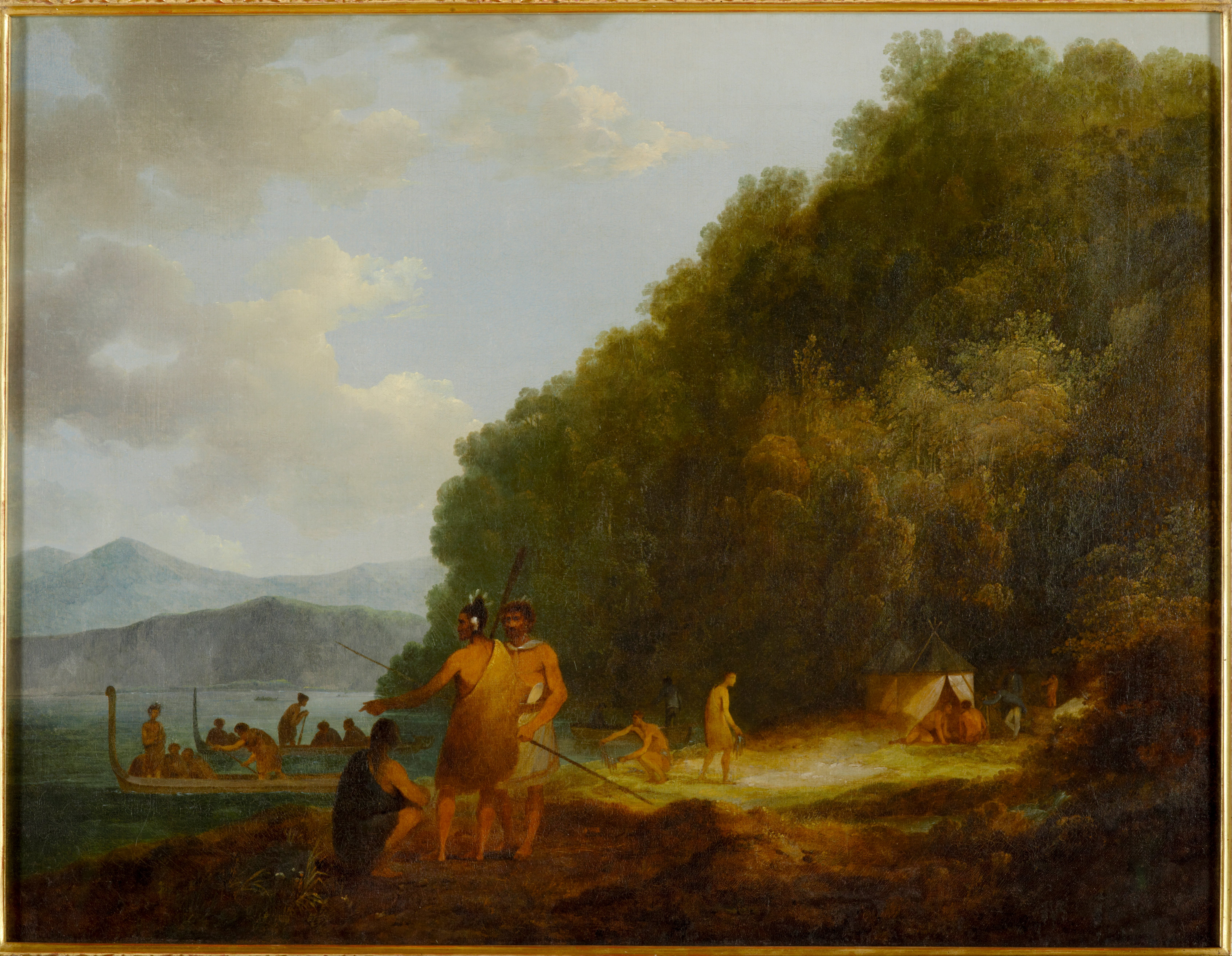
Nootka Sound
Captain James Cook named it King George's Sound in 1778. The Spanish called it Puerto de San Lorenzo de Nuca. The Nuu-chah-nulth, who had lived along its shores for thousands of years, called it Mowichat. Cook recorded the local name as "Nutka" or "Nootka," possibly mishearing a word that meant "go around" -- a reference to the island geography -- or possibly mangling the people's own name for themselves. Regardless, it was Cook's version that stuck, and every other name fell away. This Pacific inlet on Vancouver Island's wild west coast has a habit of absorbing the ambitions of outsiders and carrying on as before.
First Contact, Abalone for Furs
The first documented European visit came on August 8, 1774, when the Spanish Navy ship Santiago, under Juan Perez, entered the sound and dropped anchor. The Spanish did not land. Instead, Nuu-chah-nulth paddlers came to the ship and traded sea otter furs for abalone shells brought from California -- a transaction that, in retrospect, signaled the beginning of everything that followed. Perez named the entrance Surgidero de San Lorenzo and sailed away, but the precedent was set. When James Cook arrived four years later and published accounts of the abundant furs, and when James Hanna followed in 1785 and sold iron-for-fur trades in China for enormous profit, the maritime fur trade ignited. Nootka Sound became the Pacific Northwest's most important anchorage, drawing Spanish, British, Russian, and American vessels into increasingly competitive waters.
The Surgeon Who Stayed Behind
In 1786, maritime fur trader James Strange visited Nootka Sound. One of his crew, a surgeon named John Mackay, volunteered to remain behind and build relationships with the Nuu-chah-nulth until Strange returned the following year. Strange never came back. When trader Charles Barkley arrived in the summer of 1787, he found Mackay still alive -- having learned the language, adapted to local customs, and married a Nuu-chah-nulth woman. Chief Maquinna had initially welcomed him, but after Mackay unknowingly violated a cultural taboo, the chief exiled him from his household. Mackay survived on his own until Barkley took him aboard the Imperial Eagle. His story is a small parable about the gap between good intentions and cultural understanding, and about how quickly isolation can turn from adventure into something more precarious.
When Empires Collided
By the late 1780s, Nootka Sound had become the pressure point where Spanish, British, and Russian imperial claims converged. In 1789, Spain sent Esteban Jose Martinez to enforce its sovereignty. He established a settlement, built Fort San Miguel, and impounded British vessels -- including one owned by the merchant John Meares. The seizures triggered the Nootka Crisis, which escalated until it threatened to pull France into the conflict as well. The Spanish Bourbon monarchy asked French King Louis XVI for military support; the French National Assembly countered that the king could not commit France to war without their ratification. A dispute about fur trading rights on a remote Pacific inlet ended up reshaping the constitutional relationship between the French monarchy and its revolutionary assembly. Nootka Sound's ripple effects traveled much farther than anyone at Friendly Cove could have imagined.
A Fugitive's Narrow Escape
In June 1796, the American merchant ship Otter dropped anchor in Nootka Sound carrying an unusual passenger: Thomas Muir, a Scottish political reformer who had been sentenced to fourteen years' transportation to Australia for the crime of sedition in 1793. Muir had escaped after just thirteen months at Botany Bay and crossed the uncharted Pacific to Vancouver Island. His relief at reaching Nootka Sound turned to alarm when he learned that the British sloop-of-war under William Robert Broughton was anchored in nearby waters. Broughton had visited Port Jackson shortly before Muir's escape, and capture while under sentence of transportation meant execution. Muir's student Spanish, learned at the University of Glasgow, saved his life. He persuaded Jose Tovar, the master of a Spanish vessel in the sound, to break regulations and take him aboard. They sailed south along the coast to Monterey in Spanish California, and Muir eventually made his way to revolutionary France.
Luna and the Living Sound
Nootka Sound's most recent claim to international attention involved neither empires nor fugitives but a two-year-old male orca. In 2001, the young whale -- later named Luna -- appeared alone in the sound, swimming as far inland as the marina at Gold River. Presumed to be an orphan separated from his pod, Luna became a celebrity through his playful, curious interactions with tugboats, recreational watercraft, and people on the Gold River dock, including children who watched him from the edge. His story captivated British Columbia and beyond, raising difficult questions about wildlife management, loneliness, and what humans owe to an animal that seems to want their company. Nootka Sound itself remains what it has always been: a channel of deep water between Vancouver Island and Nootka Island, its climate oceanic and wet, its forests dense, its history layered far deeper than any single story can capture.
From the Air
Located at approximately 49.78N, 126.63W on Vancouver Island's west coast, British Columbia. From altitude, Nootka Sound appears as a large inlet separating the bulk of Vancouver Island from Nootka Island to the west. Bligh Island sits within the sound. The Nootka Lighthouse on San Rafael Island marks the entrance. Gold River (CYGE) lies at the head of Muchalat Inlet, the sound's eastern extension. Tofino/Long Beach (CYAZ) is approximately 100 km to the southeast. Expect persistent low cloud, rain, and maritime conditions. Clear days reveal dramatic coastal mountain scenery.