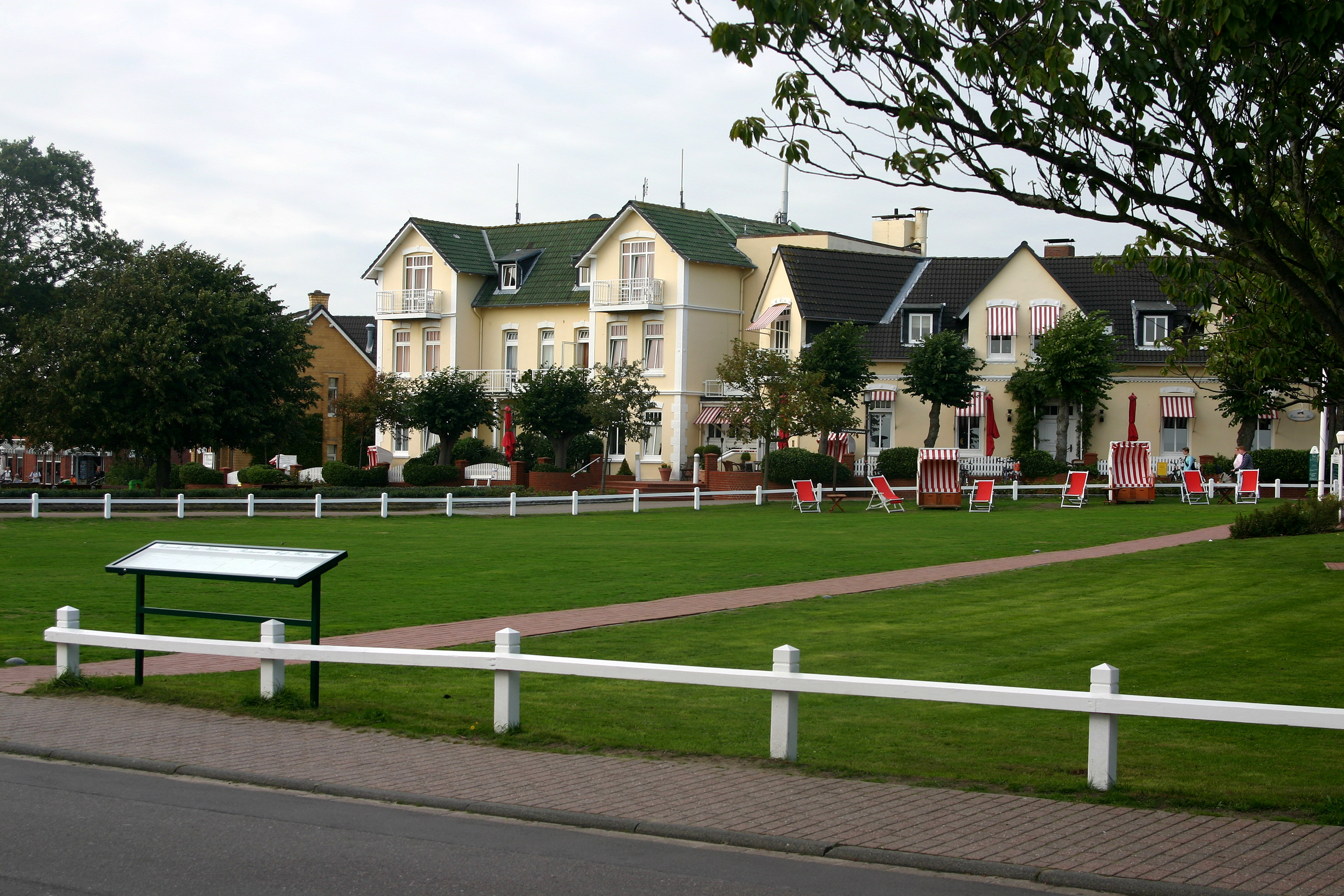
Norddorf
Norddorf does not look its age. Walk through the village today and the houses are crisp and modern, roofs of slate and tile, gardens trimmed to resort tidiness. None of it suggests that this is one of the two oldest settlements on the island of Amrum, founded centuries before tourists or trains. The reason is a fire. In 1925 the village burned, and when the islanders rebuilt they could not afford the reed thatching their grandparents had grown - so they covered the new houses in whatever was cheaper. The fire gave Norddorf an architecture younger than the village it stands on.
The Pastor and the Hospices
Until 1890, Norddorf was a quiet farming and fishing settlement on the Frisian dialect known as Öömrang - a place where the locals called the village Noorsaarep üüb Oomram and the wider world was someone else's concern. Then Friedrich von Bodelschwingh arrived. Bodelschwingh was a Westphalian pastor and social reformer who had built an entire institutional empire for people with epilepsy, disabilities, and chronic illness. He needed sea air for his patients. Amrum, remote and clean and battered by Atlantic weather, had plenty. Bodelschwingh founded a string of seaside hospices in and around Norddorf, and what arrived for the convalescents stayed for the tourists: jetties, lodgings, the habit of strangers walking the dunes. The hospices have since closed or changed purpose, but the resort identity Bodelschwingh accidentally created has outlasted them by more than a century.
The Harbour That Wandered Away
Just north of Norddorf, on the vast pale expanse of Kniepsand beach, there was once a working port. The Kniephafen had piers long enough for proper ships and a connection to Amrum's small island railway. Boats from Hörnum on Sylt tied up here regularly, carrying mail, day-trippers, freight. But the Kniepsand is not a stable thing. It is a sandbank, accreting yearly, fed by the longshore drift that piles up new beach faster than anyone can build a harbour to match. Engineers moved the pier north in stages, chasing deep water. In 1938 they moved it for the last time. Soon after, the sandbank fused completely with the dunes of Amrum's western coast and the harbour was simply landlocked - a port stranded inside its own beach. Today a walker on Kniepsand can stand where ships used to dock and see nothing but white sand running for kilometers in every direction.
Odde and the Wading Birds
Walk north out of Norddorf and the land thins toward Odde, Amrum's northernmost point. The dunes rise to thirty-two meters at Siatler, the island's tallest, where an observation platform looks across the tidal flats of the Wadden Sea. This is one of Europe's great migratory bird grounds. Sandpipers and plovers and oystercatchers - the wading order called Charadriiformes - feed by the thousands on the exposed mudflats when the tide pulls back, then rise as a single shifting cloud when something startles them. Guided walks lead visitors out across the flats at low water, sinking ankle-deep into the soft surface, while local naturalists name what flies overhead. There is a sector lighthouse here too, established in 1906, its lantern carrying small Art Nouveau flourishes that hint at what the village built when it had money for ornament.
Resort Math
In 2005, this village of a few hundred residents accommodated 43,316 guests and booked 422,319 nights of lodging - numbers that placed Norddorf among the ten busiest tourist destinations in all of Schleswig-Holstein. The arithmetic is staggering and entirely typical of the North Frisian islands, where mainland Germans come for fresh air and silence in numbers that briefly multiply the local population fiftyfold. The locals have learned to absorb the influx and then exhale it again every September. Most visitors never realize the village is older than its houses, or that the beach they walk on used to be a harbour, or that the duck decoy south of town is a centuries-old fowling trap. The brochures lead with the beach. The history hides in plain sight.
From the Air
Norddorf sits at the north end of the long narrow island of Amrum, at 54.68N, 8.33E in the German Wadden Sea. The island lies between Föhr to the east and Sylt to the north. Sylt Airport (EDXW) is the nearest field for regional aircraft; the island itself has no airstrip. From 3,000 feet the white belt of Kniepsand is visible from far out at sea - the brightest feature in the whole Wadden Sea coast on a sunny day.