Norilsk
You cannot drive to Norilsk. There are no roads. In winter, when the Yenisei River freezes solid, some adventurers have reached the city by driving across the ice, but for the 175,000 residents of this closed Arctic city, the outside world arrives by plane or by icebreaker-escorted ship from the port of Dudinka. Foreigners need a special permit even to set foot here, generally granted only for guided tours. Norilsk was built by prisoners to extract metals from the earth, and more than seventy years later, the extraction continues, the cold continues, and the city endures in a place where the average annual temperature is minus 9.8 degrees Celsius.
Born from the Gulag
Norilsk exists because rich deposits of nickel, cobalt, copper, platinum, and palladium lie beneath the tundra of the Taimyr Peninsula. In 1935, Stalin established the Norillag labor camp, and prisoners began constructing the mines, smelters, and the railway connecting the city to the river port of Dudinka. Thousands perished in the process, working and dying in Arctic conditions that push the human body past its limits. The mines and metallurgical plants were built with forced labor, and the city that grew around them carries that history in its foundations. The Norilsk Golgotha memorial complex, built on the slope of Mount Schmidtikh, marks the mass graves of the prisoners who founded the city. Poland and the Baltic states have erected monuments there to their countrymen who never returned home.
The Price of Nickel
Norilsk Nickel, now known as Nornickel, is the largest producer of non-ferrous metals in the world, accounting for 38 percent of global palladium production and 22 percent of global nickel production, a key ingredient in stainless steel. Some ore is smelted locally; the rest is enriched and shipped by rail to Dudinka, then by icebreaker-led vessels to Murmansk and eventually to a refinery at Monchegorsk on the Kola Peninsula, whose own ore deposits have long been exhausted. The cost of this industrial output is staggering. Norilsk is the most polluted city in Russia and one of the most polluted on Earth, regularly shrouded in chemical smog. Life expectancy is among the lowest in Russia. Cancer rates are among the highest. The smelters and their emissions have stripped the surrounding landscape bare of vegetation for kilometers in every direction.
Forty Below and Holding
Winter in Norilsk lasts from October to May, with temperatures routinely plunging below minus 40 degrees. The yearly temperature swing can reach 70 degrees between the deepest winter cold and the brief summer warmth. Snowfall, once it begins, accumulates relentlessly, burying streets and buildings under drifts that remain until spring. The city sees roughly two months of polar night, when the sun never rises, followed by continuous midnight sun from late May through late July. Norilsk's climate is relatively dry, but the cold is so persistent that any precipitation stays frozen for months. Buses run everywhere because walking any distance in winter invites hypothermia, and the harsh conditions mean that even simple errands require serious preparation.
Isolation as a Way of Life
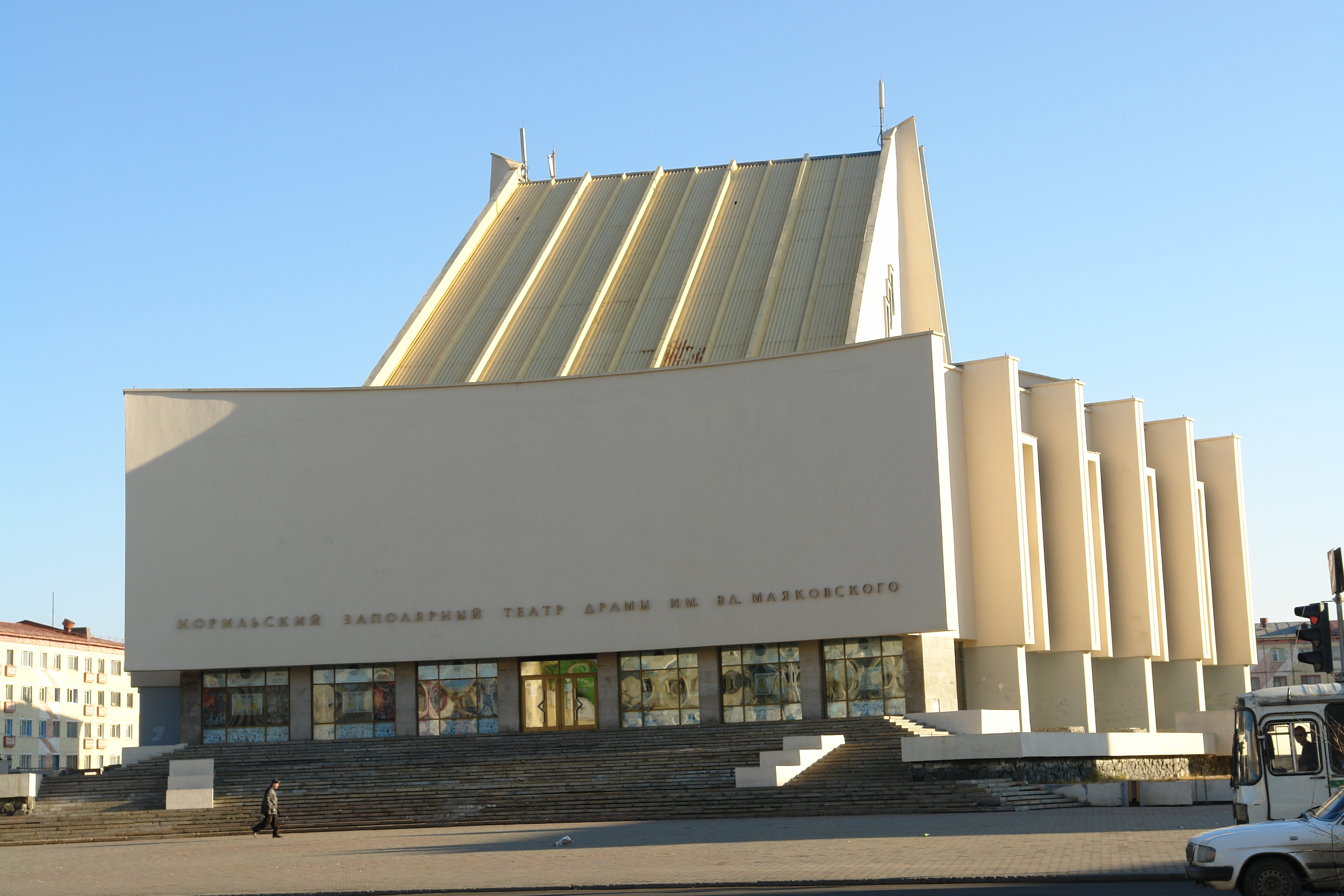
Norilsk's residents often refer to the rest of Russia as "the mainland," a phrase that captures how cut off the city feels despite being in the middle of the world's largest country. The only ways in are by air through Alykel Airport, 35 kilometers to the west, or by boat from Dudinka during the summer navigation season, a journey of three and a half days northbound from Krasnoyarsk. Fiber optic internet arrived only in 2017, when Nornickel laid a 957-kilometer cable along the Yenisei River; before that, the city relied on satellite connections. Despite the isolation, people come for the money. Mining salaries are high, and most inhabitants are migrants drawn by the wages and the opportunities that the industry provides. The city has a polar drama theater founded in 1941, originally staffed by gulag prisoners, and celebrates Heiro, the indigenous festival marking the sun's return after polar night.
Beyond the Smokestacks
Southeast of Norilsk, the Putoransky Nature Reserve spreads across a massive basalt plateau, one of the most remote wilderness areas in Asia. The reserve includes the Talnikovy Waterfall, considered the tallest in Asia, and the landscape shifts from industrial wasteland to pristine tundra with startling abruptness. The reserve has no permanent inhabitants and is extremely difficult to reach, but for those who manage it, the contrast with the city is absolute. Norilsk itself offers a few grand Soviet-era buildings in the center, surrounded by the standard concrete apartment blocks, with vast areas of decaying industrial infrastructure on the outskirts. It is, as many visitors note, simultaneously depressing and fascinating, a place where human stubbornness and geological wealth have conspired to build a city where no city should be.
From the Air
Located at 69.33N, 88.22E, approximately 300 km north of the Arctic Circle on the Taimyr Peninsula. Norilsk Airport (Alykel, UOOO) is 35 km west of the city center. The city is visible from altitude as a cluster of buildings surrounded by barren, treeless tundra with industrial smokestacks and visible smog. The port of Dudinka on the Yenisei River is about 90 km to the west. The Putorana Plateau rises to the southeast. No connecting roads to other cities. Winter polar night from late November to mid-January; midnight sun from late May to late July.