North Carolina State Capitol
On the Fourth of July, 1833, Simmons Jones Baker -- Grand Master of North Carolina's Freemasons -- laid the cornerstone of a building that would house every branch of state government under a single roof for the next five decades. The ceremony carried the full weight of Masonic ritual, a deliberate echo of the young nation's founding traditions. Two years earlier, a fire had destroyed the original North Carolina State House, and with it, a life-sized marble statue of George Washington by Antonio Canova -- a loss the state would mourn for generations. The new building would be grander, more permanent, and designed to endure. It has.
Five Architects, One Building
The North Carolina State Capitol is often credited to the New York firm of Ithiel Town and Alexander Jackson Davis, but the truth is more complicated. The building's design was the product of a sequence of architects: William Nichols Sr. and his son William Nichols Jr. began the work, Town and Davis refined it, and David Paton saw it through to completion. Construction stretched from 1833 to 1840, and the result was a Greek Revival structure of unusual purity -- a cruciform plan topped by a copper-covered dome, built from locally quarried gneiss stone. The building sits on Union Square at One East Edenton Street, occupying the geographic and symbolic center of Raleigh. The 63rd North Carolina General Assembly convened here on November 16, 1840, the first legislature to meet within its walls. It would not be the last -- 121 years of legislative sessions would unfold in these chambers before the General Assembly relocated in 1961.
Everything Under One Dome
For nearly half a century, the Capitol contained the entirety of North Carolina's government. Governor, legislature, Supreme Court, and State Library all operated within the same building. That consolidation ended gradually: the Supreme Court and State Library moved to a separate building in 1888, and the General Assembly finally relocated to the new State Legislative Building in 1963. The North Carolina Supreme Court returned briefly in 2005, convening in the old senate chamber while its own building underwent renovations -- a moment that connected the present judiciary to its nineteenth-century origins. Throughout these transitions, the governor and immediate staff have remained in the Capitol. The building is remarkably unaltered from its 1840 condition. Only three rooms have been significantly modified: two committee rooms on the second floor were divided horizontally to accommodate restrooms, and a first-floor office was partially cut away in 1951 to make room for an elevator.
A Century Between Cornerstones
On July 4, 1933 -- exactly one hundred years after the first cornerstone was laid -- the Grand Lodge of North Carolina returned to lay a second. The centennial ceremony underscored the building's endurance and its connection to the Masonic traditions that shaped early American civic architecture. That tradition of durability has been tested. The Capitol was declared a National Historic Landmark in 1973, and it sits within the Capitol Area Historic District, surrounded by buildings that trace Raleigh's evolution from a small state capital to a modern city. The 2021 state budget allocated $10 million to repair the roof, including the dome -- the kind of necessary maintenance that keeps a nearly two-hundred-year-old building standing. The grounds, too, have seen change: following the racial justice protests of 2020, Governor Roy Cooper ordered the removal of the largest Confederate statue on the Capitol grounds.
From Tryon Palace to Union Square
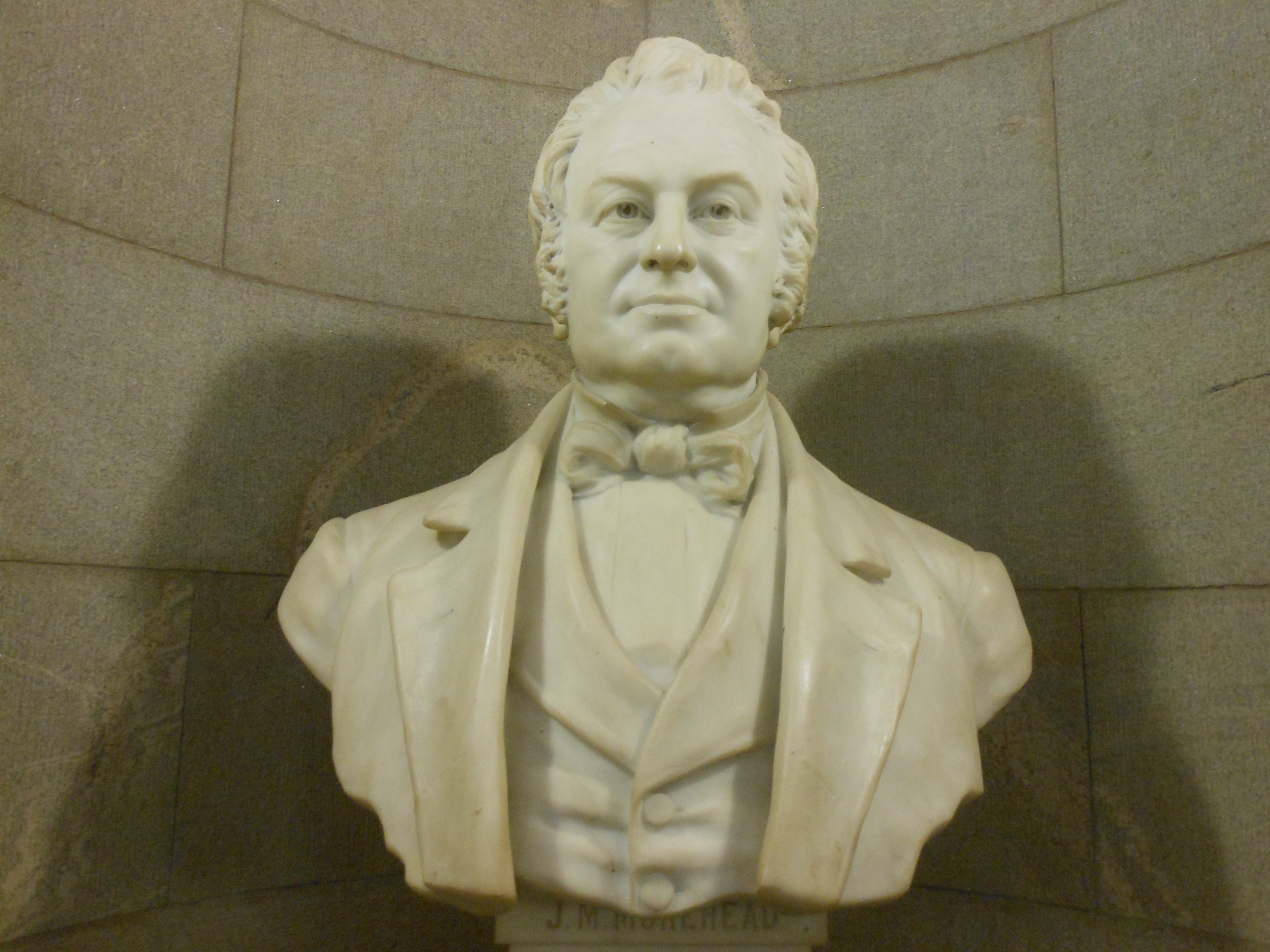
The Capitol is the third building to serve as North Carolina's seat of government. After the British vacated Tryon Palace in 1776, the General Assembly met in various locations around the state until a dedicated government building was completed in Raleigh in 1794. When fire consumed that structure in 1831, the state resolved to build something that would last. The architects delivered. Walking through the Capitol today, you pass beneath the interior dome and through chambers where legislators debated secession, Reconstruction, and civil rights across twelve decades. A statue of George Washington stands on the grounds -- a replacement, of sorts, for the Canova masterpiece that burned with the first State House. Busts of former governors line the hallways. The classical Greek facade, with its Doric portico, presents the same face to Edenton Street that it has since 1840. The building endures not because it has been frozen in time but because successive generations have decided, again and again, that it is worth preserving.
From the Air
Located at 35.780N, 78.639W on Union Square in downtown Raleigh, North Carolina. Best viewed below 3,000 feet AGL. The copper-covered dome is a prominent aerial landmark at the center of Raleigh's grid street pattern. Nearby airports include Raleigh-Durham International Airport (KRDU) approximately 10 nm northwest. The Executive Mansion, Fayetteville Street corridor, and the State Legislative Building to the north provide visual orientation. The Capitol Area Historic District surrounds the building.