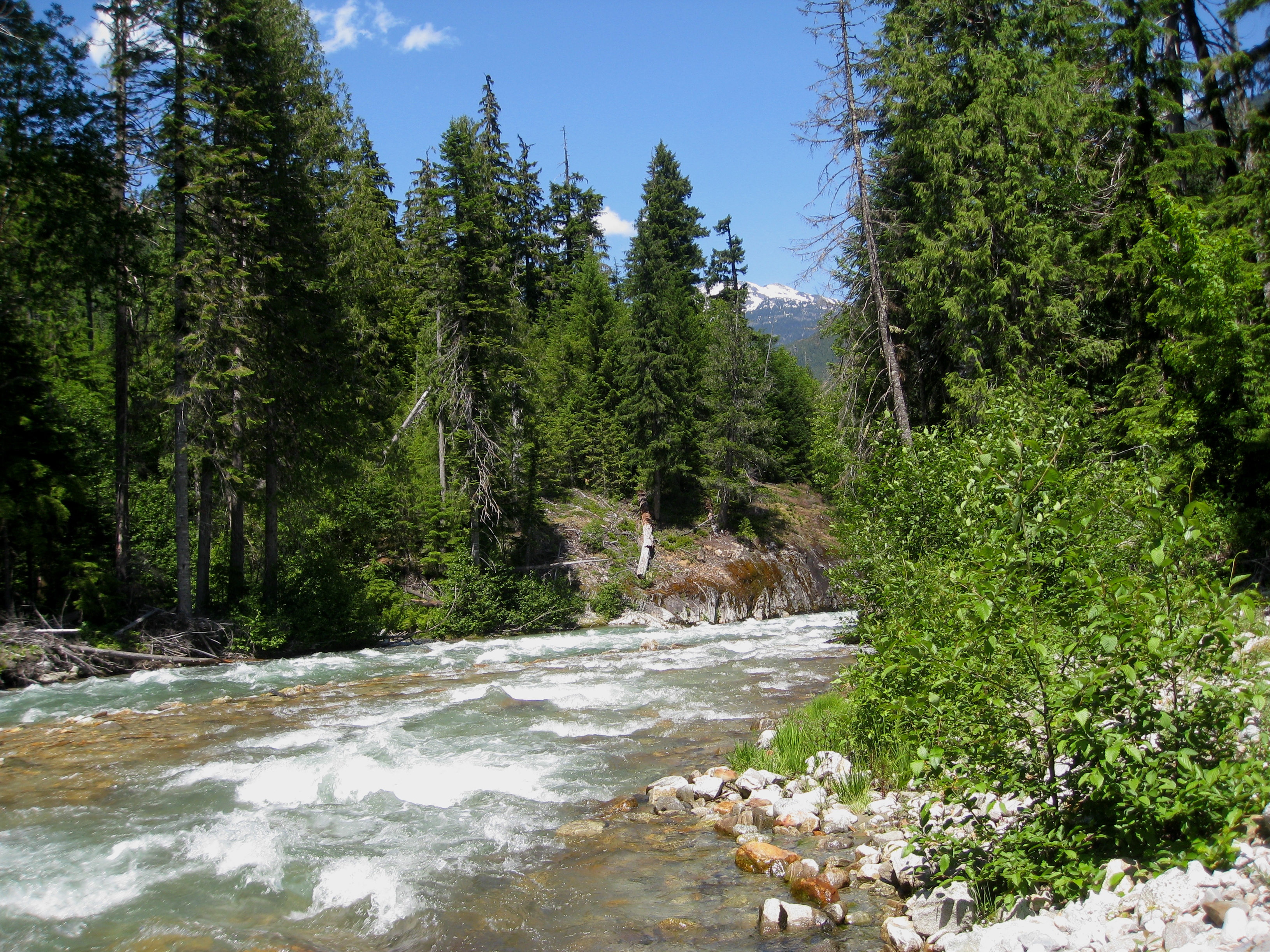
North Cascades National Park
The mountains here are not polite. They rise in shattered spires and serrated ridges, more Alpine than anything else in the lower 48, cloaked in over 300 glaciers that make this the most heavily glaciated region in the contiguous United States outside Alaska. The North Cascades earned their nickname - 'the American Alps' - but they're wilder than that comparison suggests. Most of the park has no roads, no trails even, just raw mountain wilderness where peaks still bear names like 'Forbidden' and 'Fury' and 'Terror.' Grizzly bears have returned to these valleys. Wolves hunt the high meadows. And mountaineers come from around the world to test themselves on rock and ice routes that demand everything.
The Glacial Kingdom
Over 300 glaciers drape the North Cascades, more than the rest of the contiguous US combined. These aren't remnant ice patches but living rivers of ice, actively carving the peaks into ever-sharper forms. The Challenger Glacier spans nearly a square mile. Neve Glacier and Boston Glacier feed milky torrents into valleys that haven't seen roads or logging. From altitude, the park appears almost more white than green, its peaks armored in permanent snow.
The glaciers are retreating, as they are everywhere on Earth, but they remain massive enough to shape the landscape. Their meltwater feeds the Skagit River, the largest watershed draining to Puget Sound, running thick with glacial flour that gives the water its distinctive turquoise hue. Diablo Lake and Ross Lake, reservoirs in the park's central corridor, glow an otherworldly blue-green - a color so intense it seems artificial but is simply the optical effect of suspended glacial sediment.
The Roadless Wild
State Route 20, the North Cascades Highway, offers one of America's great scenic drives - but it's a narrow thread through vastness. On either side, the wilderness stretches unbroken for dozens of miles. There are no roads into the park's interior, no visitor centers in the backcountry, no developed campgrounds beyond the highway corridor. To truly experience the North Cascades, you must walk.
And even walking is difficult here. Trails are few, maintained with difficulty against avalanches and washouts. Many peaks have no trails at all, requiring route-finding through glacier travel and technical climbing. This inaccessibility is the point. The park was established in 1968 specifically to preserve wilderness, and it has succeeded: in an era when wild places are overrun with visitors, the North Cascades remain genuinely remote, their deepest valleys seeing fewer visitors in a year than Yosemite sees in an hour.
Stehekin: The Hidden Village
At the head of Lake Chelan, accessible only by ferry, floatplane, or a grueling overland hike, sits Stehekin - one of the most remote communities in the lower 48. A few hundred residents live here year-round, by choice cut off from roads and the rhythms of mainland life. The ferry ride from Chelan takes hours, threading up the 55-mile-long glacially carved lake, passing beneath cliffs that drop thousands of feet to the water.
Stehekin serves as a resupply point for Pacific Crest Trail hikers and a staging area for mountaineering expeditions, but it's also a destination in itself - a place where the absence of roads creates a different pace, where neighbors know everyone, where the beauty is overwhelming and the connection to wilderness is total. There's a bakery famous among hikers. There's a one-room schoolhouse. There's the sense of having stepped outside ordinary life.
The Climber's Crucible
The North Cascades have trained generations of world-class mountaineers. Fred Beckey pioneered hundreds of first ascents here, establishing routes that remain test pieces decades later. The rock is sound, the glaciers complex, the weather notoriously volatile - conditions that demand complete competence. Climbers speak of the park with respect that borders on fear.
Mount Shuksan, the park's most photographed peak, appears on calendars and postcards worldwide - a perfect pyramid reflected in alpine tarns. But photographs don't convey the difficulty of its standard routes, the crevassed glaciers and loose rock bands that have humbled experienced climbers. Eldorado, Forbidden, Johannesburg: the names alone suggest what awaits. This is not a park for casual scrambles. The mountains here require expertise, fitness, and the judgment to turn back when conditions demand it.
The Return of Wildness
Grizzly bears are back in the North Cascades - not many, but a recovering population that makes these mountains one of the few places in the lower 48 where you might encounter the great bears. Wolves have returned too, hunting the deer and elk that browse the high meadows. Wolverines den in the snowfields. The park's wilderness designation, and its sheer inaccessibility, have allowed predator populations to stabilize in ways that more developed parks cannot match.
This is wilderness as it was before European settlement - or as close as anywhere can be today. The forests are largely unlogged, the watersheds undammed except for the Skagit reservoirs, the peaks unnamed and unclimbed in many cases. The North Cascades offer not just scenery but a vision of what the Cascades once were, and what wild mountains can still be when protected from development and left to their own fierce rhythms.
From the Air
Located at 48.48°N, 120.91°W along the US-Canada border. The park is unmistakable from altitude - a wall of jagged, heavily glaciated peaks unlike the gentler Cascade volcanoes to the south. Look for the distinctive turquoise of Diablo Lake and Ross Lake along the SR-20 corridor (the only road through the park). Mount Shuksan (9,131 ft) and Mount Challenger are prominent peaks; the Picket Range forms a dramatic serrated ridge. Extensive glacier coverage gives the peaks a white appearance even in summer. Lake Chelan extends 55 miles SSE from the park as a distinctive narrow fjord-like lake. The North Cascades Highway (SR-20) is visible as a thin line crossing the park. Nearest airports: Pangborn Memorial (KEAT) Wenatchee 60nm south, Bellingham (KBLI) 40nm west. Severe turbulence and icing common near peaks; weather changes rapidly.